New York City’s socialist mayor has announced a $70 million “grand experiment” in government-run grocery stores, raising alarms among those who see yet another example of bureaucrats believing they can manage the economy better than the free market.
Story Snapshot
- Mayor Zohran Mamdani unveils plan for five city-run grocery stores, invoking Depression-era government intervention as a model
- City will subsidize staples like bread and eggs through private operators under strict price controls and worker mandates
- First store slated for East Harlem’s La Marqueta by 2027, with all five boroughs covered by 2029
- Critics warn of failed socialist experiments while supporters cite 66% grocery price increases since 2013
Government Takes Over Grocery Aisles
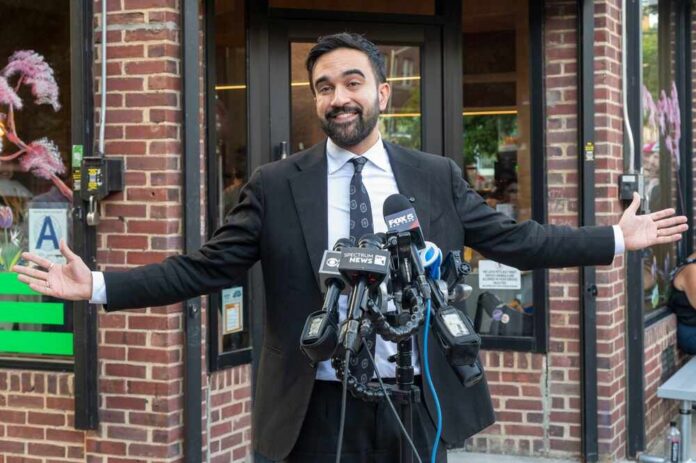
Mayor Zohran Mamdani stood at La Marqueta in East Harlem on April 14, 2026, declaring “it is time for a grand experiment” as he announced plans to build five city-operated grocery stores across New York City’s five boroughs. The initiative allocates $70 million in taxpayer funds to create government-subsidized stores where officials will dictate prices on staples and mandate worker standards. The first store will break ground at the historic La Marqueta site, covering 9,000 square feet and serving an estimated 65,000 residents within a ten-minute walk.
Zohran Mamdani said it is “time for a grand experiment” as New York moves forward with city-run grocery stores aimed at lowering food costs. He said the program is intended to make staples such as bread and eggs more affordable for residents. #NYI pic.twitter.com/m3WIBhNw69
— NewYork-Insight (@NewYork_Insight) April 14, 2026
The mayor invoked the legacy of Fiorello LaGuardia, who created the original La Marqueta in 1934 during the Great Depression as a government market experiment. Mamdani positioned his plan as a revival of direct public action to guarantee affordability, explicitly rejecting reliance on private markets to solve the city’s grocery crisis. Under the hybrid model, private operators will run daily operations while the city subsidizes key products, sets mandatory price ceilings, and enforces labor standards—a framework that critics argue distorts market signals and discourages private investment.
Affordability Crisis Meets Government Solution
Mamdani justified the initiative by citing grocery price increases of nearly 66% in New York City between 2013 and 2023, far outpacing national averages. He framed high costs as an unsolvable equation for everyday shoppers, arguing that government intervention is necessary to deliver relief where markets have failed. The plan targets food deserts like East Harlem, promising cheaper bread, eggs, and other essentials through direct subsidies. Proponents see this as addressing real hardship for working families struggling under inflation driven by federal fiscal mismanagement and energy policies.
However, the approach raises fundamental concerns about government overreach and economic efficiency. Price controls historically create shortages, reduce quality, and punish producers who cannot cover costs. By mandating prices below market rates, the city risks driving private grocers out of underserved areas, the very problem it claims to solve. The $70 million price tag also burdens taxpayers already reeling from wasteful spending by bureaucrats who prioritize political legacies over sound fiscal policy. Many Americans believe elected officials pursue grand experiments to secure reelection, not to tackle root causes of economic dysfunction.
Echoes of Failed Socialist Models
The plan has drawn sharp criticism from those who recognize the pattern of government-managed economies throughout history. Socialist experiments—from Soviet breadlines to Venezuelan grocery shortages—demonstrate that bureaucrats cannot efficiently allocate resources or predict consumer needs. Mamdani’s rhetoric, describing government as the guarantor of affordability, mirrors failed ideologies that centralize control and erode individual liberty. The insistence on worker dignity standards, while well-intentioned, adds regulatory costs that private operators must absorb, potentially undermining the viability of the stores themselves.
Supporters counter that the initiative complements existing bodegas and supermarkets rather than replacing them, creating an ecosystem where city-run stores fill gaps left by private enterprise. Yet this overlooks the competitive distortion introduced when government subsidizes certain outlets, tilting the playing field against small business owners who lack access to taxpayer funds. The timeline—first store by late 2027, all five by 2029—suggests a rushed rollout driven by political ambition rather than careful planning. For conservatives and independents frustrated by elites imposing untested schemes on hardworking citizens, Mamdani’s grand experiment represents another disconnect between government promises and economic reality.
Sources:
Transcript: Mayor Mamdani Announces La Marqueta as First Site for City-Run Grocery Store
Mamdani City-Run Grocery Stores: How They Will Work
Mayor Mamdani: It Is Time for a Grand Experiment
Socialist Mamdani Touts Government-Run Grocery Plan as ‘Grand Experiment’