Israel’s strike on Iran’s South Pars petrochemical hub signals that the war is now aimed straight at Tehran’s economic lifeline—and the materials pipeline that feeds its missile and drone programs.
Story Snapshot
- Israeli airstrikes hit Iran’s South Pars petrochemical complex in Assaluyeh, a key site tied to roughly half of Iran’s petrochemical output.
- Israeli officials said the attacks—along with earlier strikes around Mahshahr—knocked out operations connected to the bulk of Iran’s petrochemical export capacity.
- Iranian authorities acknowledged explosions and fires but emphasized containment and downplayed damage to “core” facilities.
- The timing overlaps with President Donald Trump’s pressure campaign tied to reopening the Strait of Hormuz, a chokepoint for global energy shipping.
South Pars Attack Puts Iran’s Export Revenue Under Direct Pressure
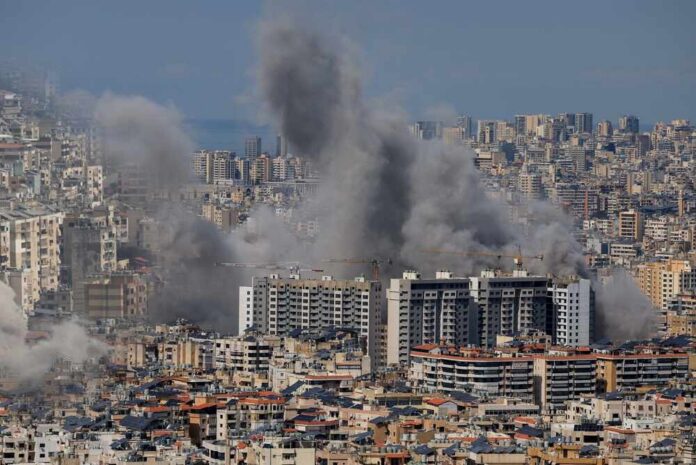
Israeli aircraft struck Iran’s South Pars petrochemical complex in Assaluyeh on April 6, targeting a facility described in reporting as the country’s largest petrochemical site and a pillar of national production. Israeli statements framed the operation as an economic and military-industrial hit, arguing petrochemical outputs support weapons supply chains. Iranian petrochemical officials confirmed an incident and said fire was contained, while damage assessments continued amid claims operations were disrupted.
Separate reporting described utilities as a key vulnerability: attacks that cut supporting services—such as power, water, and industrial oxygen—can halt multiple plants even if major equipment remains intact. That matters in petrochemicals, where continuous processes and feedstock supply are tightly integrated. Israeli officials said the strike package aimed at disabling production and export throughput, while Iranian messaging stressed control and continuity.
Mahshahr Utility Strikes Show a Blueprint: Disable the Network, Not Just One Plant
Reports also focused on strikes in and around the Mahshahr Petrochemical Special Economic Zone in Khuzestan province in the days prior, including attacks on utility plants that serve dozens of facilities. Coverage said five people were killed during those strikes, and production disruptions followed after critical support infrastructure was hit. The pattern suggests an emphasis on system-level shutdowns: damaging shared utilities can idle wide swaths of output faster than targeting individual processing units.
Israeli officials portrayed the broader campaign as a sustained effort to degrade Iran’s industrial base, including sectors linked to military manufacturing. Reporting also referenced previous hits on Iran’s steel capacity, a component in manufacturing for missiles, drones, and other systems. Iran, meanwhile, has historically relied on energy-linked export revenue to keep hard currency flowing, cushion domestic budgets, and sustain affiliated networks. Those financial realities make petrochemicals a strategic target in a long conflict.
IRGC Leadership Losses Add a Deterrence Message Beyond Infrastructure
Alongside the energy and industrial strikes, reporting said two senior Islamic Revolutionary Guard Corps officers were killed in Tehran during overnight attacks, and additional strikes hit airports described as used by the IRGC. Iranian outlets also reported residential buildings were struck, underscoring the risk of escalation and blowback.
Trump’s Hormuz Deadline Raises the Stakes for Global Energy Markets
The strikes landed as President Trump’s administration pressed Iran over the Strait of Hormuz, with public warnings tied to reopening the shipping lane. In practical terms, Hormuz is less about rhetoric than mathematics: a narrow corridor carries a large share of seaborne oil and gas traffic, and even perceived instability can push shipping costs and energy prices higher. Conservatives who remember inflation’s squeeze on household budgets will recognize how foreign conflict can quickly reappear at the gas pump.
What’s Confirmed, What’s Claimed, and What Remains Unclear
Multiple outlets agreed on the basic facts: explosions occurred, petrochemical facilities and supporting infrastructure were hit, and operations were disrupted at key sites. The sharpest dispute centered on scale—Israeli officials described a sweeping blow to export capacity, while Iranian statements emphasized containment and minimized damage to core facilities. Without transparent production data and on-site independent inspection, the precise economic loss figures and the duration of shutdowns remain hard to verify.
Ceasefire mediation was reported as continuing even as strikes expanded, a familiar contradiction in modern conflict diplomacy. For U.S. audiences, the bigger takeaway is the strategic logic: pressure applied through infrastructure can shift a regime’s resources and decision-making without immediate large-scale ground action. At the same time, widening attacks around critical energy nodes can increase retaliation risks against regional facilities, a reality that keeps markets—and voters—watching closely.
Sources:
Airstrikes on Iran kill more than 25 as Trump’s deadline to open Strait of Hormuz looms
Israel strikes South Pars petrochemical plant as Iran war escalates
Israel hits Iran’s South Pars petrochemical plant; mediators float new ceasefire proposal
Israel strikes Iran’s Mahshahr petrochemical complex, halting production