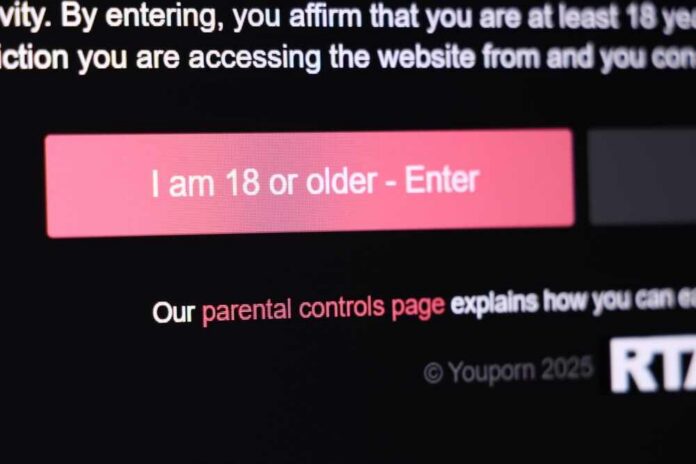
Age-verification rules sold as “for the kids” are increasingly pressuring platforms to collect more personal data while still sweeping up lawful health educators in the censorship net.
Story Snapshot
- Sex educators report bans and shadowbans for posting mainstream content about STIs, birth control, and reproductive health.
- Age-verification laws have spread to roughly half of U.S. states, often relying on broad “harmful to minors” definitions.
- Platforms respond to liability pressure with automated moderation and invasive verification tools like ID uploads or facial scans.
- Discord postponed a “Teen-by-Default” verification policy after backlash, highlighting rising privacy concerns.
- Supporters cite reduced porn-site traffic in Louisiana, while critics argue the measurement doesn’t separate minors from adults.
From Porn Crackdown to Collateral Damage Online
State age-verification laws began as a direct response to parental concerns about minors accessing pornography online. After the 2018 FOSTA-SESTA shift increased platform liability for user-generated content, major services had strong incentives to over-remove anything that might trigger legal or reputational risk. The result, according to reporting and advocacy groups, is a widening “blast radius” where educational posts about sexual health can be treated as if they were explicit content.
Sex educators say the practical effect is not a narrow porn filter but a system that punishes legitimate speech. Creators describe being banned or quietly de-boosted for content explaining sexually transmitted infections, contraception, or anatomy. Because moderation is often automated and context-blind, educators say they cannot reliably predict what will be flagged. That uncertainty produces a chilling effect: creators self-censor, and users lose access to basic, non-graphic information that used to be easy to find.
Verification Tech Pushes Platforms Toward Surveillance
Many age-verification proposals and platform policies rely on collecting sensitive data, including government ID images or biometric checks such as facial scans. Even when the target is adult-content websites, the mechanisms can migrate into mainstream platforms and community spaces. Discord’s announced “Teen-by-Default” approach would have required users to upload identification or complete facial scanning to access certain flagged servers, a step critics said normalizes routine identity checks online.
Discord ultimately postponed implementation into the second half of 2026 after intense user backlash. That pause matters because it shows a growing public line in the sand: people may accept stronger protections for minors, but many do not want a permanent digital checkpoint system tied to their identity. The controversy also highlights a core design problem—once ID-based gates exist, platforms can expand them to more categories of speech, whether for safety, compliance, or public pressure.
Effectiveness Claims and the Missing Context
Supporters of age verification point to early signals that the policy can reduce access. Louisiana’s 2023 requirement was followed by Pornhub reporting an 80% traffic drop from the state, which advocates cite as evidence that the barrier “works.” Critics respond that aggregate traffic does not show how many users were minors versus adults, or whether users simply shifted to other sites, VPNs, or unregulated channels—questions that matter when assessing costs and benefits.
First Amendment Pressure Meets Vague “Harmful to Minors” Standards
Free-speech groups argue the bigger risk is that “harmful to minors” is often defined so broadly that it can capture sex education, LGBTQ+ topics, or reproductive-health guidance. Courts have wrestled with similar issues before, including a 2004 Supreme Court decision that found certain age-verification requirements unconstitutional. More recent legal analysis suggests some laws could survive if judges view burdens on adults as incidental, but ongoing challenges show the constitutional debate is far from settled.
What This Fight Reveals About Trust, Power, and Policy
For conservatives wary of Big Tech and the administrative state, the pattern is familiar: lawmakers pass broad rules, then platforms respond with sweeping enforcement that punishes regular people while building new data-collection systems. For liberals worried about discrimination or access to health information, the same machinery can silence minority communities and suppress sensitive education. The overlap is a widening distrust that powerful institutions—government and platforms alike—will choose control and liability protection over citizens’ rights.
Liability risk and political scrutiny push companies toward blunt, automated rules, while verification mandates push them toward identity collection. If Congress and states want to protect children without building a surveillance-heavy internet, the policy details—narrow definitions, clear exemptions, and real transparency—will determine whether the cure becomes its own harm.
Sources:
https://www.kqed.org/news/12075321/sex-workers-tried-to-warn-us-about-age-verification-laws
https://www.eff.org/pages/impact-age-verification-measures-goes-beyond-porn-sites
https://ifstudies.org/blog/online-age-verification-laws-are-a-bet-worth-making
https://publicinterestprivacy.org/paxton-age-verification/