Vice President JD Vance is carrying President Trump’s message to Iran in person: negotiate seriously—or the U.S. won’t waste time on games.
Quick Take
- JD Vance departed Washington on April 10 for Islamabad, Pakistan, to lead U.S. truce talks with Iran after six weeks of war.
- Vance warned Iran against stalling tactics, saying the U.S. is open to diplomacy only if Tehran negotiates in good faith.
- The talks follow a fragile ceasefire and renewed focus on major flashpoints, including nuclear activity, proxies, and the Strait of Hormuz.
- Pakistan’s hosting role signals a push for a more direct, higher-level channel than past back-and-forth “indirect” contacts.
Vance’s warning sets the tone for weekend talks in Islamabad
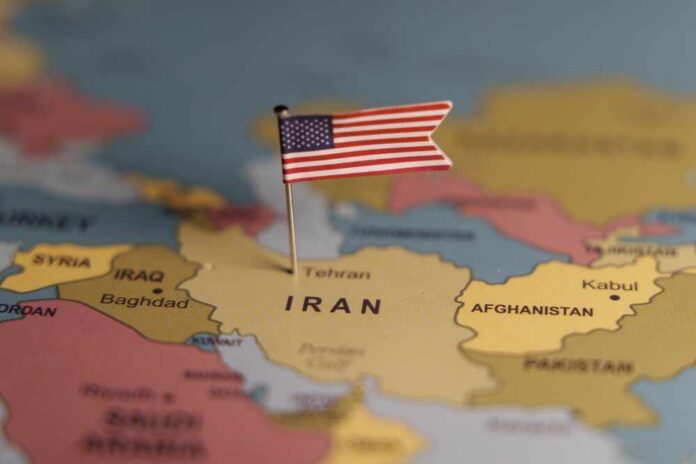
Vice President JD Vance left Washington on Friday, April 10, traveling to Islamabad to lead U.S. negotiations with Iran aimed at ending a conflict that began February 28. Speaking on Air Force Two before departure, Vance emphasized that the U.S. is willing to talk but will not entertain bad-faith maneuvering. He framed the mission around President Donald Trump’s “guidelines,” pairing openness to a deal with clear leverage if Tehran tries to stall or mislead.
White House announcements earlier in the week confirmed Vance would lead the delegation, with Special Envoy Steve Witkoff involved. Some reporting also points to Jared Kushner’s participation based on prior indirect contacts, though public descriptions of the team have varied by outlet. Trump is putting a senior political figure at the table, elevating the stakes for both sides and increasing pressure to produce measurable outcomes.
Why Pakistan is hosting—and why “direct” engagement is significant
Pakistan’s role as host is being treated by analysts as more than a mailbox for messages, especially if discussions are conducted directly rather than through intermediaries. That matters because U.S.-Iran relations have been largely frozen since the 1979 Islamic Revolution, with only rare high-level breakthroughs since then. If the Islamabad format truly reduces middlemen and accelerates verification and bargaining, it could limit misunderstandings that often drag negotiations into endless process.
The context is also combustible: Iran’s closure of the Strait of Hormuz tightened global energy markets, and the administration has treated reopening sea lanes as a key test of seriousness. Earlier ultimatums and time-bound deadlines underscored that Washington sees the war not only as a regional security fight but as a global commerce and energy issue. With conservatives still sensitive to inflation and high fuel costs, any disruption tied to Middle East shipping lanes carries political and economic consequences at home.
The pressure points: nukes, proxies, and “no weak deal” demands
Public debate around the talks has sharpened around what, exactly, the U.S. should accept. Former Vice President Mike Pence warned against an “Obama-style” arrangement, arguing that any deal must be verifiable and must address core issues like Iran’s nuclear program, the Strait of Hormuz, and support for proxy forces. That framing reflects a broader Republican instinct: diplomacy is acceptable when it produces enforceable limits, not when it relies on trust or vague promises.
Vance himself has described Iran as facing two pathways—normalization or deeper economic ruin—during remarks delivered earlier in April while in Hungary. That approach fits the Trump-era preference for leverage-first diplomacy: pressure creates incentives, and relief follows compliance.
A reluctant hawk-to-diplomat test for Vance and Trump’s “America First” coalition
Vance’s assignment is politically notable because he has been described as skeptical of open-ended intervention, and he is also an Iraq War veteran who has spoken about avoiding unnecessary foreign entanglements. That combination can be a strength if it keeps negotiations focused on concrete U.S. interests—security, deterrence, and stable energy flows—rather than mission creep. It can also draw criticism from hawkish voices who question whether inexperience creates risk in a high-stakes setting.
NEW: Vice President JD Vance speaks as he departs for pivotal negotiations with Iran:
“We're certainly willing to extend the open hand. If they're going to try to play us, then they're going to find that the negotiating team is not that receptive.” pic.twitter.com/xT77rtr9DR
— Fox News (@FoxNews) April 10, 2026
The ceasefire is described as fragile and because key details about the negotiating format have not been fully confirmed by the White House. Still, the administration’s move to put the vice president at the center of truce talks signals urgency, and it tests whether Washington can secure commitments that can be verified and enforced. For Americans distrustful of “deep state” drift and permanent conflict, the demand is simple: results, transparency, and an endgame.
Sources:
JD Vance Warns Iran Not To “Play” US As He Leaves For Truce Talks
Mike Pence warns JD Vance to avoid ‘Obama-style’ Iran deal as nuclear talks set to begin in Pakistan