With California’s governor’s race just weeks from decision day, Rep. Eric Swalwell is betting his political future on a blunt claim: “never been an allegation” of workplace sexual harassment.
Story Snapshot
- Activist and attorney Cheyenne Hunt says she is working with multiple former Swalwell staffers who may accuse him of harassment and abuse, but no lawsuits, formal complaints, or named accusers have emerged.
- Swalwell and his campaign deny the claims, saying there have been no ethics complaints and no NDAs used in his congressional office.
- Rival candidate Katie Porter publicly referenced “troubling” allegations on national TV while also acknowledging she has not spoken directly with Hunt.
- The dispute is largely playing out online and in media coverage, underscoring how election-season allegations can move faster than verification.
What’s Being Alleged—and What’s Missing So Far
Cheyenne Hunt, an activist and attorney associated with Gen-Z for Change, has publicly claimed that multiple former staffers from Rep. Eric Swalwell’s office are preparing to come forward with accusations of sexual harassment and abuse. Hunt has also described her own allegation of unwanted advances when she was 19. As of April 8–9, 2026, reporting across outlets indicates no formal charges, lawsuits, or publicly named accusers have appeared.
This matters for voters who want accountability without abandoning due process. Public claims can be meaningful, but without identifiable complainants, documentation, or an official process, the public is left weighing reputations, timelines, and political incentives rather than evidence. Several reports also describe the allegations as spreading virally, which can pressure campaigns and media to respond before facts are pinned down.
Swalwell’s Response: A Flat Denial and a Challenge on NDAs
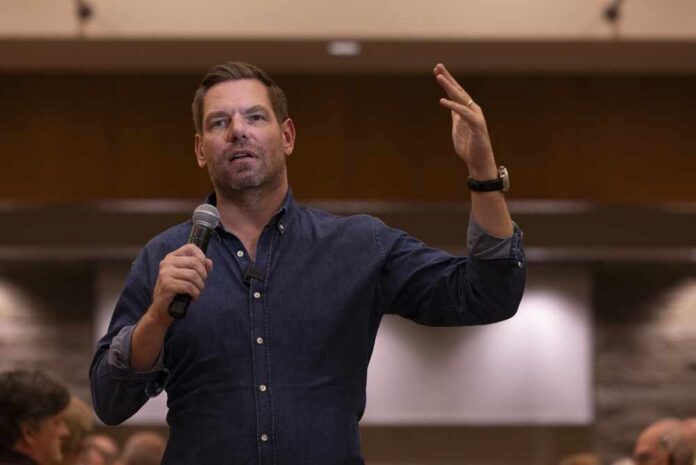
Swalwell has rejected the claims in plain terms, calling them false and emphasizing what he says is an unblemished internal record. In public remarks reported from a Sacramento-area setting, he said there has “never been an NDA” in the office and framed the controversy as rumor rather than misconduct. His campaign spokesperson, Micah Beasley, has similarly labeled the allegations an “outrageous” and politically motivated story surfacing roughly 27 days before the election.
The denial creates a clear, testable dispute: whether any complainants exist who will attach their names, whether any office records or third-party reporting support the allegations, and whether any formal channel—law enforcement, civil litigation, congressional oversight, or an ethics process—will be used. Until one of those steps happens, the story remains driven more by statements than by adjudicated facts, leaving the public with competing narratives and few verifiable anchors.
Katie Porter’s Amplification Raises the Temperature
Former Rep. Katie Porter, a rival in the California governor’s race, added fuel when she referenced “troubling allegations” on CNN that included harassment and assault language. Coverage also indicates Porter acknowledged she had not been in direct contact with Hunt. That combination—publicly spotlighting serious claims while lacking firsthand knowledge—illustrates why campaigns often tread carefully: repetition can harden accusations into “common knowledge” before independent verification catches up.
Why This Fight Resonates Beyond One Candidate
For many Americans—right, left, and politically exhausted—this episode echoes a broader belief that powerful institutions protect insiders while ordinary people are left to fight it out in the media. Conservatives, in particular, have watched standards shift depending on who is accused, with reputations destroyed quickly in some cases and stories minimized in others. Liberals who prioritized workplace protections in the #MeToo era also face a test of consistency: credible processes matter, not just viral momentum.
At this stage, the most responsible conclusion is limited: serious claims are circulating, denial is unequivocal, and formal mechanisms have not yet produced public evidence. If named accusers, corroboration, or official filings emerge, the stakes will rise sharply for voters, staff workplace protections, and party leadership. If they do not, the episode may become a case study in how online politics can weaponize unverified allegations—especially when an election clock is ticking.
Sources:
Swalwell Faces Sexual Harassment Allegations
Katie Porter, influencer Cheyenne Hunt, Eric Swalwell allegations
Sacramento Bee Capitol Alert article315290214
Eric Swalwell denies sexual harassment allegations