China’s expanding footprint at both ends of the Panama Canal has ignited a high-stakes face-off with the U.S. at the United Nations.
Story Highlights
- U.S. and Chinese officials clashed publicly at the U.N. Security Council over Chinese-operated ports at the Panama Canal.
- China’s economic reach in Latin America is fueling U.S. fears of lost influence over a vital global shipping route.
- Panama insists on its sovereignty and the canal’s neutrality amid superpower rivalry.
- Experts confirm the canal remains under Panamanian control, though U.S. policymakers warn of emerging vulnerabilities.
U.S. Raises Alarm Over Chinese Influence at Vital Maritime Chokepoint
On August 11, 2025, a heated exchange unfolded at the United Nations Security Council as U.S. Ambassador Dorothy Shea warned that Chinese companies now operate major ports at both entrances of the Panama Canal. The canal, a linchpin of global trade and a symbol of U.S. engineering and strategic power, is now at the center of escalating competition between Washington and Beijing. Shea’s warning reflects mounting concern that China’s Belt and Road Initiative is expanding into territory once firmly within the American sphere, potentially threatening the security and reliability of this critical waterway.
#Chinese and #US representatives clashed on Monday at a U.N. Security Council meeting over the #PanamaCanal amid an ongoing battle over control of the waterway that connects the Atlantic and the Pacific oceans. https://t.co/d4JokZv4ti
— The Epoch Times – China Insider (@EpochTimesChina) August 13, 2025
Chinese Ambassador Fu Cong quickly dismissed accusations of interference, insisting that Chinese port operations are purely commercial and do not compromise the canal’s neutrality or Panama’s sovereignty. Panama’s President José Raúl Mulino, who chaired the session, reaffirmed his country’s ownership and the canal’s neutral status, seeking to calm tensions between the superpowers. Despite these assurances, Washington’s unease is rooted in the strategic reality that foreign-controlled infrastructure near the canal could pose risks, especially during a crisis or conflict. The public nature of the U.N. clash highlights the seriousness with which both sides view this contest for influence.
Watch: Massive US-China CONFRONTATION at UN Security Council Over Ukraine
History of American Stewardship and the Shift to Panamanian Control
The United States constructed and operated the Panama Canal following its support for Panama’s independence from Colombia in the early 20th century. For nearly a century, the canal stood as a testament to American ingenuity and global reach. However, after decades of debate and the signing of the Torrijos-Carter Treaties in 1977, control of the canal gradually shifted to Panama, culminating in full Panamanian authority by December 31, 1999. Since then, the Panama Canal Authority has managed operations, while port contracts granted in the 1990s allowed Chinese firms to establish a presence at both canal entrances.
While the U.S. retains certain treaty rights to intervene if the canal’s neutrality is directly threatened, it no longer controls the waterway or its adjacent infrastructure. This shift is emblematic of broader global trends: American influence is waning in some regions, while Beijing’s economic leverage grows, challenging the traditional balance of power in the Western Hemisphere.
Strategic Stakes: Security, Sovereignty, and Economic Implications
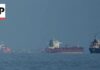
The Panama Canal remains an essential artery for global commerce, handling approximately 6% of world trade. While Panamanian authorities and credible experts agree that the canal itself is securely under national control, the presence of Chinese-operated ports at both ends introduces new strategic calculations. For the United States, any threat to the canal is a threat to both economic security and military readiness, given the waterway’s critical role in moving goods and naval assets between oceans.
Panama faces its own challenges, balancing lucrative economic ties with China against its historic relationship with the United States. The canal generates significant revenue for Panama, and any instability or perception of lost neutrality could have far-reaching consequences for the country’s economy and political autonomy. Globally, shipping companies and allied governments are watching closely, wary of disruptions or shifts in the established order of maritime transit, especially if superpower rivalry spills over into operational realities.
Sources:
Who Controls the Panama Canal? – Council on Foreign Relations
Panama Canal – Wikipedia
History of the Panama Canal – Wikipedia
History of the Panama Canal – Panama Canal Authority
Why the Panama Canal Matters to President Trump’s America – Harvard Kennedy School