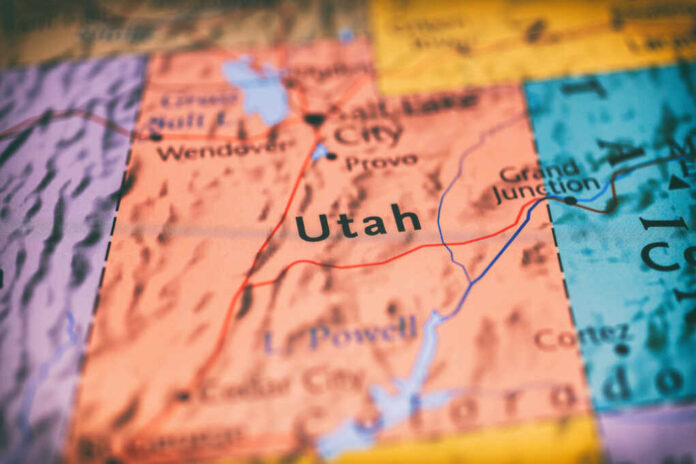
The shrinking Great Salt Lake reveals hundreds of groundwater-fed oases, challenging the region’s water management and conservation efforts.
Story Highlights
- Discovery of mysterious groundwater-fed mounds in the Great Salt Lake.
- Scientists map a vast underground plumbing system.
- Implications for water management and ecological resilience.
- Concerns over potential exploitation of fragile groundwater resources.
Scientists Discover Hidden Oases
The Great Salt Lake, a crucial ecological and economic resource in Utah, has receded to historic lows, exposing reed-covered mounds known as “phragmites islands.” These newly visible features are fed by pressurized groundwater from a vast, previously hidden underground plumbing system. University of Utah geologists are employing advanced tools, such as piezometers and airborne electromagnetic surveys, to investigate these subsurface water flows and their origins.
These discoveries are not only fascinating but also hold significant implications for the region. The groundwater-fed oases challenge previous assumptions about the lake’s water sources and resilience. As scientists continue to map this underground system, there are concerns about the potential exploitation of these fragile water resources.
Scientists stunned as strange islands and hidden springs appear in the Great Salt Lake | ScienceDaily https://t.co/8hQJ3zNvzq
— Bruce le parisien🌈ute🌹fan🔴⚪ (@BrucePerdu) September 1, 2025
Historical Context and Current Developments
The Great Salt Lake has been a vital part of the Western Hemisphere’s ecosystem for over 8,000 years. Its balance began to shift with human settlement, agriculture, and industrial activities in the 19th and 20th centuries, which altered water inflows and chemistry. In recent decades, water diversion for agriculture and urban use, alongside persistent droughts, have accelerated the lake’s shrinkage, revealing these new geological phenomena.
In August 2025, significant findings were presented at the Geochemical Society’s Goldschmidt Conference, underscoring the complexity and fragility of the lake’s hydrology. The ongoing research involves installing monitoring equipment and conducting geophysical surveys to further understand the subsurface water dynamics.
Watch a report:
Impact and Expert Perspectives
The lake’s decline has wide-reaching implications. Economically, the Great Salt Lake generates approximately $1.9 billion annually, supporting industries like brine shrimp and affecting local climate regulation. Ecologically, it serves as a habitat for migratory birds. The shrinkage threatens these functions, leading to potential economic losses and habitat disruption.
Experts like Bill Johnson from the University of Utah caution against exploiting these newly discovered groundwater sources without a full understanding of their ecological significance. While some see potential for improved water management, others warn of the risks associated with mismanagement. The ongoing research aims to inform conservation efforts and guide policy decisions to balance economic interests with environmental protection.
Sources:
Hidden Oases Beneath the Great Salt Lake: Scientists Uncover Groundwater-Fed Mounds as Lake Shrinks
ScienceDaily: Hidden Oases Beneath the Great Salt Lake
Discover Magazine: Great Salt Lake Changed More in the Last 200 Years
Phys.org: Great Salt Lake Reaches Historic Low