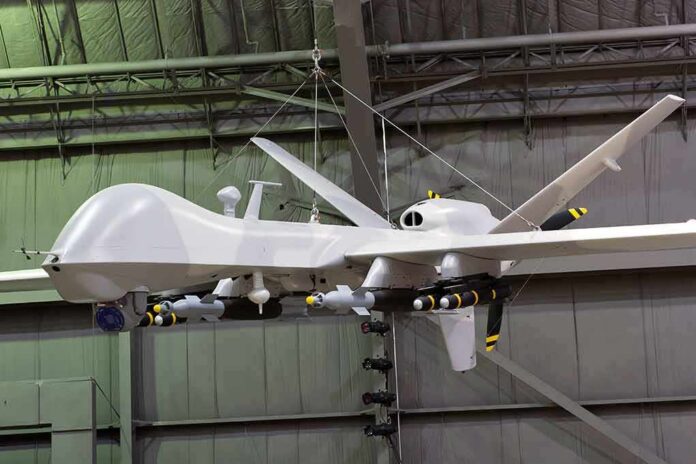
The U.S. military used a high-energy laser in Texas to disable three cartel-linked drones during a two-night border operation, marking a major shift in domestic air defense tactics.
Story Highlights
- Military laser system disabled three cartel-linked drones near the Texas-Mexico border.
- Operation ran overnight on August 25-26 in the Rio Grande Valley.
- Joint Task Force – Southern Border supported Customs and Border Protection.
- Federal guidance now allows safe border use of high‑energy lasers after earlier missteps.
What Happened Along the Texas Border
U.S. military personnel working with Customs and Border Protection used the Army’s high‑energy laser to defeat three drones near the Rio Grande Valley late August 25 and early August 26, 2026. U.S. Northern Command said the drones were linked to Mexican cartels and posed a threat to border security operations. Officials described the action as part of ongoing counter‑drone patrols in southern Texas, not a one‑off test or demo, and reported all three aircraft were rendered inoperable.
Joint Task Force – Southern Border led the mission under U.S. Northern Command authority in support of Customs and Border Protection. The task force used a directed‑energy capability that delivers focused light to heat and disable small aircraft components. The approach avoids stray gunfire and reduces debris risk compared with kinetic shots. Officials did not report injuries or damage on the ground tied to the engagements.
The Laser System and Why It Was Deployed
The Army’s counter‑drone laser is designed to quickly track, fix, and disable small unmanned aircraft that threaten troops or critical sites. The system can fire repeatedly at low per‑shot cost compared with missiles. Along the border, drones have supported smuggling, scouted patrol routes, and tried to blind or distract agents, making a rapid, precise tool useful in tight airspace near homes and roads. A defense industry notice also pointed to fielded directed‑energy use against hostile drones there.
Cartel drone activity has expanded in recent years, according to security reporting and academic studies. Groups use drones for surveillance, runs across the river, and crude attacks. Border officials have warned that these flights complicate daily patrols and raise safety risks for agents and nearby communities. These trends help explain why the military and Homeland Security have invested in sensors, jammers, and now lasers to counter low, slow, small aircraft that slip under traditional radar.
Safety Rules After Earlier Border Airspace Stumbles
Federal aviation and defense leaders set new rules this spring for when and how to use high‑energy lasers at the border. The guidance followed high‑profile airspace confusion earlier in the year and a safety review that said properly managed laser use does not pose undue risk to civil aviation. The agreement clarified coordination steps, airspace controls, and equipment standards for domestic use. These steps aimed to prevent repeat disruptions while addressing real drone threats.
The latest operation fit within that push for tighter oversight and clearer roles. U.S. Northern Command framed the actions as a controlled response to a defined hazard, not an ad hoc experiment. The command highlighted support to Customs and Border Protection and a limited engagement window over two nights. That framing reflects a shift from improvised counters to established procedures, even as agencies continue refining tactics for a crowded border sky.
Why This Matters for Both Security and Accountability
Stopping hostile drones protects agents, nearby families, and trade lanes. Quick, precise effects also lower the chance of stray rounds in border towns. But using military technology inside the United States raises fair questions about oversight, interagency teamwork, and civil aviation safety. The new laser policy and the joint task force structure are meant to deliver results while keeping power checked by clear rules and shared accountability.
“After back-to-back airspace blunders earlier this year, border task force shoots down ‘cartel-linked’ drones with AV laser. Over two days this week, Joint Task Force-Southern Border used the Army Multipurpose High Energy Laser system to engage three…
— BCG (@BCGLimaCharlie) August 28, 2026
For many Americans, the core concern is competence. People want the government to secure the border without chaos or waste. This week’s engagements show progress: a defined threat, a measured response, and no reported harm to bystanders. The test will be consistency. As cartel tactics evolve, agencies will need steady funding, disciplined training, and strict coordination so advanced tools like lasers serve the public interest and do not fuel new mistakes.
Sources:
borderlandbeat.com, aviationnews.eu, youtube.com, calhoun.nps.edu, theguardian.com, nytimes.com, idga.org, tandfonline.com