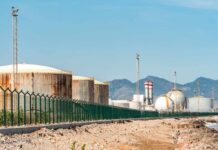
After a rare Middle East peace breakthrough lowers oil prices, President Trump is now turning the federal government on Big Oil for keeping gas prices high while working families still struggle at the pump.
Story Snapshot
- President Trump ordered the Department of Justice (DOJ) to investigate major oil companies for alleged gasoline price gouging after crude oil prices dropped.
- Trump says oil prices are “dropping like a rock” while pump prices fall too slowly, and he warns gas “better start going down a lot faster.”[1]
- Gas prices have already fallen for six straight weeks, but experts say taxes, refining, and timing delays mean changes at the pump can lag crude moves.[1][11][12]
- Decades of prior federal investigations into “Big Oil gouging” rarely proved illegal conduct, raising questions about what this DOJ probe can really find.[17][19]
Trump Moves DOJ Against Big Oil After Peace Deal Shifts Oil Markets
President Donald Trump has directed the Department of Justice to investigate major oil companies for keeping gasoline prices too high even as crude oil costs fall after his Middle East peace breakthrough.[1] In a Truth Social post, he said big oil companies “are not dropping their price at the pump” in line with the “sharply lower prices” they now pay for oil and accused them of “gouging” American customers.[1][4] He did not name specific companies in his order.[1]
Trump’s message taps into a complaint many conservatives share when they fill up the tank: prices rise fast when there is a crisis, but seem to fall in slow motion when things calm down.[1] He warned that “gasoline prices better start going down a lot faster than what I’m seeing,” making clear he expects visible relief for drivers soon.[1] At the time of his post, the national average stood just under four dollars a gallon, still painful for commuters and small businesses.[1]
Are Americans Really Being Gouged, Or Is It A Slow-Moving Market?
Reports show gasoline prices have already fallen for six straight weeks, which weakens the idea that nothing is changing at the pump, even if the drop feels too small.[1] Energy economists stress that crude oil is only part of the price; a typical gallon reflects about sixty percent crude, with the rest coming from refining, distribution, marketing, and federal and state taxes that do not fall just because oil does.[11] That built-in structure can slow how quickly lower oil prices reach regular drivers.[12]
Experts also say there is a natural delay between changes in crude prices and what shows up on the street sign outside your local station.[1][12] Refiners bought earlier, higher-priced crude, and retailers may still be selling fuel from those more expensive batches.[12] A Columbia University analyst told financial media that Trump’s simple “oil down, gas must drop now” view is not how the American gasoline market actually works, given these taxes and timing lags.[1] That kind of friction can make normal market behavior feel like gouging, even when it is not.
Long History Of “Big Oil Gouging” Probes With Thin Results
This new probe fits a pattern that goes back decades: whenever gasoline prices jump or fall slowly, politicians of both parties accuse Big Oil of gouging and demand investigations.[19] The Federal Trade Commission, which has repeatedly dug into gasoline pricing since at least Hurricane Katrina in 2005, has never found proof of systematic illegal gouging by refiners or retailers after those high-profile reviews.[17][19] State-level reviews have often reached the same basic conclusion, even when public anger was intense.[17]
One recent investigation in California, launched after years of complaints from state leaders, ended with a blunt finding: officials could explain price spikes with factors like refinery problems and state policies, but they “couldn’t prove there was gouging.”[10] That case shows how anger at the pump does not always match evidence in the books. For conservatives, the risk is that Washington spends months probing an industry without uncovering clear wrongdoing, while bureaucrats gain more excuses for future rules and oversight.[17][19]
Why Trump’s Move Still Matters To Conservatives Facing High Costs
Trump’s order comes as his administration is trying to cool inflation pressures, bring down energy costs, and show that any “peace dividend” from lower overseas tensions actually reaches American families.[1] By leaning on the Department of Justice instead of calling for new price controls, he stays closer to free-market instincts: enforce existing law, but do not hand more power to regulators to set prices by fiat.[17] That approach contrasts with many Democrats who respond to high prices by pushing new anti-gouging laws and heavier mandates on business.[15][17]
Trump threatens DOJ probe of oil companieshttps://t.co/lOQz3jnnjs
— Rose PArsons (@lilstuffParsons) June 24, 2026
For conservative readers, two truths can exist at once. Many remember how globalist climate rules, refinery shutdowns, and higher state gas taxes helped create today’s fragile energy system. At the same time, if some traders or companies are playing games with timing or margins while families struggle, a targeted Department of Justice probe can be a useful tool to expose it. History suggests results may be modest, but the signal is clear: in this White House, Big Oil answers to Main Street, not the other way around.[1][6][7]
Sources:
[1] Web – Trump orders probe because gas prices not falling enough
[4] Web – US to probe petrol price gouging claims, Trump says – BBC
[6] Web – Trump Orders Gas Price Gouging Probe | OilPrice.com
[7] Web – DOJ probing $2.6 billion in oil trades related to Iran war, sources …
[10] Web – High gas prices drive ‘big oil transparency’ legislation in Olympia
[11] Web – Oil price transparency bill heard by Senate – Joe Nguyen Archive
[12] Web – Ranking Member Markey Calls for Immediate Investigation into Big …
[15] Web – Gas Prices Explained – US Oil & Gas Association
[17] Web – PRESS RELEASE Tinio to DOE: Unbundle oil prices now, prove ‘no …
[19] Web – US partisan conflict uncertainty and oil prices – ScienceDirect.com