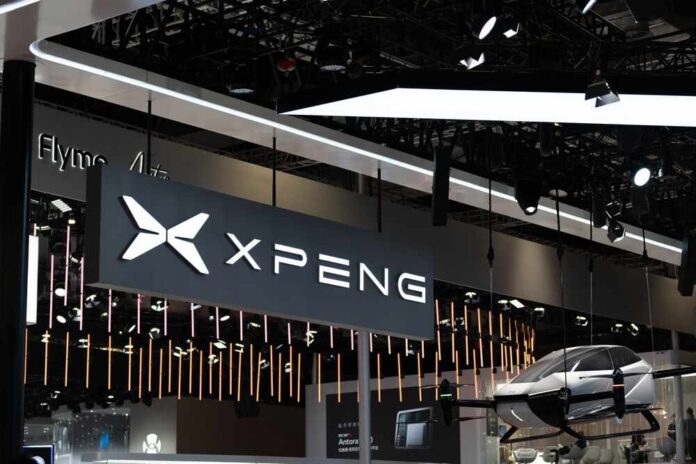
China’s first modular flying car just made its European debut, raising big questions about who will control the future of the skies above our roads.
Story Snapshot
- Chinese company XPeng AeroHT’s “Land Aircraft Carrier” flying car made its first big overseas appearance in Germany.
- The modular system combines a six‑wheel electric vehicle with a two‑seat electric aircraft that can take off vertically.
- China’s aviation regulator has accepted key certification applications, and the company claims more than 3,000 intent orders so far.
- Mass production and customer deliveries are targeted for 2026, with a factory in China being built to handle up to 10,000 units a year.
China’s Flying Car Lands in Europe
XPeng AeroHT, the flying car arm of Chinese electric car maker XPeng, has pushed its “Land Aircraft Carrier” into the European spotlight with a debut demonstration in Germany. The vehicle is a six‑wheeled electric truck that carries a compact two‑seat aircraft on its back, designed to drive on roads and then release the air module for vertical takeoff. The German debut comes after earlier showings at major events like CES in Las Vegas, signaling a serious push to reach global customers.
Company leaders describe the Land Aircraft Carrier as the world’s first modular flying car aimed at everyday drivers, not just airlines or city transit systems. The road vehicle is built as a large sport utility type platform, while the air module folds into its rear section until needed. XPeng AeroHT says drivers will be able to operate the ground vehicle with a standard license in China and then use the aircraft for short hops over traffic or rough terrain once rules allow.
Certification Milestones and Order Book
Behind the flashy demos, XPeng AeroHT is racing through China’s aviation approval process for the flying module, code‑named X3‑F. China’s Civil Aviation Administration has accepted the company’s Type Certificate application for the air module, which is the formal review of the aircraft’s design and safety standards. Regulators have also accepted a Production Certificate application, which allows them to inspect the company’s manufacturing system before large‑scale output begins.
These steps do not yet mean full approval for commercial passenger flights, but they move the project into the airworthiness certification phase, where regulators test whether real aircraft match the approved design and can operate safely. XPeng AeroHT says its air module uses a distributed electric drive system, has both manual and automatic flight modes, and is designed to keep flying even if a single part fails. The cabin seats two, with wide windows to give a near‑panoramic view during flight.
Thousands of Pre‑Orders and Factory Plans
XPeng AeroHT is not just chasing approvals; it is already taking orders. At its CES showcase, company co‑founder Wang Tan said the Land Aircraft Carrier had drawn more than 3,000 pre‑order intentions from customers interested in owning a flying car. Independent coverage of the project’s launch and early marketing campaigns has repeated the same figure, suggesting a strong early demand at least on paper.
To meet that demand, XPeng AeroHT is building what it calls a Flying Car Intelligent Manufacturing Base in Guangzhou. Industry reports say the assembly, paint, joint, and composites shops are already structurally complete and that the broader facility is about 70 percent finished. The company and outside analysts describe plans for mass production starting in 2026, with capacity that could eventually reach up to 10,000 units per year if orders and approvals line up as hoped.
Delays, Risks, and the Bigger Pattern
The path from demo to daily use is not smooth. Earlier plans suggested initial scaled production in 2025, but XPeng AeroHT pushed customer deliveries back to 2026 while continuing work on its new factory and certification tasks. The Land Aircraft Carrier still needs an airworthiness certificate and an air operator certificate in China before it can legally carry paying passengers in routine service. Similar delays have hit other flying car makers, as regulators weigh safety, airspace control, and crash risks.
China has already seen mishaps, including a crash involving two XPeng flying vehicles during a stunt rehearsal, which fueled fresh debate about safety standards and oversight. Analysts note a broader pattern: companies across the flying car industry announce major certification milestones and large order numbers years before full approval, often leading to extra waiting time and public skepticism. Official Chinese guidance suggests widespread commercial flying car use may not be common until the 2030s, even if pilot routes begin around 2025 or 2026.
What This Means for Ordinary People
For many Americans and Europeans, news of China’s flying car debut in Germany adds to a sense that technology and power are shifting while their own governments move slowly and fight over paperwork. Chinese policy now treats electric vertical takeoff and landing aircraft as part of a new “low‑altitude economy,” tying them to long‑term growth plans and public investment. At the same time, people everywhere worry that such systems may mainly serve big companies, wealthy buyers, and government agencies instead of regular families stuck in traffic.
This vehicle is part EV van, part personal aircraft. #XPENG #FlyingCar #EVhttps://modded.com/cars/xpeng-aeroht-flying-car/ pic.twitter.com/Gb1dlBto4f
— Modded (@TModded) July 17, 2026
XPeng AeroHT’s Land Aircraft Carrier shows what happens when a government and industry move fast to reshape transportation, but it also shows the trade‑offs. There is real engineering progress and a clear push toward mass production, yet safety rules, airspace control, and real‑world prices remain unsettled. For citizens on both the left and the right who feel ignored by elites, the flying car story is not just about science fiction coming true. It is a test of whether new technology will finally make life easier or simply widen the gap between the haves and the have‑nots.
Sources:
youtube.com, cnevpost.com, autonews.gasgoo.com, caixinglobal.com, airframer.com, news.metal.com, aerospaceglobalnews.com, theautopian.com