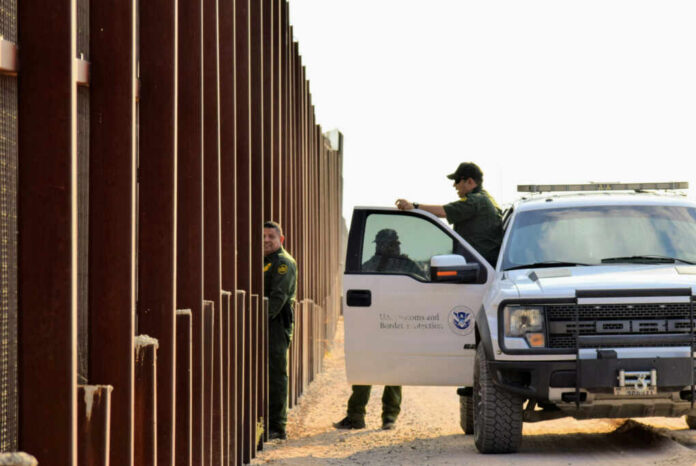
Authorities say smugglers have used third-party accounts to arrange pickups near the Texas border.
Story Snapshot
- Border reports say smugglers use third-party accounts to summon rides to desert pull-offs and highway shoulders.
- Recent Texas cases include a Laredo driver charged after 23 people were found packed in a trunk.
- State and federal actions disrupted smuggling attempts tied to stash houses and vehicle chases.
- Advocacy groups warn broad “driver” prosecutions can sweep up people with little proof of intent.
Border Tactics: Third-Party Accounts and Remote Pickups
Local reports in west Texas say smugglers are using other people’s accounts to request rides in secluded areas along the border wall and on remote highway shoulders. Authorities say drivers may receive changing pickup locations or last-minute directions, making organizers harder to identify. This hides who is hiring the ride and who is waiting at pickup. The setup reduces face-to-face contact and makes it harder for drivers and police to trace the true organizer.
Investigators say the tactics resemble methods used in other human-smuggling cases. When one route gets harder, smugglers test new ones that look normal from a distance. A ride to a rest area can appear harmless until a group rushes a car. That pattern echoes older methods that used buses, private cars, or semi-trucks to blend in with regular traffic. The goal stays the same: move people fast, keep organizers hidden, and avoid proof of a money trail.
Recent Texas Cases Show Range of Methods
Texas officers arrested a Laredo driver, age 24, after they found 23 people in the trunk of a vehicle during a traffic stop. He was charged with 23 counts of smuggling. The post did not state whether the car was tied to a rideshare app, leaving that detail unclear. In a separate case, nearly two dozen people were discovered crammed in a semi-truck’s sleeping area after a high-speed chase with state troopers, showing smugglers still use large rigs when they can.
Authorities say stash houses are commonly used in human-smuggling operations before migrants are transported by vehicle. Texas Department of Public Safety special agents also arrested a New Mexico driver accused of moving five people from Honduras and Mexico through Kinney County, underscoring how drivers cross county and state lines to avoid checkpoints. Federal officials meanwhile said they disrupted a smuggling network that spanned Texas and other southern states, signaling broader pressure on organizers beyond single traffic stops.
Open Questions: Driver Intent and Platform Responsibility
Reports that mention “rideshare drivers” often do not name the platform or provide account data. That gap makes it hard to tell whether an app trip was involved or if a personal ride was arranged offline. There is also limited public evidence that drivers knew they were taking part in smuggling. Some posts stress that smugglers hide behind third-party accounts, which could mean some drivers are duped rather than complicit.
Border Patrol warns of rideshare human smuggling risks in El Paso (The Center Square) – U.S. Border Patrol in far west Texas is warning rideshare drivers about human smugglers using rideshare apps to organize illegal smuggling activity. In the U.S. Cust…https://t.co/czjA6Goqls
— The Black Chronicle (@BlackChron) July 8, 2026
Advocacy groups warn that Texas enforcement can sweep up people with little proof they intended to smuggle. They argue state laws risk charging drivers who pick up undocumented neighbors or respond to unclear requests, and they criticize mandatory minimum sentences in such cases. That pushback reflects a long-running fight over the line between a paid smuggling run and a simple ride. The core challenge for courts remains proof of intent and knowledge, not just the act of driving.
Why It Matters: Safety, Trust, and Accountability
For drivers, a wrong pickup can mean an arrest, a damaged record, or even violence. For riders, especially migrants, the stakes can be life or death if they are locked in trunks or packed into trucks without air. For law enforcement, every third-party account and shadow pickup point is another blind spot. Each case strains public trust that basic systems like apps, highways, and rest stops still work for honest people on both sides of the border.
The debate has drawn criticism from different perspectives. Many see smugglers gaming weak spots while the system fails to protect workers and families. Conservatives point to border chaos and cartel profits. Liberals point to overbroad arrests and harsh penalties for drivers who may not know the full story. The common ground is simple: people want the government to punish real organizers, protect innocent drivers, and keep commerce and travel safe without turning every ride into a legal trap.
What to Watch Next
Watch for court records that clarify how drivers were hired, who paid, and what messages were sent. Look for federal or state requests to rideshare firms for account logs tied to border pickups. Track whether platforms add alerts or geofenced warnings near hot spots. And follow whether federal cases focus more on organizers and stash-house operators, which could hit smuggling profits without sweeping up drivers who lacked clear intent.
Sources:
redstate.com, ilrc.org, facebook.com, instagram.com, krgv.com