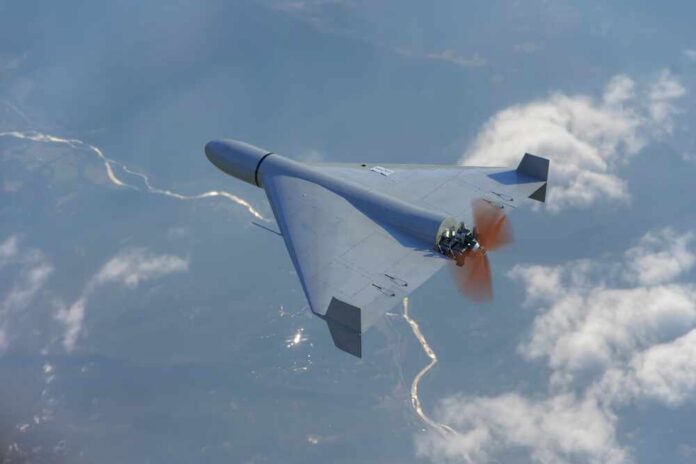
The U.S. Navy just signaled it wants most of its future carrier firepower flown by autonomous drones, not human pilots.
Story Snapshot
- The Navy issued a formal request for a new family of carrier-based drones to handle eight core missions.
- Leaders ultimately want up to 60% of the carrier air wing to be uncrewed aircraft working alongside manned jets.
- Real carrier drones like the MQ-25 Stingray are already flying, but key programs are years behind schedule.
- This push for cheaper, “consumable” drones raises big questions about cost, control, and the rise of autonomous warfare.
Navy RFI Lays Out a Drone-Centered Future for Carrier Air Wings
The United States Navy’s July 14, 2026 Request for Information asks industry to propose a family of autonomous aircraft carrier-based drones able to perform eight major missions. These missions include strikes on enemy ships and land targets, hunting submarines, air-to-air combat, electronic warfare, intelligence and surveillance, aerial refueling, and resupply flights for a naval task force. In plain language, the Navy is asking for drone versions of almost every job done today by crewed jets on the carrier flight deck.
Officials describe these platforms as “highly capable, autonomous” systems built to operate from Ford-class aircraft carriers. This fits with a broader vision already sketched in earlier plans for collaborative combat aircraft, where drones act as loyal wingmen and support assets for fighters like the F/A‑18 Super Hornet, F‑35C, and future sixth‑generation F/A‑XX. The Navy’s goal is not just a few drones on the edge of the force, but a major reshaping of how carriers fight and survive against modern threats like long‑range Chinese missiles.
From Stingray Tanker to 60% Uncrewed Air Wings
The Boeing MQ‑25 Stingray tanker drone is the first big step toward this future and is set to anchor the next phase of carrier operations. The MQ‑25 is designed to take over aerial refueling from F/A‑18 jets, freeing those manned aircraft to focus on combat missions while extending their range. Navy plans and industry reporting say future variants could also handle intelligence, surveillance, reconnaissance, and even stand‑off strike missions, making the Stingray a testbed for wider unmanned roles.
Senior leaders have openly stated a long‑term goal for carrier air wings to become **up to 60% uncrewed**, with drones taking on more complex tasks over time. The Navy is already contracting major firms—General Atomics, Boeing, Anduril, Northrop Grumman, and Lockheed Martin—to design armed collaborative combat aircraft for all 11 carriers. Analysts expect the first wave of these drones to start with surveillance, then move into electronic warfare, and later strike missions, stepping carefully as tactics and safety procedures evolve. This gradual path shows both ambition and caution inside a system that struggles to move fast.
“High Volume, Low Cost” and Disposable Drone Wingmen
Documents and expert analysis reveal that Navy planners want a “high volume of low-cost” drone aircraft, some of which are meant to be consumable—used up in combat or training rather than maintained for decades. Reporting on the Navy’s loyal wingman concept describes carrier-capable drones that cost no more than about $15 million each and are built with zero long-term sustainment costs. These aircraft would fly hundreds of hours, not years of service, and might act as one-way attack weapons or live targets to stress-test defenses.
This logic taps into a lesson many Americans on both the left and right have noticed: the Pentagon’s big-ticket programs often run late and over budget, while cheaper drones and missiles change battlefields faster. By shifting some carrier roles to smaller, expendable systems, the Navy hopes to stretch limited dollars, reduce risk to pilots, and complicate enemy planning. At the same time, it deepens dependence on complex software and industrial suppliers—an uneasy point for citizens who already see defense spending as slow, wasteful, and captured by powerful contractors.
Promises vs. Reality: Delays, AI Risks, and Deep State Worries
The Government Accountability Office has found that more than half of major United States defense programs are behind schedule, with average delays measured in years. The MQ‑25 program offers a clear example: initial plans called for operational use around 2026, but reporting now pegs full capability closer to 2029. That gap matters because the Navy is betting its future on uncrewed systems at the same time its first major carrier drone is slipping to the right on the calendar.
DEVELOPING: 3 articles — Navy Seeks Autonomous Drones for Future Carrier Air Wings | Summary & links: https://t.co/4hySb0vRQZ
— Drone Intelligence (@Drones_ci) July 15, 2026
Behind the glossy vision of smart carriers and sleek drones, this story touches frustrations shared by many Americans. Conservatives see yet another ambitious program built on complex technology, likely to cost billions and arrive late, while basic problems at home go unsolved. Liberals see growing use of autonomous weapons that could lower the barrier to war and increase civilian risk abroad. Both sides worry that unelected defense planners and corporate “elites” are making decisions about lethal artificial intelligence with little public debate.
Autonomy on the Flight Deck and What Comes Next
Recent tests show how far the technology is moving. In late 2025, the Navy used artificial intelligence software to command drones flying combat air patrols, defending airspace beyond the visual range of human controllers. On carriers, the service is building new command-and-control spaces—a kind of drone headquarters—to manage deck-launched unmanned aircraft as their missions grow. These steps turn carriers into mixed manned‑unmanned hubs and lay the groundwork for more automated decision-making at sea.
For now, the July 2026 request for information is just a demand signal to the defense industry, not a signed contract. But it confirms a clear direction: future carriers will depend heavily on autonomous drones for strike, refueling, surveillance, and defense. That shift may help U.S. forces survive in harsher threat environments. It also raises hard questions about cost, control, and accountability inside a federal system many citizens already view as slow, opaque, and too cozy with the deep state of defense and tech elites.
Sources:
realcleardefense.com, navytimes.com, youtube.com, maritime-executive.com, eurasiantimes.com, congress.gov, defence-industry.eu, battle-updates.com, twz.com, defensescoop.com, migflug.com, cbsaustin.com, primechronicle.org