President Trump has redirected a massive naval armada, including a nuclear-powered aircraft carrier and strike group, toward Iran’s doorstep.
Story Snapshot
- Trump orders USS Abraham Lincoln carrier strike group to the Strait of Hormuz after Iran planned mass executions of 800+ protesters
- Iran’s regime canceled executions just one hour before implementation, demonstrating Trump’s deterrence strategy works
- IRGC commanders threaten retaliation with hypersonic missiles, escalating tensions over the vital Strait of Hormuz chokepoint
- The deployment marks a decisive shift from Biden-era weakness, protecting both human rights and critical global oil transit routes
Trump’s Red Line on Protester Executions
President Trump announced the deployment of a “massive naval fleet” toward Iran on January 22, 2026, linking the military action directly to the regime’s planned execution of more than 800 anti-government protesters. The Iranian government canceled the mass killings just one hour before implementation, a clear victory for American strength after years of Biden administration appeasement. Trump made the announcement aboard Air Force One, stating he “may have to use it” if Iran proceeds with protester executions, drawing a hard line against the Islamic Republic’s human rights abuses that the previous administration largely ignored.
Watch:
Carrier Strike Group’s Rapid Middle East Pivot
The USS Abraham Lincoln carrier strike group, a Nimitz-class nuclear-powered carrier designated CVN-72, was rapidly redirected from the South China Sea to the Middle East during the week of January 15-21, 2026. The strike group includes guided-missile destroyers USS Frank E. Petersen Jr., USS Spruance, and USS Michael Murphy, along with a full air wing featuring F-35C Lightning II stealth fighters, F/A-18E Super Hornets, and EA-18G Growler electronic warfare aircraft. Additional U.S. Air Force F-15E Strike Eagles deployed to regional bases, creating a multi-domain strike capability. This represents the kind of decisive military positioning that reassures allies and deters adversaries, a stark contrast to the uncertain signals America sent under previous leadership.
Iran’s Asymmetric Threats and Hormuz Chokepoint
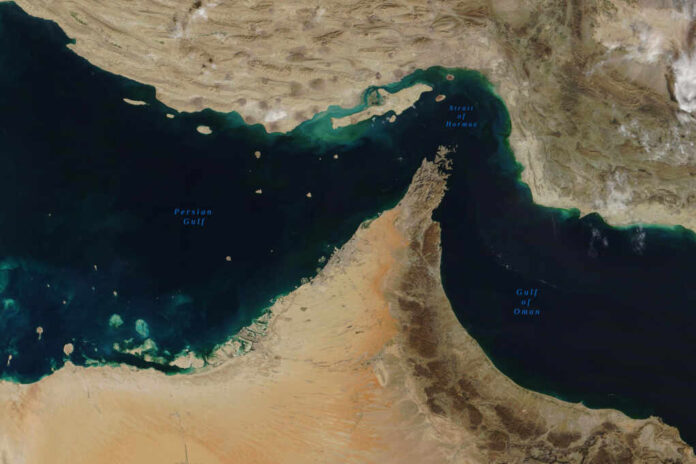
Iranian Revolutionary Guard Corps commanders responded with threats of overwhelming retaliation, warning they have their “finger on the trigger” with supersonic and hypersonic missiles targeting U.S. and Israeli assets. Rear Admiral Akbarzadeh claimed Iran maintains “smart control” of the Strait of Hormuz without needing traditional mines, suggesting advanced anti-ship capabilities. The strait carries approximately 20 percent of global oil traffic, making it a critical economic chokepoint. Iran repositioned southern missile batteries and deployed S-300PMU2 air defense systems, while state media released footage of Qiam and Fateh-110 ballistic missiles aimed at rallying domestic support.
Strategic Implications for American Interests
This deployment protects multiple conservative priorities simultaneously: defending human rights for Iranian citizens seeking freedom from theocratic oppression, securing vital energy supply routes that impact American gas prices and economic stability, and projecting strength that prevents broader Middle East conflict. U.S. Central Command coordinates daily contingency updates with allies, ensuring rapid strike capability against Iranian missile sites and IRGC command nodes if needed. The short-term risk includes potential miscalculation that could close the Hormuz strait and spike oil prices globally. However, Trump’s approach demonstrates that credible military deterrence backed by willingness to act protects American interests far better than the weakness and endless negotiation.
Sources:
U.S. Sends Major Naval Force Toward Iran as President Trump Signals Possible Military Action – Army Recognition
What Is Trump’s Objective Behind Deploying Forces to the Region? – Wanaen
Military Buildup in the Middle East Continues – The War Zone