

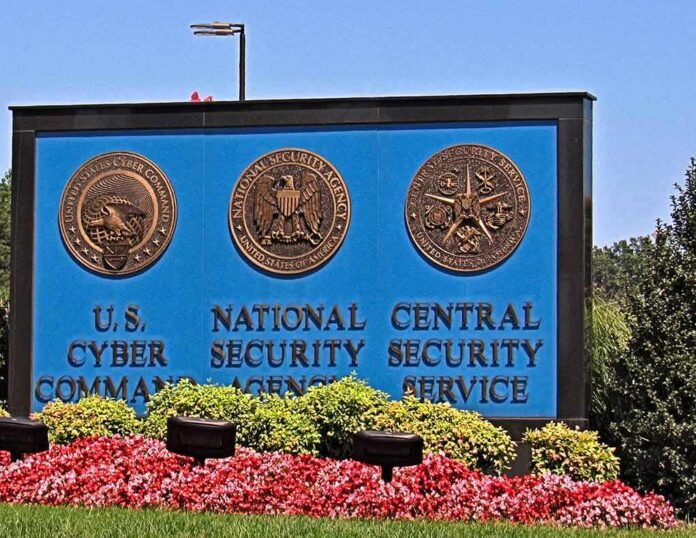
America’s top spy agency says a “maintenance” glitch sidelined parts of its classified network for days, even as leaders insist no cyberattack occurred.
Story Snapshot
- The National Security Agency (NSA) reported a maintenance-related network degradation, not a hack.
- Two U.S. officials said there was no evidence of a cyberattack at the time.
- Sources linked the outage to urgent patching after critical software flaws were found.
- Officials said other recent outages across sectors were not a coordinated attack.
What NSA Says Happened And What Went Offline
The National Security Agency said its classified internal network had a temporary degradation during scheduled routine maintenance. The agency said some internal systems were affected but that mission-critical work stayed online, and national defense activities continued. Two U.S. officials told reporters there was no evidence the disruption was caused by a cyberattack. The public statement matched what sources described as an operations-safe design with multiple layers of redundancy to keep core functions running.
Reporting described workarounds on the Fort Meade campus while the network team restored services. Staggered arrival times for some personnel helped limit a surge of logins when systems came back. That kind of step can be common after maintenance on large, sensitive networks. It keeps authentication servers from getting swamped and failing again. While inconvenient, it suggests planners prioritized stability during recovery and avoided risky shortcuts that might have created new failures.
Why Leaders Reject The Hack Theory Right Now
Senior national security officials told Congress the same week that there was no sign of a coordinated or state-backed campaign behind a cluster of U.S. outages. The Director of National Intelligence said the incidents were separate service problems tied to maintenance or technical changes, not a mass attack. Another official said there was no indication whatsoever of malicious cyber activity across those events. That aligned with what the NSA and sources said about its own disruption.
Follow-up reports tied the NSA network issue to urgent patching after critical weaknesses were identified in software that many systems use. One official said on television that the patching caused some systems to fail to restart as expected, which can happen when complex parts do not load cleanly after an update. Sources linked the NSA’s outage to that patch cycle. This account fits with the agency’s initial “maintenance” frame while adding a reason for the timing.
How A Patch Can Take Down A Big, Sensitive System
Large classified networks mix old and new tools, strict access rules, and custom code. A faulty update, a missing dependency, or a configuration clash can block services from coming back online. Teams then roll back, re-stage, or rebuild parts of the stack. If the network handles classified work, engineers move slower, and checks are tighter. That protects secrets but can stretch a short outage into days. Officials said core missions stayed up, which suggests redundancies worked.
Government watchdogs have warned for years that many federal systems run on aging parts. The Government Accountability Office found critical legacy systems across agencies, with known cyber risks and limits that block newer security methods. That mix can make maintenance harder and recovery slower after a patch. When tools are old, integration breaks more easily, and teams face more technical debt during fixes. These long-standing issues raise costs and strain staffing during incidents.
What This Means For Trust, Transparency, And Resilience
Public concern spiked because the NSA issue landed amid other outages at airlines, banks, and major cloud services. Officials pushed back on the idea of a linked attack across all of them. Still, headlines stacked together can fuel fear. Clear, steady updates help. Federal guidance urges precise language during incidents and caution on early attributions. That approach reduces error and keeps responses aligned with facts rather than rumors or worst-case assumptions.
Update: The NSANet outage that locked NSA employees out of the classified network for days has been resolved, sources told CNN; Fox's Jen Griffin reports most staff return today.@NSAGov, will you publicly explain what caused it?
— Doomsday News (@DoomsdayNewsHQ) November 20, 2026
The facts so far point to a maintenance-linked failure with no confirmed attack. That does not erase the lesson. Critical networks need modern parts, clean patch paths, and the ability to fail gracefully. Congress and agencies have plans to modernize, but watchdogs say progress lags. The country depends on systems we rarely see and cannot easily replace. When they wobble, even for a few days, it reminds us that resilience is not a slogan. It is a budget line, a deadline, and a duty.