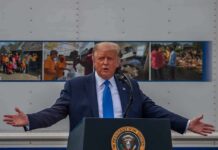

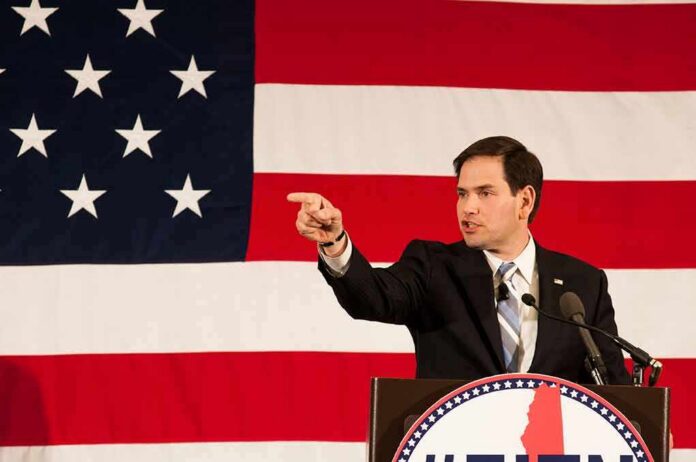
Secretary of State Marco Rubio warned the International Criminal Court that the United States will use sanctions and other tools to block any attempt to haul Americans into The Hague — a stance now backed by formal U.S. policy and active penalties.
Story Snapshot
- The White House reaffirmed that the United States is not a member of the International Criminal Court and rejects its claims over Americans.
- Executive action authorized sanctions on court officials, and the State Department has enforced those measures.
- The court says it can prosecute non-members’ nationals for crimes on member states’ territory, citing Afghanistan as an example.
- Rights groups and analysts warn U.S. sanctions could chill accountability and free speech around war crimes debates.
Rubio’s Warning and the Trump Administration’s Policy
Secretary Rubio delivered a sharp message: no American will face trial before the International Criminal Court. The statement fits the administration’s standing policy. Executive Order 14203 declared the court’s actions against Americans and Israeli allies “illegitimate and baseless,” and set sanctions in motion. The State Department tracks and announces those sanctions, which can target individuals linked to cases involving U.S. or Israeli nationals. Treasury rules detail how financial restrictions and service bans work under the order.
The United States argues consent is the core issue. Washington did not ratify the Rome Statute and is not a member of the court. The White House says non-membership defeats claims of authority over Americans. Rubio’s warning echoes that line. Supporters frame it as a defense of national sovereignty. They also point to domestic systems that can investigate or prosecute service members if needed, consistent with U.S. law and command responsibility traditions.
Where the Jurisdiction Fight Actually Sits
The International Criminal Court presents a different view. Prosecutors say the court can act when alleged crimes happen on the land of a member country or a country that accepts the court’s authority. That means non-members’ nationals may face cases if the conduct occurred there. The Afghanistan situation shows the conflict. Court records say the investigation covers alleged war crimes on Afghan territory, including alleged conduct by U.S. armed forces members. This is a direct test of the rival legal theories.
Legal analysts in Congress have mapped the split for years. A Congressional Research Service primer explains that, for war crimes, genocide, and crimes against humanity, the court’s rules allow territorial jurisdiction that can reach non-party nationals in some settings. The same materials distinguish the separate, narrower rules for the crime of aggression, which relies on different triggers. These sources help explain why non-membership alone does not end the legal dispute for every category of crime.
Sanctions Tools and the Risk of Blowback
Sanctions are the pressure point. The State Department’s sanctions page and Treasury rules describe visa bans, asset freezes, and restrictions on certain services for targeted court officials. The administration casts these steps as needed leverage to protect troops and allies. Critics respond that such tools can look like efforts to intimidate judges and prosecutors. A court filing notes threats to judges after the 2025 order, which raised alarm about pressure on the institution.
MARCO RUBIO SLAMS GLOBALIST ELITES OVER SOVEREIGNTY, IMMIGRATION, AND INTERNATIONAL COURT POWER🔥🤬
Sec. of State Marco Rubio accused international institutions of demanding control over sovereign nations while preaching national independence. He defended President Trump’s… pic.twitter.com/79ttDcAhEr
— Trumpusa1 (@Trumpusa1A1) November 15, 2026
Rights groups have also pressed back in court. Reporting describes lawsuits arguing the sanctions chill speech, harm advocacy, and deter work on war crimes cases. Independent coverage says the newest round of penalties widened the crackdown on the tribunal and could weaken global accountability norms. These critics warn that turning financial screws on investigators may confirm fears that powerful states can sidestep rules they expect others to follow, feeding public distrust at home and abroad.
What It Means for Americans and Allies
For service members, the near-term risk is more about travel and diplomacy than arrests in the United States. The court depends on countries to carry out warrants. The record shows an investigation, not specific American arrests tied to the Afghanistan file. But travel to cooperative states could pose real hazards if future warrants issue. That is why Washington is moving to deny the court access, money, and freedom of action, while signaling to allies that cooperation could carry costs.
For citizens on the left and right, the episode taps a shared worry. Many feel distant elites write rules that bite the powerless and spare the powerful. Supporters of sanctions say they shield Americans from foreign overreach. Opponents say they shield leaders from hard questions about war and civilian harm. Both concerns point to the same core frustration: a system that looks selective, slow, and more political than fair. That distrust will not fade with legal memos alone.
What to Watch Next
Watch for three signs. First, any move by the court to name specific Americans would raise stakes and test allied cooperation. Second, any U.S. expansion of sanctions would widen the chill and provoke new legal challenges. Third, clearer U.S. legal reasoning against territorial jurisdiction could surface in public records, giving Congress and courts more to debate. Until then, the fight will stay stuck between sovereignty claims, enforcement limits, and the reality of an open Afghanistan probe.
Sources:
youtube.com, whitehouse.gov, icc-cpi.int, state.gov, cbc.ca, upi.com