

A Lakewood police agent was killed and three fellow agents and a bystander were wounded after a suspect opened fire on a crowded city bus.
Story Snapshot
- Police say a suspect tied to a hit-and-run boarded an RTD Route 76 bus, then opened fire.
- Lakewood Police Agent Nicholas “Nick” Graham, 33, died; three agents and a civilian were injured.
- Officers shot and killed the suspect, identified as Gabriel Steven Garcia, on the bus.
- Transit officials confirmed the bus and route details as part of the active investigation.
Confirmed Sequence Of Events On The Bus
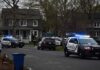
Lakewood Police said officers tracked a suspect from an earlier hit-and-run to a bus stop on Thursday evening. The man, identified later as Gabriel Steven Garcia, boarded an Regional Transportation District bus on Route 76. Officers followed onto the bus. Police reported that the suspect opened fire, striking four people, including three agents and a bystander. Officers returned fire and killed the suspect. The Regional Transportation District confirmed the bus and route involved in the incident.
Lakewood Police Public Information Officer John Romero said an agent first identified the suspect, called for backup, and then several agents approached him as he boarded. Romero stated the suspect “immediately opened fire” once officers engaged him on the bus, triggering a close-range shootout that ended with the suspect’s death. Nearby businesses reported a burst of gunfire and chaos. The involved bus was later towed from the scene as investigators processed evidence and documented the vehicle interior.
The Fallen Officer And The Wounded
Authorities identified the fallen officer as Agent Nicholas “Nick” Graham, age 33, a seven-year member of the Lakewood Police Department. Local outlets reported memorials, vigils, and a growing display of flowers outside the department’s headquarters. The department said three other agents were wounded in the attack and a bystander was also injured. All four injured people were later released from the hospital, according to subsequent reporting from the scene and city officials.
Community tributes highlighted Graham’s service and the risks local officers face during routine calls that turn volatile without warning. Processions and public remembrances continued through the weekend, as Lakewood leaders thanked residents for their support. Coverage showed residents leaving notes and flags, and officers from across the region paying respects. The early focus has been on honoring Graham’s life and recognizing the swift response that prevented more loss inside the bus during the gun battle.
What We Know About The Suspect And Supervision
News reports named the suspect as Gabriel Steven Garcia and described a lengthy criminal history. The Colorado Department of Corrections confirmed Garcia had been released to mandatory parole in September and was under parole supervision at the time of the shooting, according to coverage citing the department’s statement. Follow-up reporting examined whether Garcia had absconded from parole before the incident and what notices, if any, were issued to other agencies.
𝐍𝐄𝐖𝐒 𝐑𝐄𝐋𝐄𝐀𝐒𝐄 𝟏𝟏/𝟗/𝟐𝟔: 𝐁𝐫𝐨𝐨𝐦𝐟𝐢𝐞𝐥𝐝 𝐏𝐨𝐥𝐢𝐜𝐞 𝐏𝐫𝐨𝐯𝐢𝐝𝐞 𝐃𝐞𝐭𝐚𝐢𝐥𝐬 𝐑𝐞𝐠𝐚𝐫𝐝𝐢𝐧𝐠 𝐀𝐫𝐫𝐞𝐬𝐭 𝐚𝐧𝐝 𝐑𝐞𝐥𝐞𝐚𝐬𝐞 𝐨𝐟 𝐋𝐚𝐤𝐞𝐰𝐨𝐨𝐝 𝐒𝐡𝐨𝐨𝐭𝐢𝐧𝐠 𝐒𝐮𝐬𝐩𝐞𝐜𝐭 𝐆𝐚𝐛𝐫𝐢𝐞𝐥 𝐆𝐚𝐫𝐜𝐢𝐚
On September 28, 2026, at approximately… pic.twitter.com/4bdsiP4pOq
— Broomfield Police (@BroomfieldPD) November 9, 2026
The parole timeline has become a flashpoint because it touches on public safety, court backlogs, and how well agencies track high-risk offenders. People on the right see a system that releases repeat offenders too soon. People on the left see a system that fails to monitor people after release and does not invest enough in reentry. Both sides see a machine that moves slowly, shifts blame, and leaves communities and line officers to deal with the fallout when supervision breaks down.
Why This Matters Beyond Lakewood
The Lakewood shooting shows how everyday places, like a bus, can turn into danger zones when police and suspects meet in tight spaces. Transit agencies, police, and city leaders now face tough questions. How do they stop a wanted person from boarding in the first place? How do they protect riders while still making an arrest? Officials will review bus camera video, radio traffic, and dispatch logs to map the timeline and see what training or policies should change next.
Across the country, police shootings trigger a standard process. Investigators collect body-camera video, witness statements, and ballistics. Prosecutors later decide if the officers’ use of force was lawful, and they explain that decision in a public letter. A Denver-focused study showed that these reviews recur often and shape how communities understand police force decisions over time, including when prosecutors decline to file charges.
The Road Ahead For Records And Transparency
Officials have released core facts, but many technical details will arrive later in formal reports. Those include weapon recovery, bullet paths, and exact timing for every shot. Agencies will likely release bus and body-camera footage when allowed. Clear, prompt records help families, riders, and officers process what happened and learn from it. Transparent reviews also help reduce rumor and keep the focus on facts, not spin, so reforms match what the evidence shows.
For now, Lakewood mourns Agent Graham and supports the injured. The case underscores a shared worry: government systems meant to protect the public often fail at the handoff points, from parole to patrol to public transit. When those gaps line up, it is the community—and the officers on the front line—who pay the price. The test for leaders will be to fix the seams, not just offer thoughts, prayers, or blame after the next avoidable tragedy.
Sources:
washingtontimes.com, dailypress.com, coloradopolitics.com, 9news.com, rtd-denver.com, denver7.com