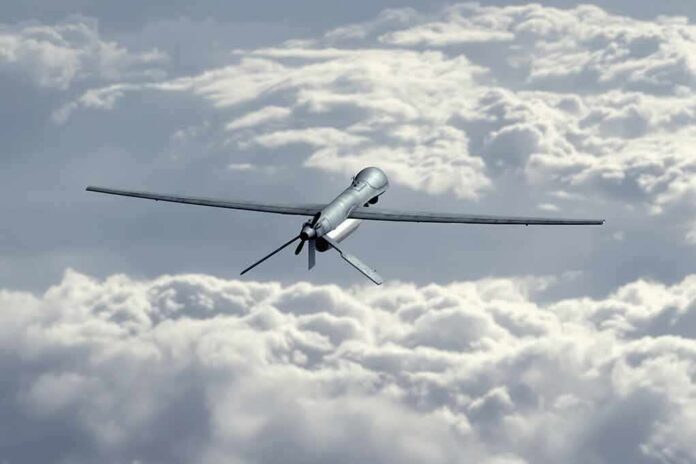
A Central Intelligence Agency-linked investor helped a German drone maker win U.S. government work, including with the Central Intelligence Agency and the Federal Bureau of Investigation, according to an executive’s on-record account.
Story Highlights
- German firm Quantum Systems says In-Q-Tel opened doors in Washington and led to CIA and FBI work.
- Reuters reports the investor’s role gave the company an early foothold in the U.S. drone market.
- Homeland Security describes In-Q-Tel as a bridge matching startups to government needs.
- Quantum Systems has grown fast with new U.S. Army and European contracts and large funding rounds.
What Quantum Systems Says Happened
Reuters reported that Quantum Systems, a German drone company, gained an early foothold in the United States with help from In-Q-Tel, a not-for-profit investor tied to the Central Intelligence Agency. Co-Chief Executive Sven Kruck told Reuters that United States investors, including In-Q-Tel, opened doors in Washington and helped the firm win work with the Central Intelligence Agency and the Federal Bureau of Investigation. That on-record statement anchors the key claim and explains how the company moved quickly into sensitive U.S. markets.
Reuters framed the story as a window into how United States capital and networks shape Europe’s defense startups. The account points to In-Q-Tel’s role as more than money. It signals to federal buyers that a startup’s tech matches real mission needs. That signal can matter as much as funding when agencies must pick trusted vendors. In fast-moving fields like drones, early trust can lead to pilot projects and, later, to scaled orders.
Who In-Q-Tel Is and How It Works
The Department of Homeland Security describes In-Q-Tel as a prolific investor that identifies startup technology, analyzes it for government use, and aligns it to agency missions. The program exists to match emerging tools to needs across security agencies. That includes providing analysis and introductions that help officials assess new tools faster. Department guidance outlines this “bridge” role between government users and private founders seeking to sell into complex federal markets.
Public profiles have long noted that In-Q-Tel helps connect companies to buyers and technical experts across the United States government. The investor’s model is designed to reduce friction for young firms that lack contracting teams or long sales histories. This approach can speed adoption in areas like autonomy, sensors, and software where timelines are tight and threats evolve quickly. That is the backdrop for Quantum Systems’ entry into the United States market.
Quantum Systems’ Rapid Growth and New Customers
Market trackers say Quantum Systems has expanded beyond early customers and now sells to a wider set of defense buyers. Recent deals include a United States Army award in April 2026 and a Romanian Armed Forces contract financed through a European Union fund in June 2026. The company also closed a large funding round in July 2026 that lifted its valuation. These markers show traction beyond one agency or country and suggest growing demand for its drones.
German drone maker Quantum Systems got a foothold in the United States with help from CIA-backed investor In-Q-Tel (IQT), its co-CEO said, underscoring the influence of US money and intelligence networks in shaping Europe's rising defense stars https://t.co/32p9HyYLbH pic.twitter.com/NAzn8sEXi6
— Reuters (@Reuters) August 31, 2026
Those wins matter because they hint at a path many defense startups try to follow. First, land a pilot or small contract with a trusted buyer. Next, show proven performance in the field. Then, use that proof to expand across agencies and allied countries. The Reuters report ties Quantum Systems’ early step in that path to In-Q-Tel’s backing and introductions. The later sales show how early access can turn into broader growth if the product delivers.
Why This Raises Bigger Questions for Both Sides
For readers who worry that insiders tilt the playing field, this case is a test. A Central Intelligence Agency-linked fund helped a foreign drone maker reach top United States buyers, according to the company itself. Supporters say this is the point: move promising tech into the hands of operators fast. Critics will ask who gets that help, how choices get made, and whether smaller domestic firms get squeezed out. The facts show the bridge exists; the guardrails matter.
For people frustrated with slow, costly procurement, the bridge can look like a fix. Federal buyers often struggle to find and vet fast-evolving tools. In-Q-Tel aims to cut that time by curating options and de-risking trials. That can improve readiness and save money if the tech works. But when the investor’s signal opens doors that others cannot access, policymakers face a balance: speed and security on one side, open competition and transparency on the other.
What To Watch Next
Watch whether United States agencies expand orders for Quantum Systems or run competitive trials with multiple vendors. Track how In-Q-Tel describes future investments in Europe and in drone autonomy. Look for Congress and inspectors general to review how these partnerships weigh national security, fair competition, and the use of public funds. Clear rules on foreign ownership, data handling, and supply chains will shape which firms can scale inside the United States market.
Also watch how allied demand affects United States choices. If partners buy the same systems, joint training and shared parts can cut costs and speed missions. If different systems spread, logistics and data-sharing get harder. The next set of contracts, both at home and with allies, will show whether Quantum Systems turns early access into a lasting footprint—or whether rivals close the gap through open bids and better performance.
Sources:
youtube.com, pitchbook.com, sacra.com