
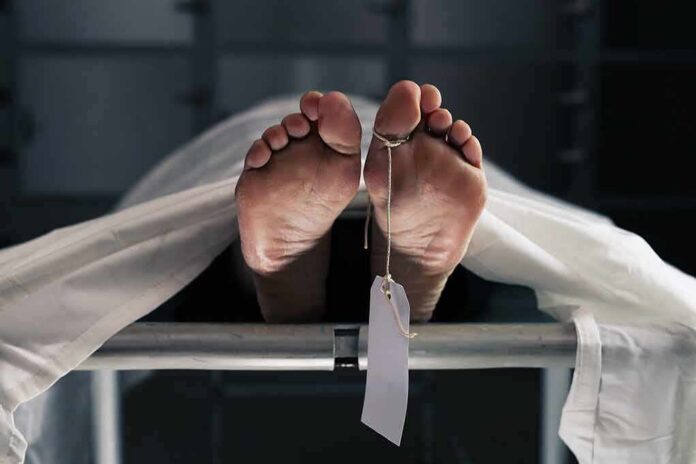
Jurors convicted a Phoenix hospital security guard of four felonies for sexual conduct with a corpse inside a morgue freezer, a case that exposed shocking breaches of basic dignity and safety standards.
Story Highlights
- A jury found Randall Bird guilty on four felony counts tied to crimes against the dead.
- Investigators reported Bird’s DNA on genital-area swabs from the deceased woman.
- Co-workers said they found Bird in the locked morgue freezer with the body bag unzipped.
- Arizona law makes necrophilia and other crimes against the dead illegal and punishable.
What Investigators And Jurors Said Happened
Police and court records described a disturbing scene at Banner University Medical Center in Phoenix. Two hospital security workers reported the morgue freezer door was locked from the inside. They said the light was on and found colleague Randall Bird sweating and nervous. They reported the body bag was fully unzipped and the woman’s gown pulled up, exposing her lower body. A jury later convicted Bird on four felony counts linked to sexual conduct with a corpse.
Forensic testing reported Bird’s DNA on the deceased woman’s body, including genital-area swabs taken during a sexual-assault exam. Outlets citing investigative records reported the match to Bird. One account added that the body arrived zipped inside the bag, which narrowed when contact likely happened. These points, entered at trial through evidence and testimony, were part of the state’s case that persuaded jurors beyond a reasonable doubt.
Evidence, Charges, And The Law In Arizona
News reports said the medical examiner documented evidence including post-mortem rib fractures, along with the DNA findings. Reports did not provide the full autopsy file, lab allele data, or chain-of-custody forms. Those details are often sealed or hard to obtain in active cases. Even so, the jury verdict stands on the record presented in court. Arizona law bans necrophilia and other crimes against the dead, making such acts clear felonies under state statute.
Coverage noted some early confusion about the number and labels of charges. Initial stories referenced five “crimes against the dead,” while the verdict reported four convictions. That sort of change can reflect an amended indictment or a dismissed count. The conviction report is the clearest data point now on the public record. The core facts are consistent across outlets: the freezer discovery, the unzipped bag, and the reported DNA match to Bird.
Why This Case Hits A Nerve Beyond One Hospital
This prosecution sits in a rare category of abuse involving human remains. Researchers explain that cases are uncommon, and reliable rates are unknown. However, many known cases involve workers with access to morgues, hospitals, or funeral sites. That does not mean most workers offend. It shows how access and weak controls can create opportunity for harm if oversight fails. The Phoenix case highlights the need for strong doors, logs, cameras, and audits.
An Arizona man has been convicted of having sex with a 79-year-old woman’s corpse in the morgue freezer of the Phoenix hospital where he worked as a security guard, according to court record https://t.co/f4BzjVfxyH via @tsgnews
— Robert Don Gifford (@GiffordLawFirm) November 15, 2026
Families trust hospitals to protect loved ones even after death. When that trust breaks, people across the political spectrum see a system not doing its most basic job. Conservatives and liberals both push for accountability here: better hiring, background checks, strict access rules, and real-time monitoring. Clear state laws, firm penalties, and transparent internal reviews can help stop this kind of abuse. Institutions must prove that respect for the dead is nonnegotiable.
Sources:
thesmokinggun.com, kbtx.com, metro.co.uk, foxnews.com, fox10phoenix.com, azleg.gov, scholarship.law.wm.edu