
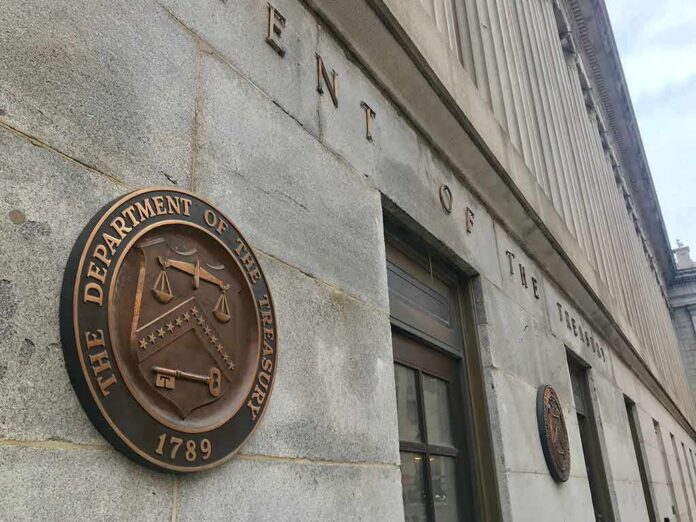
The Treasury Secretary has moved onto a U.S. military base after U.S. officials tied threats to his life to Iran, underscoring how national security is now colliding with domestic governance.
Story Snapshot
- Treasury Secretary Scott Bessent relocated from his home to a U.S. military base after threats linked to Iran.
- Treasury says Bessent will keep leading the financial squeeze on Iran despite the threats.
- U.S. officials assessed that plots by Iran against Americans have grown more advanced.
- Iran has publicly denied planning attacks on U.S. soil.
What Happened And Why It Matters
The New York Times reported that Treasury Secretary Scott Bessent left his residence and moved to a U.S. military base after threats to his life tied to Iran. Reuters echoed the report the next day, citing the same core facts. A Treasury spokesperson said Bessent will not be deterred and will keep executing the pressure campaign on Iran’s economy. The reports did not share operational details of the threat, but the relocation shows officials treated it as serious.
U.S. officials assessed in recent weeks that plots by Iran against current and former American officials had become more advanced. Reuters reported seeing a memo from a senior intelligence official warning that lethal plots had reached “advanced stages.” The Times tied that broader view in part to threat intelligence around Bessent. That assessment sets the scene for tougher protection steps and signals a tense period for national security decision makers.
Bessent’s Role In Sanctions And Exposure To Risk
Bessent has been a lead figure in President Trump’s push to isolate Iran financially. He has threatened tougher sanctions on sectors and on countries that keep doing business with Tehran. That mission increases his public profile and could make him a target. Moving him to a base suggests agencies weighed both his role and the recent intelligence. Treasury’s statement that he will keep working aims to show continuity and resolve during a volatile moment.
Sanctions are designed to cut off money flows that fund the Iranian state and its security arms. When sanctions bite, pressure rises on the targeted regime and on partners abroad. That pressure can spark responses in other arenas, including cyber and clandestine threats. The U.S. government has previously charged people linked to Iran in alleged plots on American soil, which informs current security posture even when new case details stay classified.
How This Fits A Known Pattern Of Threats
The Department of Justice has documented plots tied to Iranian actors in recent years. In 2022, prosecutors charged a member of Iran’s Islamic Revolutionary Guard Corps in a plot to murder former National Security Advisor John Bolton. In another case, a federal jury convicted Asif Merchant for a 2024 scheme linked to Iranian direction that targeted U.S. officials. These cases do not prove any new plot, but they show capability and intent have existed.
🚨 U.S. Treasury Secretary Scott Bessent has moved out of his Washington, D.C. residence and into a military bas following threats against his life linked to Iran.
A U.S. intelligence memo warned that Iranian plots targeting American personnel and citizens had reached advanced… pic.twitter.com/Lv4gPypp3L
— 𝐓𝐡𝐞 𝐄𝐦𝐩𝐢𝐫𝐞 𝐖𝐚𝐭𝐜𝐡 (@TheEmpireWatch) November 11, 2026
Earlier cases also include a 2021 indictment that accused Iranian intelligence officials of a kidnapping conspiracy targeting a U.S.-based critic. Years before, a man was sentenced for a plot to kill the Saudi ambassador in Washington, which prosecutors tied to Iranian planning. This record helps explain why U.S. agencies move fast when they see warning signs. It also explains why the public may see strong steps even when details stay behind closed doors.
What This Means For Americans Watching Washington
Protective moves like this remind Americans that foreign threats can reach into daily governance. A Cabinet official living on a base is not normal. It shows that security and policy are fused right now. Conservatives who back maximum pressure see a price for leadership. Liberals who fear violent escalation see the risk of blowback. Most agree on one point: leaders must protect civil life while staying transparent and effective in their work.
What To Watch Next
Watch for any new Treasury actions that tighten sanctions or expand secondary penalties. Look for statements from the White House, the Secret Service, or the Pentagon about protective measures, even if brief. Track any Justice Department filings that mention active plots or arrests inside the United States. Finally, watch for signals from allies and banks abroad, which often react to U.S. sanctions and can shape whether Iran feels more pressure or finds new workarounds.
Sources:
townhall.com, reuters.com, iranintl.com, rawstory.com