
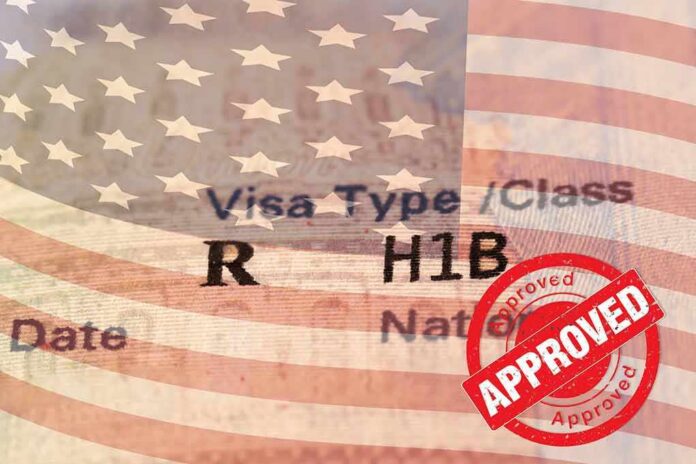
New analysis and old audits point to a stubborn risk in the H-1B system: some employers may use it to cut labor costs while U.S. workers fear getting pushed aside.
Story Snapshot
- A federal watchdog recorded layoff complaints tied to lower-paid H-1B hiring.
- Law already flags “displacement” and sets wage rules to protect U.S. workers.
- Heritage says most H-1B jobs pay below the median; critics dispute broad underpayment.
- Richmond Fed cites high H-1B median pay and wage gains at visa-winning firms.
What the Federal Record Says About Displacement Risks
The Government Accountability Office reported that labor groups alleged companies laid off U.S. workers while hiring or keeping H-1B staff at lower pay. Employers also said H-1B workers might accept lower salaries than similarly skilled Americans. The same report noted companies claimed to follow required wage rules. These accounts show a real tension but do not prove how often true displacement happens nationwide. The watchdog called for better tracking to measure program effects.
The Department of Labor defines “displacement” as laying off a U.S. worker from a job equal to the one sought for an H-1B hire. The agency requires certain high-use employers to attest they are not displacing similar U.S. workers. The framework also requires paying at least the higher of the local prevailing wage or the actual internal wage for similar roles. These protections exist on paper, but enforcement and data quality shape how well they work in practice.
The Wage Debate: Cost Cutting or High Skill Premium?
The Heritage Foundation argues that most H-1B positions pay below the median wage and that only about one in six reaches the top wage level. Heritage also says large technology firms and foreign outsourcing companies capture many slots, which can favor cost control over rare-talent hiring. These points support a cost-cutting concern but rely on aggregate wage levels that do not, by themselves, prove underpayment in specific like-for-like jobs or widespread rulebreaking.
Other evidence pushes back. The Federal Reserve Bank of Richmond reports a median H-1B salary of $92,600, with even higher medians for workers with professional or doctoral degrees. The bank also reports that, at firms that obtained H-1B visas, young and college-educated workers saw 4 to 5 percent wage gains, whether they were born in the United States or abroad. This suggests some firms use H-1B hiring to grow, not to replace domestic talent across the board.
How Often Does Replacement Happen? Evidence Gaps Remain
The strongest federal audit evidence includes interviews and allegations, not a nationwide count of equivalent one-to-one replacements. That means we lack a clean measure of how often U.S. workers lost roles that H-1B workers then filled with the same duties and lower pay. Critics cite eye-catching cases and industry patterns. Supporters stress the law’s wage and displacement rules and firm-level growth effects. Both sides point to real data, but the full frequency of misuse remains unclear in public records.
How Democratic control of Congress creates a significant shift in legislative and budgetary priorities, altering the operational landscape for Indian IT services, SaaS companies, and H-1B visa policies.
While executive authority over immigration enforcement remains with…— Dr Deepak Deshpande (@ddtimes) November 4, 2026
Several studies and summaries say the average H-1B employer does not displace U.S. workers and may later hire more Americans as revenue rises. At the same time, some lawmakers and worker advocates point to outsourcing-heavy models that appear to lean on young, cheaper labor. This split can both be true across different firms at the same time. That is why better employer-level data on wages, duties, locations, and layoffs is key to settle the core question.
Why This Matters Across the Political Spectrum
Americans on the right worry about undercut wages and jobs. Americans on the left worry about power imbalances, opaque hiring, and a widening gap between winners and losers. Both worry that elites write rules and then dodge them. The record shows Congress built guardrails. But audits also show gaps in tracking and oversight. Transparent payroll audits, stronger reporting, and real penalties for abuse would protect U.S. workers and honest employers, and help restore trust in the system.
Sources:
youtube.com, heritage.org, whitehouse.gov, theatlantic.com