
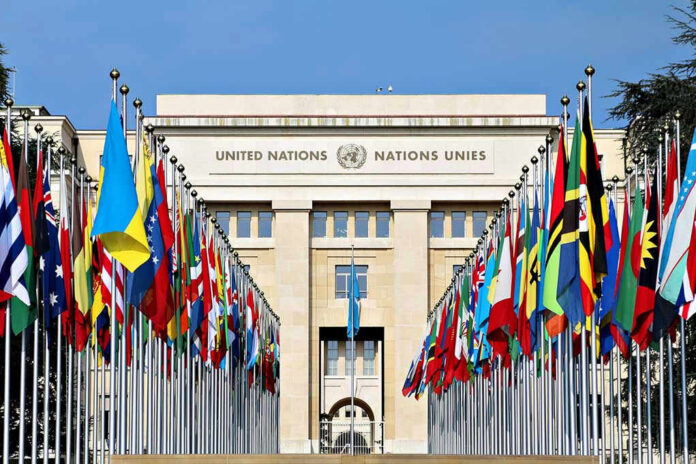
The United States is set to become the first country to fully refuse a United Nations human rights review, breaking a two-decade norm and raising global and domestic questions about accountability and bias.
Story Snapshot
- The United States plans to shun its Universal Periodic Review at the United Nations Human Rights Council, an unprecedented step.
- The Trump administration cites bias at the Council, pointing to a standing agenda item that singles out Israel.
- Human rights groups warn the move undercuts a system built on universal participation and peer pressure.
- The Council previously rescheduled the U.S. review after a missed 2025 appearance, urging renewed cooperation.
What Exactly Is Being Refused
The United Nations Human Rights Council runs a “Universal Periodic Review” that puts every country’s record up for peer review on a set cycle. The United States was due for its fourth-cycle review but skipped in late 2025. The Council then pushed the session to 2026 and called on Washington to cooperate. Officials and press accounts now report the United States will fully refuse to take part, a first since the process began about twenty years ago.
The review is not a court. It relies on public dialogue, state-to-state questions, and records from civil groups and United Nations offices. Researchers say the process works by creating public pressure and reputational costs rather than legal orders. Supporters argue that this simple design is its strength. When every state shows up, the process feels fair. When a state walks out, the shared rule starts to crack.
Why the Administration Says No
The Trump administration argues the Council is not even-handed. It points to “Agenda Item 7,” a standing item that targets alleged violations by Israel and in the Palestinian territories. A United States representative has said on the record that the United States “strongly and unequivocally” opposes this agenda item because only Israel is singled out this way. Backers of the refusal say a process that starts from bias cannot deliver fair review for anyone.
Scholars and past diplomats have long debated politicization at the Council. Analyses describe tensions between the Council’s stated goals—universality and equal treatment—and how voting blocs shape outcomes. Critics say the special focus on one country conflicts with non-selectivity. Supporters counter that some situations need steady attention to protect people on the ground. This clash sits under today’s standoff and fuels mistrust on both sides.
Why Critics Say It Matters
Human Rights Watch and other groups warn that the United States’ non-cooperation threatens the “universal” promise of the review. They argue that the process builds accountability by combining input from governments, civil society, and United Nations monitors, and that refusing to show up weakens that pressure for change. They also say allowing any powerful state to opt out invites others to follow, which could drain the system of fairness and teeth.
Independent experts and reporters note that the review has had full participation for years. Research finds it can nudge states by shining a bright light in public and at home. That reputational push is the point: show up, answer questions, and commit to clear steps. If the United States, a leading power that has often promoted rights abroad, refuses the review, the signal to allies and rivals could be sharp and long-lasting.
What This Means at Home
Americans across the spectrum see different risks. Many conservatives distrust global bodies that they view as politicized and unfair toward allies like Israel. They see a refusal as drawing a line against bias and defending national sovereignty. Many liberals worry that skipping review reduces transparency and shields real problems from open debate. They see a refusal as lowering the bar on rights at home and weakening America’s moral voice abroad. Both sides share a core concern: elites play by different rules, and systems bend for the powerful.
That shared concern is why this fight matters beyond Geneva. If the Council appears biased, people lose trust. If the United States shrugs off a rule that binds others, people also lose trust. Either way, citizens see institutions—foreign and domestic—failing basic fairness. The Council asked the United States to return to the table after the 2025 no-show. The choice now is stark: engage to fix what is broken, or walk away and risk breaking more.
Sources:
nhregister.com, un.org, en.vijesti.me, training.theadvocatesforhumanrights.org, hrw.org, assets.aclu.org