
Luigi Mangione just won a partial court fight that could reshape what prosecutors can use against him at trial.
Quick Take
- A New York judge ruled that some evidence from Mangione’s arrest can be used, while other items were suppressed.
- The initial backpack search at the Altoona McDonald’s was found improper, but a later station-house inventory search was upheld.
- Statements Mangione made before he was considered in custody remain admissible, while some post-arrest comments were excluded.
- The ruling matters because prosecutors say the seized gun, suppressor, ammunition, and notebook link Mangione to Brian Thompson’s killing.
What The Judge Allowed And Blocked
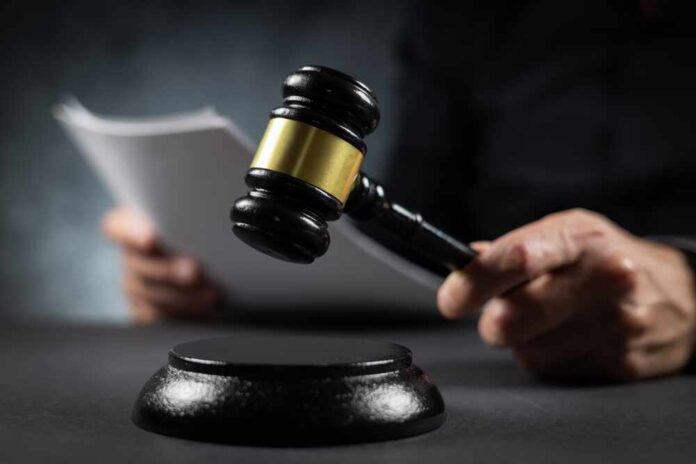
New York Supreme Court Judge Gregory Carro issued a split ruling in the state case against Luigi Mangione, the man accused of killing UnitedHealthcare chief executive Brian Thompson. Court reporting says the judge rejected the defense challenge to the initial warrantless backpack search in Pennsylvania, but allowed prosecutors to keep key evidence found later during a police-station inventory search [1][4]. That distinction matters because the first search was the most vulnerable constitutional point.
According to the hearing summaries, the later search at the police station was treated as a lawful inventory procedure rather than an unlawful evidentiary rummage [1][4]. Prosecutors had argued that the items inside the backpack, including a gun, suppressor, ammunition, and notebook, were central to their case [5]. The judge’s ruling means the state does not lose everything from the arrest, even though the first search drew constitutional scrutiny.
Why The Statements Still Matter
The court also drew a line on Mangione’s statements to police. Reporting says the judge found he was not yet in custody until about 9:47 a.m., which allowed comments made before that point to remain in evidence [2][4]. That is a critical legal detail because Miranda warnings only apply once custody begins. The defense argued officers questioned Mangione too early, but the ruling accepted that claim only in part.
After Miranda warnings were given shortly after 9:48 a.m., the court still allowed spontaneous remarks and routine pedigree or safety-related answers [1][4]. That leaves prosecutors with a narrower but still meaningful statement record. For readers who have watched law enforcement overstep in other high-profile cases, the ruling is a reminder that courts can punish improper police conduct without automatically throwing out every piece of evidence that follows.
What This Means For The State Case
Prosecutors still have a path forward, and they will likely lean hard on the surviving physical evidence and the statements that remain admissible. According to the coverage, the backpack items include a pistol, suppressor, and notebook that investigators say connect Mangione to Thompson’s shooting in Manhattan five days earlier [1]. The judge’s decision narrows the defense’s suppression victory, but it does not eliminate the prosecution’s core theory.
Judge Rules Partly In Favor Of Luigi Mangione At Key Pretrial Hearinghttps://t.co/92ugS0lovc
— Maridee Now (@marideenow) May 18, 2026
The broader lesson is familiar to anyone who has followed major criminal cases: constitutional challenges can trim the state’s evidence without ending the case. That is especially true when law enforcement secures a second, legally defensible search after an initial mistake. The hearing also shows why careful police procedure still matters. A bad first search can damage confidence in the case, but a lawful inventory search can keep the prosecution alive [1][4].
What Comes Next In Court
The reporting says the ruling only applies to the state case, while Mangione’s federal fight over evidence can still move on a separate track [6]. That means the fight over search and seizure is not over, and the defense can keep pressing constitutional arguments where the record allows it. For now, the state has avoided the worst outcome for prosecutors: losing the physical items most closely tied to the alleged crime [1][5].
The case remains a sharp example of why Americans should care about the Fourth Amendment, Miranda rules, and proper policing. When officers ignore the limits of lawful search, the courts must step in. When judges enforce those limits only partially, the result can be messy but still legally sound. In this case, Mangione’s defense scored real suppression relief, but prosecutors kept enough evidence to continue pushing toward trial [1][2][4].
Sources:
[1] YouTube – Luigi Mangione pretrial hearing: Defense seeks to suppress evidence
[2] Web – A Look Inside Luigi Mangione’s Pre-trial Suppression Hearings
[4] YouTube – Luigi Mangione returns to court for pretrial hearing
[5] Web – Luigi Mangione’s pretrial hearing concludes as judge says he’ll …
[6] Web – All the Discoveries from Luigi Mangione’s Pretrial State Hearing – …