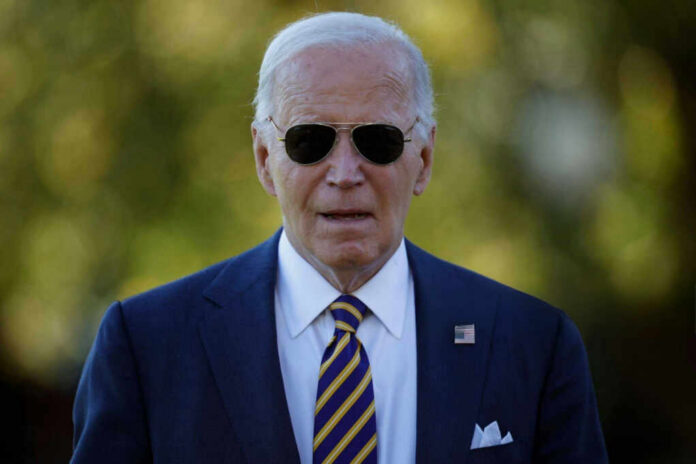
A Republican-led Congress is now digging into whether unelected aides quietly ran parts of the Biden White House—using an autopen to execute presidential power when Americans were told the president was fine.
Story Snapshot
- House Oversight staff alleges Biden’s inner circle concealed mental and physical decline while controlling access and decision-making.
- Sen. Ron Johnson is pressing the National Archives (NARA) for records tied to Biden’s condition and late-term autopen use as part of a Senate probe.
- Investigators are scrutinizing whether clemency actions and other documents were properly authorized, not merely mechanically signed.
- Reporting tied to Jake Tapper and Alex Thompson’s work describes a “protective” circle that limited exposure after Biden’s June 27, 2024 debate.
Why the “autopen presidency” claim matters
House Oversight Republicans framed their staff report around a core question: if the president was not consistently able to perform the job, who actually made the calls. Autopen signatures themselves are not new in government, but the controversy is about authorization and accountability—whether key actions were meaningfully directed by Biden or handled by staff during periods of alleged decline. That distinction drives the legal and political stakes now unfolding.
Congressional investigators point to a pattern they say became harder to dismiss after Biden’s June 27, 2024 debate performance, which intensified public scrutiny about cognitive fitness. The report’s narrative argues that access was managed tightly, appearances were controlled, and decision documentation was thin or routed through a small circle. Those claims are politically explosive because they imply the public was asked to trust a governing process it could not see.
What Senate investigators are seeking from NARA
Sen. Ron Johnson’s inquiry has focused on records held by NARA that could clarify who requested, approved, and executed key documents late in Biden’s term. According to reporting on the probe, investigators want communications and supporting paperwork tied to Biden’s health and to the decision trail behind major executive actions. That includes scrutiny of clemency paperwork, where critics argue the public deserves to know whether the president personally reviewed decisions or whether staff handled them.
One flashpoint is the late-term wave of pardons and commutations. The Oversight narrative emphasizes scale—thousands of clemency grants—and alleges that autopen use expanded to high-profile or politically sensitive recipients.
What journalists say about the “protective circle” around Biden
Separate from the congressional report, journalistic accounts have described a small group of aides and allies who limited Biden’s exposure to unscripted situations and restricted access by staff, donors, or even officials who would normally interact with a president. That reporting generally stops short of claiming Biden was entirely unaware, instead portraying a president who may have been partially aware of decline but determined to push forward. Even so, it reinforces investigators’ central concern: decision-making may have been more insulated than voters understood.
The bigger issue: trust, transparency, and constitutional guardrails
For conservatives—and for many Americans across parties—the most consequential question is not whether an autopen exists, but whether constitutional accountability was bypassed. If the government cannot clearly prove who authorized major executive actions, public trust erodes and future administrations inherit a dangerous precedent. Congress can tighten protocols, but the political system also has to relearn an old lesson: hiding a leader’s limitations may protect insiders in the short term while damaging legitimacy for years.
What's Biden Trying to Hide This Time? https://t.co/aLWRj0RXnY
— john slotkin (@john_slotkin) May 11, 2026
Democrats have historically argued that such investigations are partisan attacks, while Republicans argue the stakes are fundamental: voters deserve a real president, not a managed public image. At this stage, probes appear focused on records, process, and testimony rather than criminal charges, and the outcome will hinge on what documents show about authorization. With Republicans controlling Congress in 2026, the investigation is unlikely to fade—and it will keep pressuring institutions to choose between protecting reputations and proving transparency.
Sources:
Johnson demands NARA turn over records related to Biden’s mental decline amid Senate probe coverup