Beijing’s leader warned that mishandling Taiwan could trigger U.S.-China conflict, a stark reminder that America’s resolve is being tested in plain view.
Story Highlights
- Chinese readouts say Xi Jinping told President Trump the Taiwan issue could lead to conflict if mishandled [1][2][3].
- Chinese state media claimed “balanced and positive” trade progress while elevating Taiwan as the core concern [1][2].
- No official U.S. transcript confirms the private exchange, leaving Beijing’s account uncorroborated [1][2][3].
- Historical U.S. arms sales to Taiwan indicate policy continuity despite Chinese pressure [4].
Beijing’s Warning Puts Taiwan at the Center of Great-Power Tension
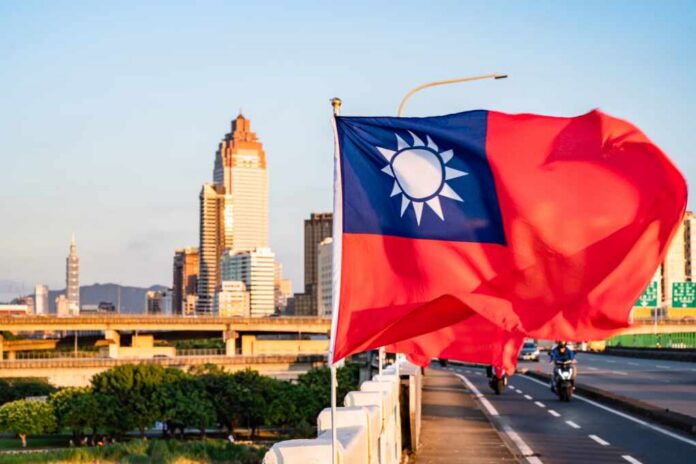
Chinese state media reported that Xi Jinping told President Donald Trump in Beijing that Taiwan is the most important issue in United States–China relations and that poor handling could lead to “conflict” and an “extremely dangerous” situation. The account came from Chinese outlets summarizing two hours of talks, asserting Xi raised bright red lines and pressed Washington to avoid what Beijing calls interference in its internal affairs. These reports framed Taiwan as the immovable object in an otherwise cordial, trade-focused summit [1][2][3].
Chinese coverage paired the warning with upbeat language about trade. Xinhua’s readout described negotiations between economic teams as “overall balanced and positive,” spotlighting commercial momentum while insisting Taiwan remained non-negotiable. That juxtaposition tracks with a longstanding Chinese tactic: claim progress on commerce, then condition the broader relationship on concessions over sovereignty claims. The message to Washington was unmistakable—deals are welcome, but American support for Taiwan will meet immediate resistance [1][2].
Competing Narratives and the Missing U.S. Readout
American-side confirmation is thin. Publicly, President Trump called the talks “great,” praised personal rapport with Xi, and did not engage reporters’ Taiwan questions during a brief photo opportunity. There is no formal United States readout substantiating the private warning or detailing the administration’s reply. That omission leaves Beijing’s version uncontested in the public sphere and lets foreign outlets recycle China’s framing without independent verification of tone, wording, or context from the U.S. side [1][2][3].
For readers tracking accountability and clarity, the documentation gap matters. Without a White House or United States Department of State transcript, outside audiences cannot tell whether Washington restated long-standing commitments under the Taiwan Relations Act, pressed Beijing on its expanding military posture, or linked any trade understandings to reduced coercion across the strait. The lack of an American paper trail gives China room to suggest momentum for its position while U.S. policy signals remain inferred rather than explicit [1][2][3].
Policy Reality Check: U.S. Support for Taiwan Has Endured
Available evidence indicates continuity more than concession. Reporting on United States–Taiwan security ties shows decades of arms sales, with a significant uptick during the first Trump term and continued planning thereafter. Analysts point to more than eighteen billion dollars in notified sales under earlier periods as a baseline for current expectations, underscoring that Beijing’s rhetoric rarely halts legally authorized defense cooperation. No post-summit action has surfaced showing a pause or reversal tied to Xi’s warning [4].
Taiwanese officials also rebut Beijing’s narrative bluntly. Taipei has labeled China’s military pressure the principal source of instability in the Taiwan Strait and the wider Indo-Pacific, arguing that deterrence and international support keep the peace. That stance mirrors the practical effect of American “strategic ambiguity”: maintain capability and will to resist coercion while avoiding steps that pre-judge political outcomes. Beijing’s warning, read alongside Taiwan’s response, highlights a familiar standoff rather than a U.S. retreat [4].
What Conservatives Should Watch Next: Transparency, Deterrence, and Resolve
Congressional oversight and transparency steps can close the information gap. Lawmakers can request official records of the Beijing talks, including contemporaneous notes, to clarify exactly what was said and how the administration responded. Follow-on indicators—such as new Defense Security Cooperation Agency notifications to Congress for Taiwan and visible United States Navy transits through international waters—will reveal whether Washington is reinforcing deterrence or deferring under pressure. Clear, public markers reduce the risk that Beijing’s state media defines the narrative by default [1][2][3][4].
Xi Jinping has put Taiwan back at the center of the Trump–Xi summit.
According to Reuters, Xi told Trump that the Taiwan issue remains the most important matter in China-U.S. relations, warning that mishandling it could push both powers toward direct confrontation.
The message…
— ECO3 (@sirEC03) May 14, 2026
For Americans concerned about constitutional limits and national strength, the stakes are straightforward. The United States cannot allow an authoritarian regime to dictate who America arms, who America defends, or how America speaks. Peace through strength requires transparent commitments, steady resourcing, and the will to say no when adversaries demand silence. Until there is verified evidence of a policy shift, the record points to continuity: supportive ties with Taiwan, skepticism of Chinese coercion, and vigilance against narratives designed to erode American resolve [4].
Sources:
[1] Web – China’s Xi hails trade progress in Trump summit, sends …
[2] Web – China’s Xi hails trade progress in Trump summit, sends …
[3] Web – Xi talks tough on Taiwan during Beijing meeting with Trump
[4] Web – Allies say Xi has no shot at convincing Trump to change …