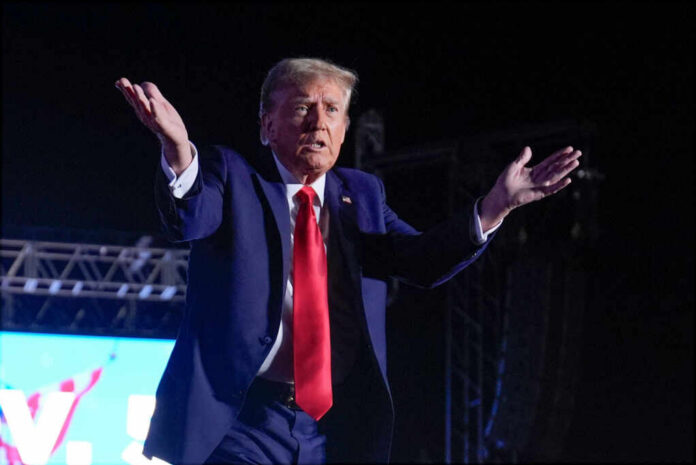
President Trump’s pledge to escort oil tankers through the Strait of Hormuz represents a critical showdown with Iran that could either restore global energy security or trigger an unprecedented escalation in a conflict already disrupting one-fifth of the world’s oil supply.
Story Snapshot
- Iran’s attacks on oil tankers have shut down the Strait of Hormuz, driving oil prices past $103 per barrel in the biggest supply disruption in history
- Trump vows U.S. Navy escorts “will happen soon,” but military readiness hinges on degrading Iranian missiles, drones, and mines through ongoing airstrikes
- The operation echoes Reagan-era convoy missions but faces modern threats including asymmetric warfare tactics that could target initial escort attempts
- Economists warn sustained closure threatens recession as American families face surging pump prices from Biden-era inflation compounded by this crisis
Iran’s Chokehold on Global Energy
The Strait of Hormuz, a 21-mile-wide passage between Iran and Oman, normally channels 20 percent of global oil trade. Since the U.S.-Israel war with Iran erupted in early March 2026, Iranian forces have attacked more than a dozen tankers and cargo vessels, effectively paralyzing shipping through this critical waterway. Brent crude hit $103.14 per barrel on March 14, with the International Energy Agency declaring this the largest oil supply disruption ever recorded. Only shadow fleet operators—tankers willing to risk Iranian fire—now account for half of transits, leaving legitimate commerce gridlocked and energy markets in chaos.
Military Preparations and Tactical Challenges
Trump’s escort commitment faces substantial operational hurdles that military planners are working to overcome. Energy Secretary Christopher Wright stated escorts would begin “relatively soon, but not now,” acknowledging the U.S. Navy must first degrade Iranian capabilities including anti-ship missiles, armed drones, naval mines, and fast-attack boats. CBS analyst Aaron MacLean outlined a two-phase strategy: intensive airstrikes to neutralize threats, followed by “mother duck” convoy formations with destroyers and air cover. The first convoys will be “sporty,” experts warn, as Iranian forces test American resolve with attacks designed to reveal defensive positions for later targeting.
Treasury Secretary Scott Bessent advocated launching escorts “as soon as militarily possible,” pushing for an international coalition to share the burden. France and European states are reportedly coordinating participation to protect their energy imports. Recent U.S. strikes on Kharg Island targeted military infrastructure while conditionally sparing oil facilities, signaling Trump’s strategy of pressure without destroying Iran’s economic lifeline. General Caine confirmed rehearsals with partner nations conducted in February 2026 prepared coalition forces for precisely this scenario, demonstrating foresight the Biden administration never prioritized.
Economic Fallout and American Families
The disruption hammers American consumers already reeling from years of inflationary policies under the previous administration. Vice President JD Vance addressed the economic consequences directly, emphasizing the need to stabilize oil markets before sustained high prices trigger broader recession. Tanker owners have halted voyages, unwilling to risk vessels worth hundreds of millions in a war zone, while global pump prices spike and supply chains buckle. Trump issued a 30-day waiver allowing Russian oil purchases to ease allied shortages, a pragmatic move critics note also funds Moscow’s Ukraine operations—underscoring the impossible choices created by inadequate energy policy and geopolitical weakness inherited from Biden-era mismanagement.
Historical Precedent and Strategic Stakes
This crisis evokes Operation Earnest Will from 1987-88, when the Reagan administration escorted Kuwaiti tankers during the Iran-Iraq War’s “Tanker War” phase. That mission succeeded despite Iranian mine strikes damaging the USS Samuel B. Roberts, proving American resolve could secure vital commerce under fire. Today’s challenge differs: Iran’s new supreme leader, Mojtaba Khamenei, vowed on March 12 to keep the Strait shut, backed by asymmetric warfare capabilities far beyond 1980s technology. Seth Jones of the Center for Strategic and International Studies stressed that mine-sweeping operations and rapid-reaction forces are essential to counter drones and small-boat swarms, threats that could deter tanker owners even with escorts present.
Trump Plots How to Escort Ships Through Strait of Hormuz as Oil Jumps Past $100 Per Barrel https://t.co/8MVSl4uZtV pic.twitter.com/tASsLCydo7
— Mediaite (@Mediaite) March 15, 2026
Trump’s March 14 declaration—”We’ll escort them right through”—and promise to hit Iranian targets “very hard over next week” signal determination to reopen this chokepoint. The stakes extend beyond oil prices: failure would embolden Tehran and demonstrate American weakness, while success restores confidence in U.S. security guarantees. Patriots recognize this mission defends not just energy markets but the principle that hostile regimes cannot strangle global commerce through terrorism and aggression, a lesson the weak multilateralism of past years failed to teach.
Sources:
Trump administration has vowed to escort oil tankers through Strait of Hormuz. How would that work?
Trump says US will soon escort ships through Strait of Hormuz as oil prices roil global economy