
President Trump used the United Nations stage to reject globalism and champion national sovereignty as the core of U.S. foreign policy.
Story Highlights
- Trump told world leaders the United States rejects globalism and embraces patriotism.
- Speeches stressed sovereignty, sanctions, and hard bargaining over multilateral rules.
- Analysts say this marked a steady shift toward transactional nationalism, not a one-off.
- The “spoils” framing is an inference; transcripts center on sovereignty and leverage.
What Trump Said At The United Nations
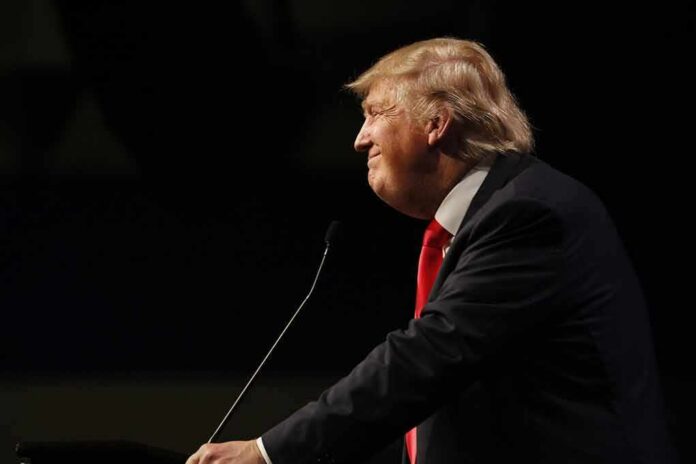
President Trump stood before the United Nations and said the United States would not yield its sovereignty to global bodies. He declared that America rejects globalism and embraces the doctrine of patriotism. He told the hall that strong, independent nations best secure peace and prosperity. These lines echoed across multiple addresses and press materials tied to his United Nations appearances. They formed a clear through-line in how he explained “America First” on a global stage.
Trump also praised national pride and warned rivals that the United States would defend its interests with strength. He tied that message to military spending, sanctions, and trade pressure. He argued that cooperation works best when nations put their own people first. He framed bodies like the United Nations as useful only when they respect sovereignty. He presented this not as isolation but as conditional teamwork on America’s terms.
How The Message Fits His Broader Foreign Policy
Reporters and scholars noted that Trump used words like “sovereign” and “sovereignty” again and again. They counted dozens of uses in one speech and linked them to a pattern. That pattern put national control over treaties, courts, and agencies that set global rules. It favored pressure tactics, bilateral deals, and explicit demands. Analysts called this a stable feature of his policy, not a passing theme or a single event.
Commentary from policy institutes and think tanks described the approach as transactional nationalism. They said Trump’s method replaced talk of shared norms with talk of leverage and outcomes. They also said it treated alliances as tools, not values, and pushed for measurable wins. Supporters saw clearer lines and stronger bargaining. Critics warned this weakens collective action in crises and trade.
Where The “Spoils” Idea Comes From
Some observers summarized Trump’s stance as “to the victor belong the spoils.” They drew that from his stress on winning, leverage, and resource security. The formal transcripts and official accounts, however, center on sovereignty and patriotism. They describe sanctions, pressure, and strength as the means to shape deals in America’s favor. The “spoils” idea is a reading of that hard-edged style rather than a direct quote in those core texts.
That reading reflects a wider worry on both left and right. Many Americans feel global rules often serve elites while average people lose ground. Trump’s speeches promised to flip that script by placing national interest first. Fans heard a vow to protect workers, borders, and energy. Opponents heard a license for unequal gains and short-term wins. The divide is sharp, but the record shows he set sovereignty as the test for cooperation.
Why This Still Matters In 2026
Today, President Trump and a Republican Congress still drive policy around this frame. Immigration, energy, and trade talks continue to reflect a sovereignty-first lens. That shapes how the United States applies sanctions, sets tariffs, and picks partners. It also shapes how agencies engage with global courts and climate bodies. Supporters see clearer aims and fewer concessions. Critics see frayed alliances and higher costs when countries retaliate.
Shared frustration with federal leadership also runs through this story. Voters across parties think Washington serves the well-connected more than families who work hard. Trump’s United Nations line on sovereignty taps into that anger at distant, unaccountable power. The risk, which analysts flag, is that a rules-light world can also reward the powerful. The open question is whether a sovereignty-first approach can deliver broad gains without eroding the order that kept conflicts in check.
Sources:
theamericanconservative.com, politico.com, millercenter.org, trumpwhitehouse.archives.gov