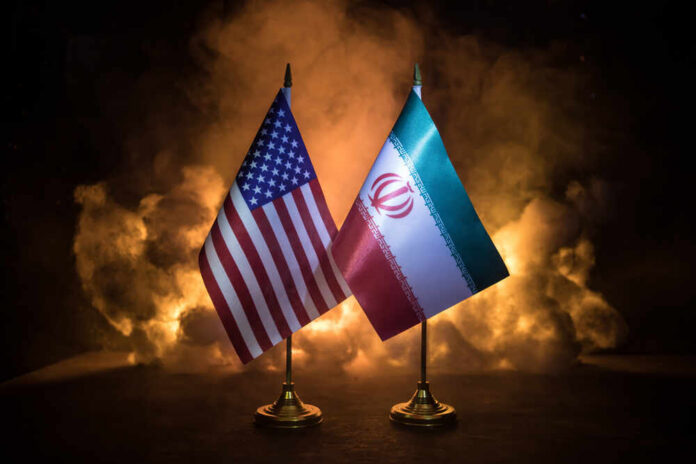
Another high-stakes Iran talk began with fanfare and slid into delay, feeding doubts that Washington’s promises match reality and that Tehran will stall until the clock runs out.
Story Snapshot
- Vice President JD Vance was tapped by President Donald Trump to lead U.S.-Iran talks in Switzerland but his trip was abruptly postponed [1].
- A new memorandum sets a 60-day window to tackle Iran’s uranium stockpile and reopen oil traffic through the Strait of Hormuz to prewar levels [1].
- Vance says the team aims to make progress on nuclear constraints and a Lebanon ceasefire once talks begin [2].
- Conflicting claims, last-minute schedule changes, and pressure from regional fighting cloud the start of negotiations [3][9].
What Changed Between the Signing and the Scrubbed Flight
White House officials said Vice President JD Vance, empowered by President Donald Trump to lead negotiations, was set to fly to Switzerland for technical talks when plans fell apart late Thursday [1]. The shift came just after leaders signed a memorandum to launch a 60-day push on Iran’s nuclear constraints and energy flow through the Strait of Hormuz [1]. Swiss officials had expected delegations to meet at the Bürgenstock resort, but the United States announced Vance would remain in Washington for now [4].
Earlier Thursday, Vance cautioned that timing was fluid and that the start could slip [1]. Al Jazeera reported the delay followed Israeli strikes in southern Lebanon, which raised questions about whether a ceasefire there is truly part of the framework the United States and Iran endorsed [3]. German outlet DW likewise reported opening talks were postponed amid disputes tied to fighting in Lebanon, even as some diplomats claimed Hezbollah and Israel had paused hostilities through mediation [9].
What the Memorandum Says—and What It Does Not
Associated Press reporting says the memorandum requires Iran’s highly enriched uranium to be diluted under international supervision and restates Iran’s prior promise not to procure or develop nuclear weapons [1]. Fox News coverage added that negotiators still must solve enforcement details, including how to handle the uranium and possible limits on missiles not spelled out in the memorandum [4]. The plan aims to restore oil traffic through Hormuz to prewar levels during the 60-day period, but key verification and sequencing steps remain unsettled [1][4].
Vance told reporters the goals include progress on nuclear issues and a Lebanon ceasefire once teams sit down, with Pakistan and Qatar acting as mediators [2]. That agenda addresses two core sources of instability: nuclear risk and regional escalation that threatens energy routes. But the gap between stated aims and operational steps is large. The memorandum leaves sanctions relief terms, missile parameters, and on-the-ground verification mechanisms to later technical talks that have not yet begun in earnest [4].
Why Both Sides Are Talking—and Why Neither Side Trusts the Other
Iranian media and international outlets have chronicled years of mixed messages, last-minute reversals, and leaks that outrun documents, a pattern seen again here as deadlines slip and public claims diverge [7]. The United States says Iran must give up highly enriched uranium and accept strict limits; Iran has pushed back while seeking relief and recognition of its leverage in the strait [23][25]. That mistrust shows up in the start-stop schedule and in disputes over whether Lebanon is covered by the ceasefire terms [3][9].
🔴Breaking:—U.S., Iran Begin Technical Talks in Switzerland as Pakistan Continues Mediation Efforts!
📍BÜRGENSTOCK, Switzerland — June 21, 2026 — Senior officials from the United States and Iran have launched a new round of technical-level negotiations in Switzerland aimed at… pic.twitter.com/eff4sEnZCk
— HewadPress (@HewadPress) June 21, 2026
Americans watching energy prices and global risks see the same movie: leaders promise order, then process bogs down. Conservatives worry about a weak deal that lets Tehran regroup. Liberals worry about secret side arrangements and endless conflict. Both sides see a Washington process that announces wins before details are real. Delays in Switzerland reinforce the fear that powerful players manage headlines while the public pays in higher costs and greater danger if Hormuz stays shaky [1][25].
What to Watch Next in Switzerland
First, watch whether technical teams actually convene at the resort with clear task lists on uranium disposition, missile parameters, and shipping security timelines. Second, track whether any verified steps occur inside the 60-day window, such as International Atomic Energy Agency-supervised dilution or documented increases in tanker throughput. Third, look for a real Lebanon de-escalation that holds beyond a news cycle; ongoing strikes will keep tripping the talks before they start [1][3][9].
Sources:
[1] Web – Vance In Switzerland As High-Stakes Iran Talks Get Underway: What We …
[2] Web – Vance’s push to get Iran talks started hits an early bump – AP News
[3] YouTube – JD Vance speaks before Iran peace talks in Switzerland
[4] Web – Iran war day 112: Vance defends Tehran ‘deal’ but Switzerland trips …
[7] Web – Getting things set up in the right way.” Vice President JD Vance says …
[9] Web – US-Iran talks expected to begin Friday in Switzerland were …
[23] Web – What Comes Next After Failed U.S.-Iran Talks, With Elliott Abrams
[25] YouTube – Where negotiations between the U.S. and Iran stand