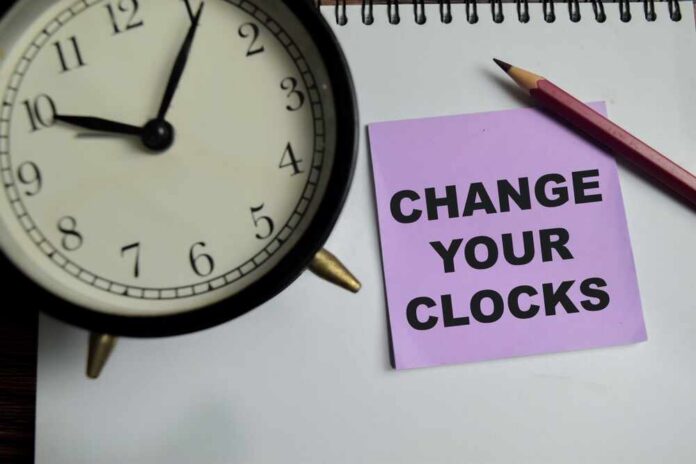
The House just voted 308–117 to end the twice-yearly clock change — but the bill still has to survive a Senate that has killed it before.
At a Glance
- The House passed the Sunshine Protection Act on July 14, 2026, with a strong bipartisan vote of 308–117, ending the twice-yearly clock change if signed into law.
- President Trump and the White House back the bill, citing fewer traffic deaths, lower crime, and hundreds of millions of dollars in savings.
- Critics warn that in northern states, winter sunrises would not come until after 9 a.m. — raising safety concerns for kids waiting for school buses in the dark.
- The Senate has not scheduled a vote, and a similar bill died there in 2022, leaving the bill’s future uncertain.
House Votes to Lock the Clocks
The House passed H.R. 139, the Sunshine Protection Act of 2025, on July 14, 2026, by a vote of 308 to 117. The bill was sponsored by Rep. Vern Buchanan, a Republican from Florida, and drew support from both parties. If it becomes law, Americans would stay on daylight saving time all year and never again “spring forward” or “fall back.” The White House issued a formal statement backing the bill and said President Trump would sign it.
Supporters say the constant clock switching costs the country money, disrupts sleep, and causes accidents. The White House cited studies claiming permanent daylight saving time would prevent hundreds of traffic deaths per year and cut robberies by seven percent. A poll found that 56% of adults prefer having extra daylight in the evening. The bill cleared the House Energy and Commerce Committee 48 to 1 before reaching the full House floor.
What It Would Mean for Your Morning
The biggest concern is what happens to winter mornings in northern states. Under permanent daylight saving time, the sun would not rise until 8:20 a.m. in New York, 9:05 a.m. in Detroit, and as late as 9:42 a.m. in North Dakota. For families with kids waiting at bus stops before dawn, that is not a small detail. Residents in some areas have already said plainly that dark morning commutes are “not a safe situation for kids.”
Medical experts have raised concerns too. Losing morning light can disrupt the body’s internal clock, and doctors warn that could lead to more depression, anxiety, and weight problems. Farmers say the change would hurt crop-harvesting schedules. Meteorologists oppose it because it could affect the timing of weather data collection. Senator Tom Cotton has argued that pushing winter sunrises to “an absurdly late hour” is a serious problem — and he is not alone in the Senate.
A Bill That Has Been Here Before
This is not the first time Congress has come close. In 2022, the Senate passed a version of the Sunshine Protection Act — but the House never voted on it, and the bill expired. Now the roles are reversed. The House has acted, but the Senate has not scheduled a vote. In 2026 alone, 16 states introduced their own legislation to lock the clocks, but states cannot legally adopt permanent daylight saving time without Congress acting first.
Congress just passed the Sunshine Protection Act (House 308-117) for permanent DST.
Now in Senate.
It allows state opt-outs, but the pattern continues:
👉🏼elite-aligned lobbies shape time itself.
We deserve time policy for people, not extended evenings for sales.
— WeThePeople (@WTPCongress) July 17, 2026
The pattern here is familiar to anyone who watches Washington closely. A popular idea builds momentum, clears one chamber, then stalls in the other while the details remain unresolved. The core disagreement — more evening light versus safer winter mornings — is a real tradeoff, not a made-up political fight. Southern states near the equator barely notice the difference. Northern states face a much harder choice. Until the Senate acts, nothing changes, and Americans will keep changing their clocks twice a year.
Sources:
govinfo.gov, billtrack50.com, fastdemocracy.com, cleveland.com, thehill.com, npr.org