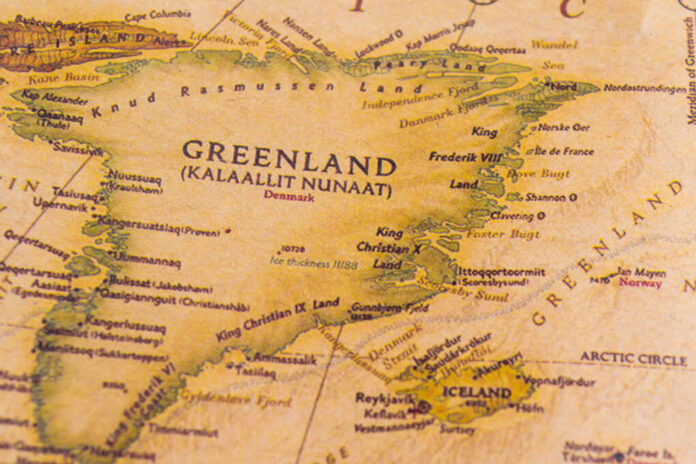
President Trump’s bold push to secure America’s Arctic foothold in Greenland revives a storied Cold War legacy, countering European meddling that threatens U.S. strategic dominance.
Story Highlights
- The 1951 Defense of Greenland Agreement granted U.S. military permanent access to key Arctic bases like Thule, ensuring NATO strength against Soviet threats.
- Denmark affirmed sovereignty while allowing secret U.S. nuclear operations, a pragmatic win for American deterrence.
- Thule Air Base remains vital today under U.S. Space Force, watching for missile threats amid renewed Russia tensions.
- Historical pacts like this bolster Trump’s 2026 vision for unchallenged U.S. presence, rejecting globalist encroachments.
Roots in World War II Urgency
On April 9, 1941, Danish Minister Henrik Kauffmann signed an agreement granting the U.S. near-unlimited base rights in Greenland amid Nazi threats to North Atlantic security. Greenland’s position, rich in cryolite minerals and essential for transatlantic routes, drew U.S. interest. Nazi weather stations posed direct risks. Post-WWII, the U.S. built 17 bases under these rights, including Narsarsuaq and Sondrestrom airfields. Denmark regained control but faced U.S. demands for permanence by October 1949.
The 1951 Agreement Solidifies U.S. Access
Signed April 27, 1951, and ratified June 1 by the Danish Parliament, the Defense of Greenland Agreement replaced the 1941 pact. It delimited U.S. use of “defense areas” for air bases, radar, and nuclear-capable operations at sites like Thule and Sondrestrom, without compensation to Denmark. Danish oversight came via a local commander-in-chief, limiting activities to NATO-approved zones. Secret annexes defined areas, embedding U.S. operations in NATO plans against Soviet expansion. This shifted temporary WWII access to Cold War permanence.
Nuclear Secrecy and Strategic Deterrence
In 1957-1958, Prime Minister H.C. Hansen’s secret document enabled U.S. nuclear weapons deployment and daily overflights in Greenland. Secretary of State John Foster Dulles thanked Danes for these arrangements. The 1968 exchange of notes aligned the pact with Denmark’s nuclear-free policy after a B-52 crash at Thule exposed risks. U.S. leverage from military aid secured Danish concessions, preserving formal sovereignty while advancing Arctic deterrence. Projects like nuclear-powered Camp Century signaled strength to the Soviets.
Watch:
Enduring Legacy for American Security
Thule Air Base continues U.S. Space Force missile warning operations in 2026, a direct outgrowth of the 1951 pact. Long-term impacts include a cemented U.S. Arctic foothold, despite environmental legacies from Camp Century like nuclear waste. Danish negotiators limited U.S. rights compared to 1941’s expanse, crediting sovereignty wins. Experts affirm the agreement’s strategic necessity, shaping Arctic militarization and U.S.-Russia dynamics. Greenlandic communities endured restricted access, but infrastructure boosted local capabilities. Under President Trump, this history underscores rejecting foreign interference for unchallenged U.S. defense primacy, aligning with conservative priorities of strong borders and national sovereignty.
Sources:
Columbia International Affairs on 1951 Agreement Diplomacy
Military Times: U.S. Military History in Greenland from WWII to Cold War
Army Times: U.S. Military History in Greenland from WWII to Cold War
Avalon Project: 1951 Defense of Greenland Agreement Text
National Security Archive: U.S. and Greenland Nuclear History