
Washington is weighing whether to shutter Mexican consulates across the U.S.—a rare diplomatic step that could reshape border security cooperation and everyday services for millions.
Story Snapshot
- The State Department has started a review of all 53 Mexican consulates operating across 25 U.S. states, and closures are possible.
- The review arrives after two CIA officers died in April during a counter-narcotics operation in northern Mexico, intensifying bilateral strains.
- U.S. authorities also announced drug trafficking and weapons charges against top Mexican political figures and filed extradition requests, including for Sinaloa Gov. Rubén Rocha Moya.
- Officials framed the effort as aligning foreign relations with President Trump’s “America First” agenda, but details and timelines remain limited.
What the State Department is reviewing—and why it matters
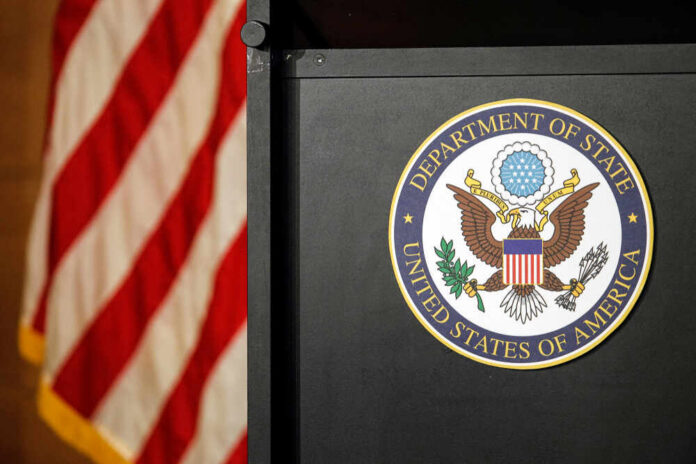
The U.S. State Department has initiated a comprehensive review of Mexico’s consular network in the United States, covering 53 consulates spread across 25 states. The review is unusual in scope because it targets a single country’s diplomatic footprint rather than a broad reorganization. As of May 7–8, consulates remain open, and no offices have been named for closure. The department has not publicly described the criteria or timetable for decisions.
Assistant Secretary of State for Global Public Affairs Dylan Johnson described the review as part of routine oversight meant to ensure foreign relations match President Trump’s “America First” agenda and “advance American interests.” That language matters politically because it frames a potentially disruptive action—closing consulates—as a policy-alignment exercise, not merely a response to a single incident. For conservatives frustrated with government drift and weak accountability abroad, the message signals a tougher posture and a willingness to use leverage.
The flashpoints driving the escalation with Mexico
Tensions spiked after two U.S. CIA officers died in April during a counter-narcotics operation in a remote mountainous region of northern Mexico. Reports describe a vehicle crash during an operation targeting suspected drug laboratories, with two Mexican investigators also killed. Public reporting does not establish full responsibility beyond the operational context, but the deaths added pressure for a visible U.S. response. In parallel, U.S. officials announced drug trafficking and weapons charges against senior Mexican political figures.
Extradition requests have compounded the strain, including a request involving Sinaloa Governor Rubén Rocha Moya. The combination—charges, extradition demands, and now a review that could close consulates—amounts to a significant diplomatic escalation. The available reporting does not include a detailed Mexican government response, and official U.S. statements have been careful not to spell out Mexico-specific grievances. Still, the sequencing suggests Washington is linking diplomatic access to measurable cooperation on cartel violence and corruption allegations.
Who could feel the impact first: families, businesses, and border communities
If any consulates close, the immediate effects are likely practical before they are geopolitical. Mexican consulates handle passport and documentation services, legal and emergency assistance to citizens, and coordination that supports travel and visa-related processes. Consolidating services into fewer locations could create delays for routine paperwork and increase travel burdens—especially for working-class families and older residents who rely on nearby offices. U.S. businesses that depend on cross-border travel and staffing could also face friction.
The trade and security stakes are bigger than a paperwork shuffle
Beyond services, the bigger question is whether this move strengthens or weakens U.S. leverage over cartel activity and border security outcomes. The U.S. and Mexico remain deeply interdependent through trade governed by the USMCA and through daily cross-border supply chains. Analysts cited in the research warn that reduced diplomatic infrastructure can complicate intelligence sharing and coordination for counter-narcotics operations—precisely the areas under strain. At the same time, a credible threat of closures may be intended as pressure to deliver results.
What to watch next as Washington weighs closures
The review is still in its early stages, and Secretary of State Marco Rubio is positioned as a central decision-maker on any closures. Key unknowns include whether the State Department focuses on security vulnerabilities, staffing concerns, reciprocity, or broader diplomatic signaling. The lack of a published timeline also matters for communities and employers trying to plan. For Americans skeptical that the federal government can carry out complex policy without creating collateral damage, this is a test: can Washington apply pressure abroad while protecting lawful commerce and everyday families at home?
Any decision will also be read through domestic politics. Republicans controlling Congress gives the administration more room to act, while Democrats are likely to argue that closures punish communities and inflame tensions. The strongest factual takeaway so far is narrow but important: the United States is signaling that diplomatic privileges are not automatic when security cooperation is failing. Whether that yields better outcomes against cartels—or simply more bureaucratic fallout—depends on what standards the review applies and what Mexico does next.
Sources:
State Dept. reviewing all Mexican consulates in U.S. as tensions grow
State Department reviewing all Mexican consulates in U.S. as tensions grow
US launches review of Mexican consulates