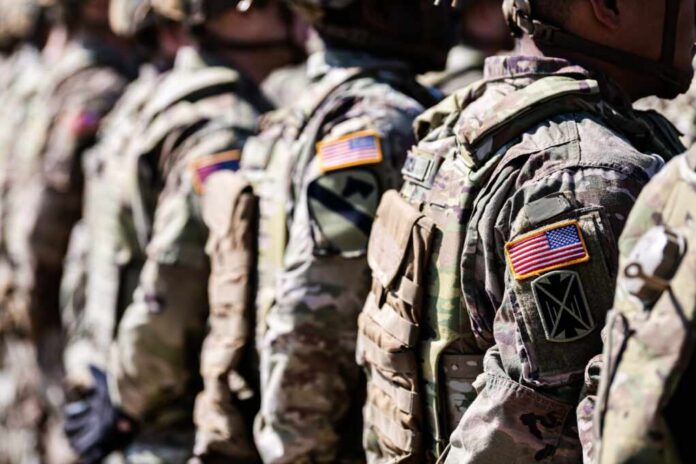
Trump’s “might” about moving 5,000 U.S. troops from Germany to Poland is less a throwaway line than a test of who, in NATO, is serious enough to earn America’s footprint.
Quick Take
- The Pentagon has announced a plan to withdraw 5,000 troops from Germany on a roughly one-year timeline, with the destination still unsettled.
- Trump publicly floated Poland as a possible new home, praising President Karol Nawrocki and emphasizing the U.S.-Poland relationship.
- Poland and Lithuania have actively lobbied to host the troops, turning basing into a competitive political and logistical bid.
- Germany’s deep, decades-built infrastructure—especially around major hubs like Vilseck—won’t be replicated quickly in Poland or Lithuania.
A “Maybe” That Moves Markets, Alliances, and Military Planning
Trump’s comment that he “might” move troops pulled from Germany to Poland landed like a starting gun because “might” is enough to force everyone to act. The Pentagon’s plan to withdraw 5,000 troops from Germany over about a year is real; where they go is not. That uncertainty pressures allies to bid, signals priorities to adversaries, and forces military planners to model disruption before a single convoy rolls.
Trump framed Poland as an eager, capable partner and praised Polish President Karol Nawrocki in personal terms, which matters because relationships shape negotiating leverage. A redeployment decision is not a single signature; it’s a chain of basing rights, construction, family support, training ranges, medical capacity, and host-nation funding. Conditional language also preserves Trump’s bargaining position with Berlin and other capitals that want the U.S. presence but resist paying more.
Germany’s Role Was Never Just About Germany
Germany has hosted the largest concentration of U.S. forces in Europe since World War II, roughly 35,000 to 40,000 personnel as of 2026. That posture built an ecosystem: depots, airlift access, hospitals, schools, training areas, and command networks that let the U.S. surge forces east quickly. Even when troops never approach a front line, Germany functions as NATO’s backbone—an operational warehouse and highway system in uniform.
The likely unit implicated in the withdrawal is tied to Vilseck’s Rose Barracks, home to the 2nd Cavalry Regiment. A formation like that is not a suitcase; it’s vehicles, maintenance bays, ammunition storage, and a rhythm of training that assumes mature facilities. Pulling 5,000 troops out does not simply “subtract” deterrence. During transition, readiness can dip, families face churn, and commanders lose time to logistics instead of warfighting.
Poland and Lithuania Are Lobbying Because Geography Is Destiny
Poland’s pitch is straightforward: the threat sits to the east, so deterrence should too. Since Russia’s 2014 seizure of Crimea and especially after the 2022 invasion of Ukraine, NATO shifted attention toward the eastern flank. Poland has become a critical logistics hub for support into Ukraine and for alliance planning across the region. Hosting additional U.S. troops would reinforce that role and elevate Poland’s influence inside NATO.
Lithuania’s bid, voiced publicly by President Gitanas Nauseda during a military exercise, reflects a smaller country’s cold arithmetic: proximity to Russia creates urgency, and visible U.S. presence lowers the risk of miscalculation. Lithuania also admits, in practice, that “ready to host” often means “ready to build.” Both Poland and Lithuania want the tripwire effect of U.S. troops—because Washington’s skin in the game clarifies consequences.
The Real Obstacle Is Concrete, Not Courage
Polish leaders have said they have the infrastructure to host the troops, but Germany’s advantage comes from decades of sunk cost. Barracks, motor pools, warehouses, secure communications, rail links, and medical facilities don’t appear on a press conference schedule. A one-year withdrawal window invites an awkward possibility: troops leave Germany before equivalent capacity exists farther east. That gap can create temporary brittleness, the opposite of deterrence.
Logistics also has a moral dimension that political leaders sometimes overlook. Moving a unit means moving spouses, kids, schools, and healthcare access, and those factors affect retention and performance. Conservative common sense says you don’t break what works without a plan that works better. If redeployment aims to strengthen NATO’s eastern shield, it must be executed in a way that preserves training time and maintenance cycles, not just headline value.
Burden-Sharing Politics: Reward the Payers, Pressure the Reluctant
Trump’s NATO skepticism has always centered on fairness: the U.S. should not indefinitely underwrite wealthy allies that underinvest in defense. From that perspective, moving forces toward countries that spend more and feel the threat more acutely follows a transactional logic many American voters understand. Germany, by contrast, often symbolizes slow-moving European consensus politics—big economy, complicated priorities, and frequent friction with Washington over trade and defense.
The Polish Prime Minister’s caution about not “poaching” troops from other allies hints at NATO’s internal politics. Poland wants more U.S. presence but also wants to avoid looking like it’s benefiting from Germany’s loss. That tension exposes a deeper question: does NATO behave like a single alliance or two clubs—frontline states begging for forces and legacy states assuming forces will stay? Trump’s “might” forces that question into daylight.
What Happens Next: Three Plausible Endgames
One outcome sends most or all of the 5,000 troops to Poland, formalizing the eastern shift and rewarding a willing host. Another splits forces across Poland and other eastern members, spreading deterrence but complicating command and support. A third keeps a meaningful portion in Germany while rotating more aggressively east—preserving the German hub while signaling resolve. Each choice carries tradeoffs in cost, speed, and alliance unity, with Russia watching the seams.
NEW: President Trump says that he “might” move U.S. troops from Germany to Poland.
“Well Poland would like that. We have a great relationship with Poland. I have a great relationship with the president"
“I endorsed him, and he won, and he came from way behind, and he won. He's… pic.twitter.com/OulNJsKH8x
— Fox News (@FoxNews) May 9, 2026
Trump’s statement stays deliberately non-final because leverage lives in ambiguity, but the strategic takeaway is clear: basing is no longer a museum of Cold War habits. If Germany wants to keep America’s footprint, it needs to look indispensable, not entitled. If Poland wants more troops, it must prove it can host them without degrading readiness. The next year will reveal whether NATO can modernize its posture without fracturing its politics.
Sources:
trump-poland-lithuania-troops-21600285
Trump pulls 5,000 troops from Germany amid Merz spat, floats sending them to Poland