
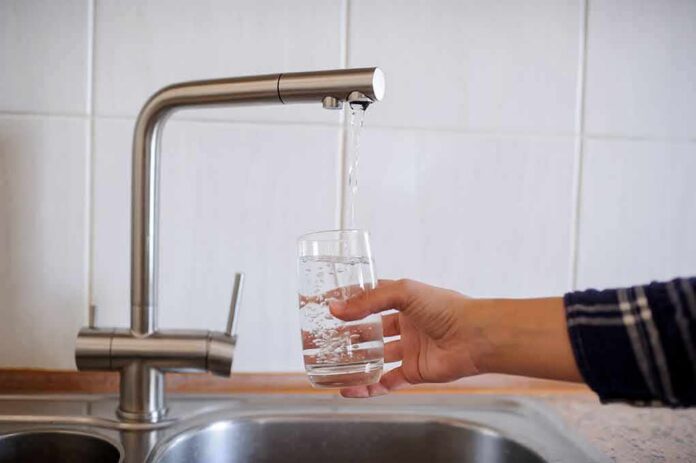
America’s water systems in at least two states have come under coordinated cyberattack, and investigators say the taps are still safe even as they race to find out who is trying to turn them off.
Story Snapshot
- Michigan reports cyber activity at nine water systems after Minnesota is hit at more than 30 plants.
- Federal agents say drinking water remains safe for now, but warn hackers are increasingly targeting water controls.
- U.S. agencies see signs that Iran-linked actors are focusing on American water and energy infrastructure.
- The incidents deepen public fears that critical systems are vulnerable while politicians and agencies point fingers.
Michigan and Minnesota report cyberattacks on local water systems
Michigan officials said nine local water systems reported cyber activity that matched a federal warning sent earlier in the week. The alert described attempts to tamper with the “operational technology” that runs pumps, valves, and other basic water equipment. Minnesota authorities had already reported a coordinated cyberattack against more than 30 community water systems over two days. State technology staff in Minnesota said the investigation was ongoing and they had not yet identified who was behind the attacks.
Michigan’s Department of Environment, Great Lakes, and Energy said local operators fixed the problems and kept water service running. The agency’s spokesperson stressed that all impacted systems “continued to operate safely” and there were no known changes that would threaten public health. Minnesota officials likewise reported no signs that water service was disrupted or contaminated for residents. Even so, the clustered timing of the attacks raised alarms for people already worried that government has not protected basic infrastructure.
Federal investigation and warnings about growing cyber threats
The Federal Bureau of Investigation (FBI) confirmed it is investigating the attacks in both states but has not publicly named a suspect. A spokesperson declined to say who the bureau believes is responsible, highlighting how hard it is to prove who is behind a keyboard. At the same time, the FBI and the U.S. government’s main civilian cyber defense agency have warned that hackers are increasingly targeting technology used to run water and wastewater systems. Officials urged water operators to take systems off the public internet wherever possible to limit remote access by criminals or foreign states.
In April, the Environmental Protection Agency, the FBI, the Cybersecurity and Infrastructure Security Agency, and the National Security Agency issued a joint advisory describing an “urgent and ongoing” Iranian-affiliated threat against American water systems. That alert said hackers linked to Iran were focusing on internet-facing devices that control water and sewer operations, as well as other critical infrastructure. Federal agencies encouraged local utilities to report suspicious activity quickly and to tighten basic protections like strong passwords and up-to-date software. These steps sound simple, yet past cases show many facilities still rely on old systems that are easy to break into.
Evidence pointing toward Iran and what officials are saying
U.S. intelligence officials now suspect that Iran was likely behind the coordinated attack on Minnesota’s water systems, though they stop short of calling it proven fact. Sources told reporters that the techniques used and the lack of a ransom demand looked similar to known Iranian cyber operations. A senior law enforcement official said the Minnesota attacks “bear all the hallmarks” of hackers backed by Iran, echoing an assessment shared on national television. At the same time, the FBI and state investigators keep stressing that attribution could change as more technical evidence is collected.
These incidents come as the Trump administration has already warned that Iranian-linked hackers are targeting U.S. drinking water, energy systems, and other services. The joint federal advisory and later media reports describe a pattern: hackers search for poorly protected control devices online, break in, and try to change settings that could disrupt service or damage equipment. So far, there is no indication that the recent attacks in Michigan or Minnesota actually changed chemical levels or water flow in ways that harmed people. But many Americans see a deeper problem: critical systems seem exposed while leaders argue over blame instead of fixing the holes.
Infrastructure vulnerabilities and rising public frustration
Past events show how dangerous these weaknesses can be if attackers push harder. In 2021, unidentified cyber actors gained access to the control system at a U.S. drinking water plant and tried to raise the amount of lye, a caustic chemical used in treatment. Federal investigators later said poor password security, outdated software, and remote desktop tools likely helped the attackers get in. Even there, the FBI could not prove the incident was a targeted intrusion, which highlights how the technical truth can stay cloudy even when the threat is real.
FBI investigates as Michigan joins Minnesota in reporting cyberattacks on its water systems https://t.co/GDSGFn6YvL
More than 30 water treatment facilities have been hit by cyber attacks and the numbers are growing.
Attacks on critical infrastructure can impact your community.— Emergency Management Group Inc. (@EmergMgt) August 1, 2026
For many people on both the right and the left, these stories feel like one more sign that basic government duties are slipping. Conservatives who already doubt “woke” priorities and huge federal spending see water systems left open to foreign hackers. Liberals who worry about inequality and neglected public services see the same failure to protect everyday citizens. Both groups see federal agencies issuing warnings year after year while critical systems still run on old, exposed technology. The cyberattacks on Michigan and Minnesota’s water systems tap into a shared fear: that the people in charge are more focused on politics than on keeping the country’s most essential services safe.
Sources:
washingtontimes.com, aol.com, nbcnews.com, facebook.com, epa.gov, reuters.com, cisa.gov, instagram.com, cybersecuritydive.com, youtube.com