When a school minibus crossed closed tracks in Belgium and was struck by a high‑speed train, it exposed the deadly gap between official narratives and the still‑hidden facts families deserve to see.
Story Snapshot
- Police and media say crossing lights flashed and barriers were down when the minibus entered the tracks [2]
- Four people, including two children, were killed; several others were injured [1]
- Authorities have not released full CCTV, signal logs, or a formal accident report [2]
- Design and visibility questions linger despite early focus on driver fault [2]
What investigators and broadcasters say happened at the crossing
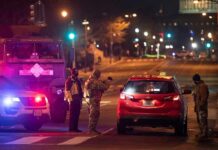
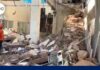
Belgian outlets and international broadcasters reported that the level crossing in Buggenhout was closed, with red warning lights active and the barrier down, when a school minibus entered the tracks and was struck by a passenger train, killing four and injuring others [1]. Sky News and other video reports cited police closed‑circuit footage indicating the vehicle proceeded despite the active protections [2]. Reporters added that the train driver saw the minibus but could not stop in time, consistent with the train’s still‑substantial speed on approach [2].
Coverage described the train as slowing yet traveling at a significant rate when impact occurred, a condition that makes last‑second stopping physically unlikely once a vehicle breaches a closed crossing [2]. Broadcasters also relayed that two of the dead were children, intensifying public grief and pressure for quick explanations [1]. These accounts collectively center a signal‑compliance narrative: the infrastructure worked, and the road vehicle entered anyway. That framing now anchors early public understanding of the crash [2].
What remains unknown and why it matters to families
Journalists also acknowledged unresolved facts: why the minibus was on the tracks, whether the driver attempted to stop, and whether visibility, geometry, or vehicle condition contributed [2]. No named, public accident report, prosecutorial reconstruction, or engineering dossier has been released to establish definitive fault based on primary evidence [2]. Without published CCTV, level‑crossing event logs, or locomotive recorder data, the public record relies on summarized statements rather than verifiable documentation, leaving room for alternate contributing factors alongside driver error [2].
Questions persist about crossing design and sightlines. Some video reporting referenced partial barrier coverage and approach angles that could affect what a driver sees while turning, an issue relevant to whether warnings were visible at the critical moment [2]. Investigators could clarify this by releasing crossing schematics, maintenance and test records, and time‑stamped telemetry showing the precise sequence of light activation, barrier position, horn use, and braking. Absent that, debate over causation risks hardening around early narratives before all facts are independently tested [2].
Broader implications for safety, transparency, and trust
Grade‑crossing tragedies often produce rapid, simplified explanations because rail operators can quickly report signal status, while fuller reconstructions take longer. Families, however, need more than assurances. Releasing the underlying video, signal telemetry, and train event data would let independent experts validate claims about compliance, timing, and sight distance. That transparency protects everyone: it can confirm driver fault if proven, or surface design and visibility corrections that prevent the next family from facing the same loss [2].
Four dead, including two children, and five injured after a train collided with a special needs school minibus at a closed level crossing in Buggenhout, Belgium. Investigation is underway.
Read more on our Website. #BelgiumTrainCrash #Buggenhout #BreakingNews pic.twitter.com/ImG2UavtyU
— The New York Editorial (@nyeditorialus) May 26, 2026
Americans watching from afar will see familiar patterns: institutions present an early, confident account, yet critical evidence remains sealed. In an era when many citizens on the left and right believe powerful systems protect themselves first, the remedy is straightforward—show the work. Belgium’s investigators can honor the victims by publishing the hard data, not just summaries. Doing so strengthens safety culture, deters speculation, and rebuilds trust that accountability flows from facts, not convenience [2].
Sources:
[1] YouTube – Four killed as minibus of children hit by train in Belgium
[2] Web – A train collides with a minibus of children in Belgium and 4 people …