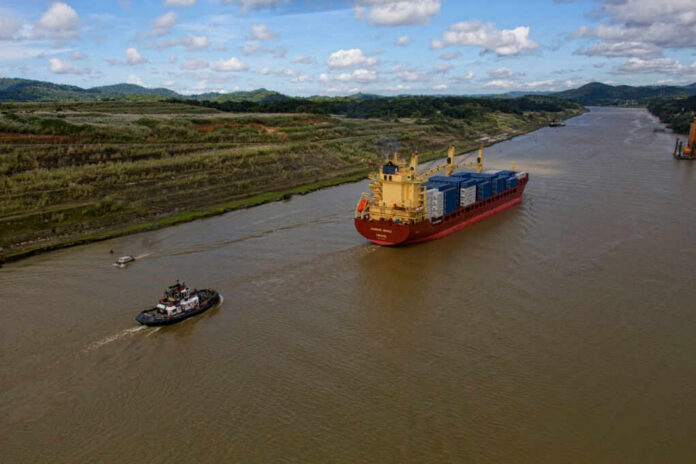
The Strait of Hormuz has become a global pressure point where a shipping bottleneck is already pushing fuel markets, food chains, and household costs toward a larger shock.
Quick Take
- Reporting says the Strait has remained effectively closed for weeks, with shortages already showing up in fuel supplies across Asia and Europe [1].
- Market analysts warn that each additional day of restricted transit raises the damage, not just for oil, but for diesel, kerosene, and other refined fuels [1][2].
- Some outlooks still assume reopening within weeks, showing how much uncertainty remains over whether the disruption becomes a summer-long crisis .
- The bigger issue is not only price spikes at the pump, but the fragility of a system that depends on one narrow maritime corridor [1][2].
Why This Chokepoint Matters Now
El País reported that the closure of the Strait of Hormuz has been “wreaking havoc across the globe for weeks,” with shortages already affecting kerosene, fuel oil, and diesel in Asia and Europe [1]. That matters because the strait is not just an oil route. It is a critical corridor for refined products and liquefied natural gas, so even a partial shutdown can ripple through transport, agriculture, and industrial supply chains long before tanks run empty.
Windward, quoted in OilPrice, said transit remains tightly controlled and that there has been no return to open commercial navigation after the ceasefire announcement [2]. The report also said movement through the waterway is being routed under the discretion of the Islamic Revolutionary Guard Corps rather than through standard commercial lanes [2]. That does not prove a permanent blockade, but it does show why shippers, insurers, and buyers are treating the route as unstable rather than restored.
Why Markets Fear A Summer-Long Disruption
Goldman Sachs warned, as relayed by El País, that each day the route stays closed becomes more damaging than the last [1]. The same report said storage pressure could force well closures and deepen long-term harm if crude cannot move out of the region [1]. In practical terms, that means the problem is no longer limited to headline oil prices. It is becoming a logistics and inventory problem that can take months to unwind even after the route reopens.
That time lag is why a late-summer scenario keeps appearing in coverage. The El País report said Europe’s gas storage levels are already low and that summer is the peak consumption period for road fuel [1]. OilPrice added that even if the strait opened immediately, recovery could take months because shipping, storage, and insurance conditions would still need to normalize [2]. For families, that can mean delayed relief even if the headlines improve first.
What The Competing Forecasts Actually Say
The strongest counterpoint comes from the U.S. Energy Information Administration (EIA), which assumes the strait remains effectively closed only until late May, with traffic picking up in June . That is a meaningful difference from a late-summer shutdown thesis. It shows that not every official or market model expects a prolonged closure. But it also underscores how little public certainty exists, because the underlying access conditions remain fluid and hard to verify in real time.
The @FAO warning today: the closure of the Strait of Hormuz is going to have an impact on food prices: first through energy and fertiliser, then seeds, then lower farm yields. And then it will reach consumers. https://t.co/4U2WQgd8Bi
— Klaas Johan Osinga (@KJOsinga) May 20, 2026
The gap between these forecasts reflects the deeper issue: ordinary people pay for elite uncertainty. One set of analysts sees a near-term reopening; another warns that every additional week magnifies the damage [1][2]. Until there is clear evidence of normal transit, the public is left absorbing higher fuel risk, higher shipping costs, and the possibility of broader shortages. That is the kind of fragility many Americans, across party lines, recognize as a failure of basic governing and strategic planning.
Sources:
[1] Web – Why no one can afford for the Strait of Hormuz to still be closed by …
[2] YouTube – Why the Strait of Hormuz closure could trigger a global food crisis