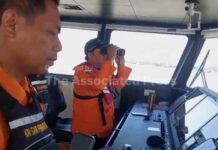
A 22-hour standoff between Chinese and Taiwanese coast guard ships near a tiny, disputed island shows how easily a far‑off maritime dispute can expose just how distracted and overstretched America’s leaders have become.
Story Snapshot
- Taiwan says a Chinese coast guard ship disabled its identification system and approached within about one nautical mile near Taiwan-run Pratas Island before finally leaving.
- The standoff lasted roughly 22 hours and took place in what Taiwan calls “restricted waters,” underscoring a live sovereignty dispute rather than routine transit.[1]
- The encounter fits a broader pattern of “gray zone” pressure, where Beijing uses coast guard vessels to probe defenses without triggering open war.[1]
- Americans on both left and right now face the hard question: can a distracted, debt‑ridden Washington still deter crises in Asia while domestic problems mount?
A Long Standoff Around a Small but Strategic Island
Taiwan’s coast guard reports that the incident began on a Saturday when a Chinese coast guard vessel moved into waters around Pratas Island, a remote atoll that Taiwan administers but Beijing also claims.[1] Taiwan describes the area as “restricted waters,” suggesting the ship was inside a zone Taipei treats as off-limits to foreign state vessels. The encounter reportedly lasted about 22 hours, with the two ships coming within roughly one nautical mile of each other before the Chinese vessel finally departed.[1]
Taiwanese officials say the Chinese ship at one point disabled its identification system, the electronic signal commercial and government vessels normally use so others can track them.[1] Taiwan continued to monitor the ship and responded by dispatching its own coast guard cutter, which broadcast warnings over radio and loudspeaker, ordering the Chinese vessel to leave.[1] According to Taiwan’s account, the crews then argued over sovereignty on the radio, each side insisting the surrounding waters belonged to them before the Chinese vessel turned away.[1]
Competing Narratives and Limited Hard Proof
Public information about the standoff still comes almost entirely from media reports summarizing Taiwan’s version of events, not from full primary documents. The ship has not been publicly identified by name, call sign, or registry, and no radar plots, identification logs, or full radio transcripts have been released in the open record.[1][2] Those gaps make it hard for outsiders to confirm whether the Chinese vessel crossed a clearly defined territorial boundary or remained just outside, where Beijing would argue its patrol was lawful.[1][2]
The lack of detailed charts and coordinates also leaves the legal picture blurry, which both sides may find useful.[1][2] Taiwan can emphasize that the encounter happened in its “restricted waters,” reinforcing its claim that this was a sovereignty violation, while China can frame the same presence as routine patrol in contested seas. No Chinese official record or explanation has surfaced in the provided material, leaving important questions unanswered about why the identification system was turned off and what precise orders the vessel was following.[1][2]
Gray-Zone Pressure and America’s Shrinking Bandwidth
Security analysts describe incidents like this as “gray zone” tactics: pressure below the threshold of war, using coast guard and other quasi-civilian forces to slowly shift control without firing shots.[1] Similar patterns have appeared in other regional disputes, where Chinese ships linger, test responses, and force rivals to either accept their presence or risk escalation by pushing back. Each encounter may look minor by itself, but over time these small moves can change facts on the water and normalize Chinese presence.
CHINESE COAST GUARD VESSEL DEPARTS TENSE STANDOFF NEAR TAIWANESE PRATAS ISLANDS
• A Chinese Coast Guard vessel withdrew from waters near the Taiwan-controlled Pratas Islands after an intense 33-hour maritime standoff.
• The maritime confrontation involved sharp radio…— Augustcool Research (@augustcool) May 25, 2026
For Americans already angry at a federal government buried in debt, struggling with border chaos, and distracted by overseas commitments, this standoff raises a deeper concern. Washington has promised to help Taiwan deter coercion, yet the United States is also straining to sustain weapons supplies and military operations in other theaters, from the Middle East to Eastern Europe.[1] Citizens across the spectrum see a pattern: while elites play global chess, basic problems at home and abroad are both going unmanaged.
Why This Matters to Voters Who No Longer Trust Washington
Conservatives look at the Pratas incident and see another test of resolve after decades of globalist policies, military overstretch, and underinvestment in core defense manufacturing. Liberals see a different but related failure: a political class that can always find resources for far‑off confrontations yet cannot address widening inequality or protect social programs at home. Both sides increasingly doubt that the same leadership presiding over spiraling debt and broken promises can manage a delicate standoff with a rising superpower.
The Pratas encounter is a reminder that geopolitical drift has real costs. When Washington is distracted, indebted, and internally divided, adversaries gain more room to probe and push. Every ambiguous standoff in contested waters forces the United States to choose between risking escalation or watching its credibility erode. For citizens who already suspect the “deep state” is more interested in preserving its own power than defending the country’s founding principles, that feels less like strategy and more like slow-motion abdication.
Sources:
[1] YouTube – Chinese Coast Guard Vessel Standoff Near Pratas Island
[2] Web – Chinese Coast Guard Vessel Standoff Near Pratas Island – video …