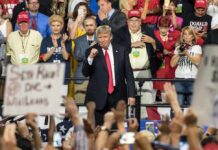
Republicans broke new ground with a first-ever midterm convention in Dallas that drew packed crowds and wall-to-wall coverage across two high-energy nights.
Story Highlights
- President Trump and Vice President JD Vance headlined a two-night Republican midterm convention in Dallas.
- The American Airlines Center hosted a large, public event with free tickets and strong in-person turnout.
- Speakers urged voter mobilization to flip and defend key seats in Congress this November.
- Major outlets carried live coverage and analysis, signaling broad national attention.
Historic Dallas Gathering Sets The Stage For November
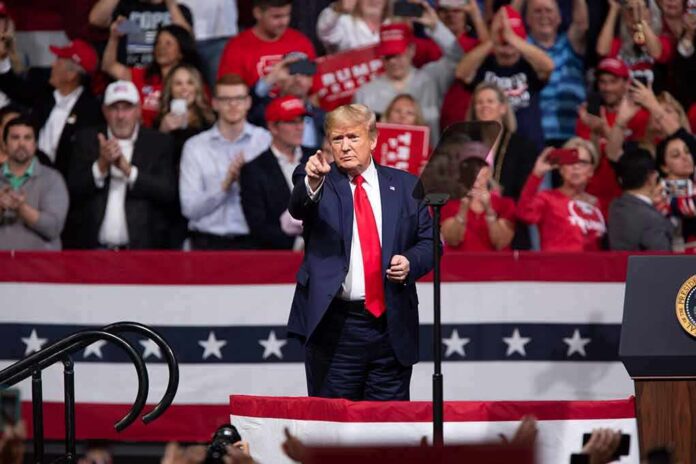
Republicans convened in Dallas on September 9 and 10 for the party’s first national midterm convention, a new format designed to fire up voters before November. President Trump announced the plan in July and set Dallas as the site, turning the American Airlines Center into a primetime stage for a two-night show of unity and focus. Top Texas leaders joined the program, and the roster highlighted races that will decide control of Congress this fall.
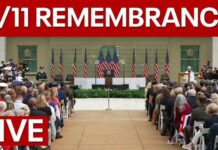
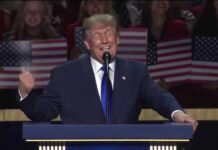
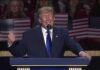
President Trump and Vice President JD Vance served as headliners, anchoring long program blocks filled with candidates and surrogates. Coverage from national outlets and public broadcasters streamed the proceedings, giving viewers access to speeches, interviews, and floor moments across both nights. The Republican National Committee framed the event as a turnout engine, asking voters to treat the midterms like a presidential ballot and show up in force in every district and state.
Venue, Attendance, And Access Point To Scale
The American Airlines Center, home to major sports and concerts, hosted the convention, underscoring the scale of production with an arena-level setup and full run-of-show elements. Reports described strong turnout, with expectations topping twenty thousand and some accounts placing total attendance higher across both nights. Organizers opened the doors to the general public and offered free tickets, a rare move for a national-scale political convention and one that broadened participation.
Broadcast and streaming partners carried extensive live coverage, including continuous feeds of the speeches and stage programming. A detailed agenda listed more than one hundred items and speakers, confirming a large, structured program rather than a simple rally. That footprint supported the Republican National Committee’s goal: turn media attention into voter action, with direct calls for early voting, registration checks, and neighbor-to-neighbor outreach heading into November.
Message: Mobilize Voters And Sharpen The Contrast
Trump and Vance focused on clear contrasts with Democrats on the border, the economy, crime, and foreign policy, themes that have animated conservative voters this cycle. Speakers urged supporters to push back against failed big-city policies, school chaos, and soft-on-crime approaches that hurt working families. The message linked national frustration with kitchen-table issues like prices and energy, while spotlighting states on the map where a few thousand votes could tip a Senate or House race.
Texas officials, including Attorney General Ken Paxton and Governor Greg Abbott, reinforced border security and law-and-order priorities that conservatives see as nonnegotiable. Their presence tied national stakes to a state that has faced the daily costs of illegal crossings and cartel crime. The convention framed those issues as reasons to expand a pro-security majority in Congress, back law enforcement, and defend constitutional rights that many believe are under attack from the left.
Media Reach And What “Ratings” Mean In 2026
Major outlets, including the Public Broadcasting Service, carried the convention live and provided broad coverage, signaling strong national interest in the new format. Modern “ratings” blend television, livestreams, clips, and social shares, which makes exact comparisons tricky without a single, audited report. In normal media practice, reach counts unique viewers while impressions count total displays, often including repeats; that difference explains why big totals can reflect many touchpoints across platforms.
While coverage documented heavy attention and large in-person crowds, detailed platform-by-platform view counts were not centrally reported in the sources cited here. What is clear is the event’s purpose and effect: put voters’ eyes on the midterms, keep issues like border security and inflation front and center, and drive turnout that can flip close races. By that measure, the Dallas convention delivered visibility, message discipline, and a visible ground game for November.
Sources:
thegatewaypundit.com, aljazeera.com, wsj.com, pbs.org, ap.org, cbsnews.com, usatoday.com