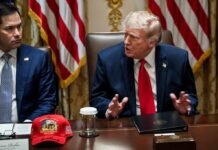

President Trump headlined both nights of the first-ever Republican midterm convention in Dallas, signaling a two-year push to protect the party’s governing agenda.
Story Highlights
- Republicans staged a first-of-its-kind midterm convention to fire up voters before November.
- President Trump spoke on both nights, with Vice President JD Vance also featured.
- Party leaders framed the event around keeping Republican control in Washington, DC.
- Wire services described the gathering as centered on Trump and voter mobilization.
Trump Takes Center Stage In Two-Night Dallas Convention
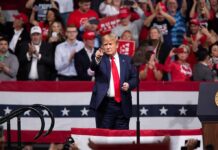
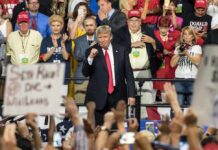
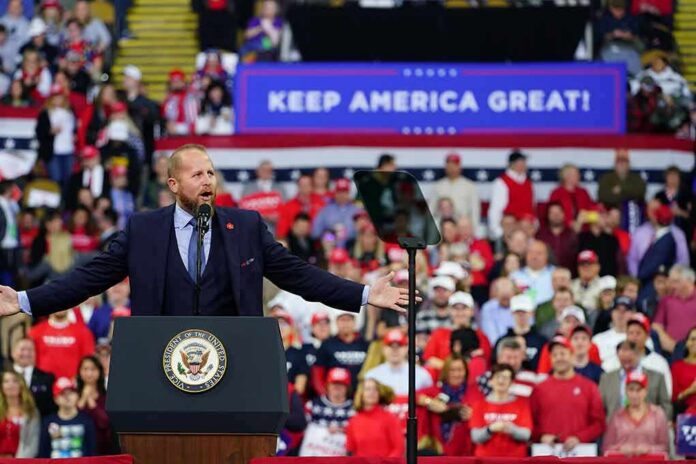
Republican leaders gathered at the American Airlines Center in Dallas on September 9-10 for the party’s first midterm convention. President Trump was scheduled as the featured speaker on both nights, reflecting the event’s clear focus on turnout and party unity ahead of November. Outlets detailed the plan days in advance, placing Trump in the opening keynote slot and the closing role, with Vice President JD Vance appearing in between. The program signaled a sustained, national push through the next two years.
Republicans described the Dallas convention as a mobilization event designed to draw eyes and energy at a key moment in the cycle. Reporting said the party aimed to engage voters and protect its governing majority in Washington, DC. Coverage emphasized that Trump would “take center stage” across both nights, underscoring his role in setting the message and momentum for the midterms and beyond. This format placed one figure at the core of the party’s turnout strategy.
Republicans Frame The Midterms Around Action And Continuity
Reports from wire services and major outlets called the gathering unusual and heavily focused on President Trump’s agenda. The Republican National Committee’s schedule, echoed by local and national media, set an arc that placed Trump’s remarks as the bookends of the two-night program. That structure matched the party’s stated goal to keep voters engaged through Election Day and into the next phase of governance after November. The approach aimed to lock in attention and sustain it through coordinated messaging.
Vice President JD Vance, senior administration officials, Republican candidates, and party leaders joined the Dallas lineup. Their presence showed an organized, coordinated event rather than a simple rally. Outlets identified participants and described how the program was built to showcase policy themes and campaign support. The schedule placed Vance in a prominent slot between Trump’s appearances, reinforcing continuity from the White House to the wider party ticket. This sequencing helped anchor the message across both nights.
What The Convention Sought To Achieve For Voters
Republican messaging tied the convention to concrete goals: boost attention, mobilize base voters, and frame a clear path to protect the party’s agenda. Political research has long found that party events can produce short-lived bumps in attention and engagement. Those effects matter most when a party delivers a strong, unified message across platforms. The Dallas program aimed to achieve exactly that through repetition, clear speakers, and a national spotlight on Trump’s leadership. Published reporting aligned with that strategy.
One limitation remains: outlets provided schedules, framing, and real-time coverage, but not a full, official transcript of every line delivered on stage. That gap does not change the established facts of Trump’s two-night role and the convention’s mobilization purpose, which are well supported across multiple reports. For voters watching pocketbooks, borders, and safety, the message from Dallas was straightforward: keep Republican control to continue the current policy direction into the next two years.
Sources:
nypost.com, reuters.com, fox4news.com, nbcnews.com, usatoday.com, washingtonexaminer.com, cnn.com