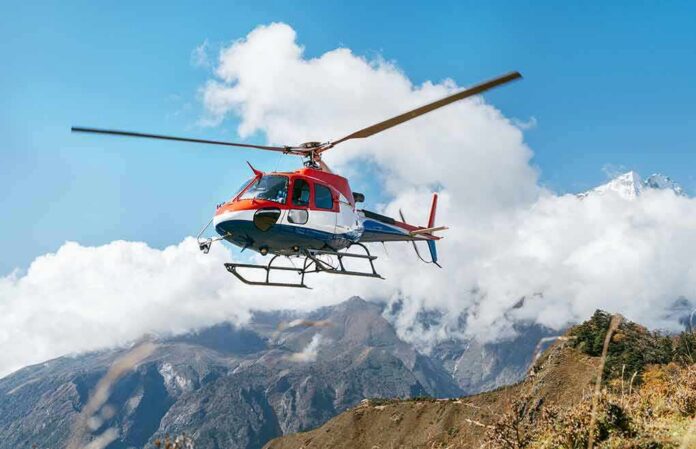
California air crews pulled off a cliffside hoist at Courtright Reservoir, lifting a fallen climber to safety from the sheer granite of Power Dome.
Story Snapshot
- California Highway Patrol air crews hoisted a fallen climber off Power Dome and moved the patient to an ambulance.
- The Helicopter-70 crew launched from Paso Robles and picked up a Fresno County Sheriff’s Office rescue technician en route.
- Officials described the site as a remote granite wall at Courtright Reservoir in the Sierra National Forest east of Shaver Lake.
- Authorities did not release the climber’s identity or injury details, but confirmed a successful rescue and transfer for treatment.
Rescue Launch And Response Route
California Highway Patrol Coastal Division Air Operations received a midday call about a fallen climber at Power Dome. Helicopter-70 departed from Paso Robles Airport with a two-person crew and flew to the Sierra. The crew stopped to pick up a Fresno County Sheriff’s Office rescue technician for the hoist. The combined team then headed to Courtright Reservoir, a remote high-country area where ground access can be slow and steep.
Responders found the climber on a granite face above the reservoir. The helicopter moved in close to the cliff to allow a safe hoist. The crew lowered the technician to secure the patient in a harness. The climber was raised into the aircraft and flown to a nearby location. An ambulance took over care and transported the patient for further medical treatment, completing the air rescue phase.
Terrain, Risk, And Why Hoists Matter
Power Dome rises as a steep granite wall in the Sierra National Forest east of Shaver Lake. Terrain like this blocks vehicles and stretches ground rescue timelines. Hoist operations let air crews insert a rescuer and lift a patient from places with no landing zone. Agencies train for these missions because they are high risk and low frequency. When weather, altitude, or rockfall threaten, small errors can grow fast, so standard checklists and roles matter.
Documented mountain rescues across California show the same pattern. Air units from the California Highway Patrol often work with county teams and national park rescuers. In some cases, winds or heat force delays or cause a switch to ground extraction. In others, a hoist shortens the rescue by hours and reduces risk to ground teams moving on exposed slopes. This mission at Courtright fits that established playbook for cliffside extractions.
What Officials Confirmed And What They Withheld
Officials described the mission as a successful rescue, not a recovery. They confirmed the hoist, the transfer to an ambulance, and the general location. They did not release the climber’s name or the exact injuries. That is common in active medical cases in remote rescues. Some reports used slightly different dates when recounting the timeline. The core sequence remained the same across accounts based on the agency’s summary.
Rescue teams often limit personal details to protect patient privacy. They also focus public statements on safety steps and outcomes. In this case, the core facts highlight training, teamwork, and a quick exit from hazardous terrain. The image of a helicopter inches from a cliff can draw attention. The underlying story is the careful method that lets crews make that hover, lower a rescuer, and leave the scene without adding new injuries.
Why This Matters Beyond One Climb
Mountain trips are booming, and more people enter serious terrain with limited room for error. When falls happen on steep faces, minutes matter. Air hoists save time and reduce exposure for everyone involved. They also show how local sheriffs, state air units, and park or forest teams join up fast. That coordination can be the line between a rescue and a recovery. It also reflects taxpayer investment in gear, training, and shared radio plans.
For readers who feel the system often fails, this is one corner where it still works. A call came in. Agencies teamed up. A patient left a cliff alive. That is not luck. It is a chain of skilled people, from dispatchers to pilots to rescue techs, doing quiet work the public rarely sees. The lesson for hikers and climbers is simple: plan well, know your limits, and carry a way to call for help when the trail or the wall turns against you.
Sources:
nypost.com, fresnobee.com, us.headtopics.com, activenorcal.com, abc30.com, uk.news.yahoo.com