A declared Houthi “maritime embargo” against Saudi shipping has already pushed tankers to turn away from the Red Sea, threatening tighter oil supplies and higher fuel costs if it persists.
Story Snapshot
- Houthis announced an immediate embargo on Saudi-bound or Saudi-linked vessels.
- Ship-tracking shows oil tankers altering course near Yemen after the warning.
- Red Sea traffic had not fully recovered even before this latest threat.
- Past Houthi attacks show a pattern of phased threats that rapidly disrupt routes.
What the Houthis Declared and Why It Matters
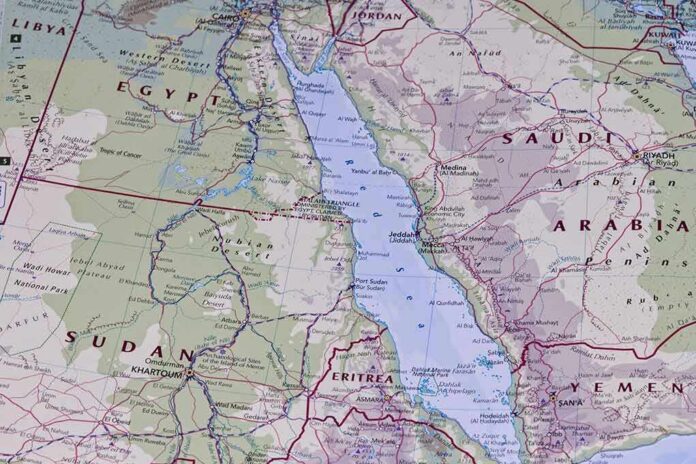
On July 20, Yemen’s Houthi movement announced a “maritime embargo” against Saudi Arabia and warned shipowners not to call at Saudi ports. The group framed the step as retaliation for Saudi actions and said it would start at once. This matters because the Houthis operate along the Bab el-Mandeb Strait, a choke point that links the Red Sea to the Indian Ocean. Any credible threat in this corridor can force ships to reroute and raise costs quickly.
After the announcement, ship-tracking data showed tankers changing course near Yemen. BBC reporting counted at least seven oil tankers making abrupt route changes following the warning, reflecting real-time risk avoidance by operators. Rerouting around Africa adds time, fuel, and insurance costs. Even cautious diversions can tighten supply chains for crude and refined fuels, raising the chance that drivers feel price pressure at the pump if the disruption holds.
What Shipping Patterns Already Show
Industry trackers and maritime outlets report that Red Sea traffic has struggled to return to normal levels since the wider Houthi campaign began. Lloyd’s List found no full recovery in transits months after earlier escalations. A European naval commander said traffic had improved when targets narrowed, but still lagged pre-crisis volumes. This baseline weakness means the new embargo threat lands on an already stressed route, making further slowdowns more likely and more costly.
Since late 2023, the Houthis have staged repeated attacks and threats that arrive in phases and spur quick detours by commercial ships. Analysts document over one hundred attacks and repeated shipping restrictions during this period. This track record gives shipowners a strong reason to act early when new threats arise. Early diversions often appear before hard data on freight rates or fuel prices, creating a lag between risk signals at sea and wallet-level impacts on land.
Energy Market Stakes for Households
Oil and fuel prices react to risk, not just to actual supply loss. When tankers avoid the Red Sea, voyages get longer and insurance can jump. Those costs can pass through to wholesale prices, then to gas stations. If the embargo threat endures or spreads to more ships, the odds rise that drivers in the United States see higher prices within weeks. If the threat fades, some routes may normalize, but prior disruptions show recovery can be halting and incomplete.
🔴 HOUTHI ESCALATION TARGETS SAUDI OIL TANKERS IN RED SEA 🇸🇦🇾🇪
Houthi forces deployed MISSILES and DRONES against two SAUDI tankers. This maritime embargo signals a dangerous shift in regional stability near the RED SEA shipping lanes. ⚓💥#Houthi #OSINT
— OSN – Observer Security Network (@OSN_Reports) July 22, 2026
Both conservatives and liberals worry that global shocks keep hitting family budgets while leaders argue. This episode feeds that concern. A non-state armed group can shake a vital trade lane, and the response often looks slow and reactive. People see higher costs and delayed goods while officials trade statements. The pattern reinforces a broader fear that complex security risks keep outrunning the government’s capacity to protect everyday economic life.
What We Know, What We Do Not
Clear facts: the Houthis announced a Saudi-focused embargo; ship-tracking shows tankers altering course; Red Sea traffic remains below normal; and past Houthi actions have disrupted shipping at scale. Unclear items: how strictly the Houthis will enforce the embargo, how long diversions will last, and the exact size and timing of any pump-price increase. Those answers depend on enforcement, maritime security responses, and how quickly shippers regain confidence.
Sources:
news.az, bbc.com, documents1.worldbank.org, reuters.com, atlasinstitute.org, aei.org