After another bloody weekend in Chicago, President Trump says he could “fix it in a month” with troops, while Illinois leaders call that promise illegal, dangerous, and part of a deeper power grab.
Story Snapshot
- Trump is urging Illinois Governor JB Pritzker to request federal help after a wave of shootings in Chicago, claiming federal forces could make the city safe in about a month.[1][10]
- Pritzker and Chicago leaders reject the idea of National Guard troops on city streets, calling it “unconstitutional,” “un-American,” and a “military-style invasion.”[5][8]
- The White House has already signed an order to federalize 300 Illinois National Guard members to protect federal agents and property in Illinois, especially around immigration enforcement.[7][10]
- Court fights and past rulings cast doubt on whether Trump can legally send troops for broad crime fighting in Chicago without state consent.[3][4]
Chicago’s Bloody Weekend and Trump’s ‘One Month’ Promise
After a holiday weekend that left multiple people dead and dozens wounded in Chicago shootings, President Donald Trump blasted Illinois leaders and renewed his claim that federal help could quickly turn the city around.[1][10] Trump said that if Governor JB Pritzker simply called and asked, he would send in federal forces and “fix” Chicago’s crime problems in about a month, framing the situation as proof that local Democratic leadership has failed.[1][2][10] His message resonates with many Americans who feel urban violence shows a system that no longer protects ordinary people while politicians trade blame and hold press conferences.
Trump’s push is not just words online or at rallies. In recent months he has tied Chicago’s violence to his larger “law and order” agenda, arguing that tough federal action is needed because local officials, in his view, lack the will to act.[2][10] He has pointed to earlier deployments of National Guard troops and federal agents in other cities as a model, saying visible force on the streets sends a message to criminals and to protesters who clash with immigration officers near federal sites.[1][7] For many frustrated residents nationwide, the idea of someone finally “doing something” about chaos has a strong emotional pull, even as the legal and moral tradeoffs remain unclear.
Governor Pritzker, Local Leaders, and the Charge of a ‘Military-Style Invasion’
Governor JB Pritzker and Chicago Mayor Brandon Johnson have responded just as sharply, accusing Trump of using Chicago as a political stage instead of working with local leaders to reduce violence.[4][8] Pritzker says the state learned from the media and “unauthorized patriotic officials” that Trump was planning to send armed military personnel to the city’s streets, not from any proper federal outreach.[6][9] In press conferences, he has called the plan “illegal,” “unconstitutional,” and “un-American,” arguing that there is no true emergency that meets the legal standards for such a deployment in Illinois.[5][8]
State and city officials say this is less about safety and more about building a pattern of federal military action in Democratic-led cities before the 2026 elections.[3][4] They point out that Chicago has already created joint commands using state police and local law enforcement to handle protests near immigration facilities, and they insist federal troops would only inflame tensions, especially in neighborhoods that already distrust both police and Washington. Critics across the political spectrum worry that once presidents normalize using troops inside cities, it will be hard to draw a clear line between a true emergency and a convenient excuse for political theater.
What Trump Has Actually Ordered So Far
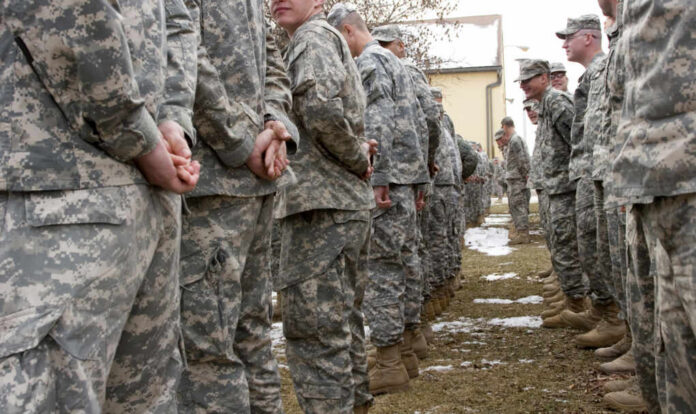
Beyond rhetoric, Trump has signed a formal presidential action titled “Department of War Security for the Protection of Federal Personnel and Property in Illinois,” which calls at least 300 Illinois National Guard members into federal service.[7] The order states that federal facilities tied to immigration enforcement and federal protective services have come under “coordinated assault” from violent groups trying to block deportations and other federal operations in and around Chicago.[7] Guard members are directed to protect federal agents and property at any location where violent demonstrations prevent or threaten to prevent federal law from being carried out.[7][10]
The White House and its allies present this as a narrow mission focused on federal sites, not general street policing, and note that other cities such as Washington, Los Angeles, Memphis, and Portland have also seen similar deployments.[1][4][24] Yet even this more limited use of National Guard forces has drawn lawsuits and strong criticism from civil rights groups and legal scholars who say it edges toward a militarized response to protests and immigration activism rather than targeted crime fighting. For many Americans, it feeds the feeling that the federal government is quick to show force at home while failing to solve everyday problems like jobs, schools, and affordable housing.
Legal Roadblocks, Court Rulings, and What History Shows
Trump argues that he has clear authority to “go in anyway” if Illinois leaders will not act, framing it as his duty to protect the country, including cities like Chicago and Baltimore.[2] But past and current court cases show the picture is not that simple. Judges have already blocked or limited some National Guard deployments, ruling that the administration failed to show the kind of rebellion or emergency required to override state control.[3][4][21] The Supreme Court has refused to let at least one Chicago-area deployment move forward, finding no legal basis to federalize the Guard for broad state-level law enforcement.[3]
Multiple Chicago shootings dominate headlines: at least seven killed in recent violence, with a weekend surge of 30+ injured and a high-profile call for renewed national security measures by Trump. Reports detail drive-by and mass shootings across the ci… https://t.co/ZPofTKLrTr
— ClipFront (@clipfront) June 22, 2026
Legal experts point to long-standing limits, such as the Posse Comitatus Act, which restricts using the military for domestic law enforcement, and say the Insurrection Act is meant for rare, extreme crises, not routine crime or protest. They warn that normalizing troops on city streets risks eroding civil liberties and blurring the line between a free society and one managed by force. At the same time, many citizens on both the right and the left look at Chicago’s recurring violence and see a different kind of failure: a political class that argues over who controls the guns and uniforms while families bury their dead and the promise of equal protection under the law feels more like a slogan than a reality.
Sources:
[1] Web – Trump Tells Pritzker to Call for Help After Chicago’s Bloody Weekend
[2] Web – Trump authorises National Guard deployment to Chicago – BBC
[3] Web – Trump says he’s set to order federal intervention in Chicago and …
[4] Web – Trump drops push for National Guard in Chicago – The Texas Tribune
[5] Web – Domestic military deployments by the second Trump administration
[6] Web – Trump ends National Guard push in Chicago, Portland and L.A.
[7] YouTube – Trump threatens to send troops into cities like Chicago and Baltimore
[8] Web – Department of War Security for the Protection of Federal Personnel …
[9] YouTube – U.S. officials reveal key terms of agreement to end Iran war
[10] Web – Reel by President Donald J. Trump (@realdonaldtrump) – Instagram