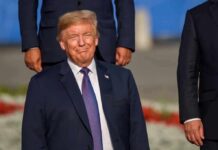
After warning Iran wants him dead, President Trump flew home on the existing Air Force One for his trip home from the NATO summit. The decision came as security concerns surrounding Iran dominated the summit, while the aircraft itself is still undergoing testing and certification
Story Snapshot
- President Trump said Iran wants to kill him and called himself Tehran’s top target during summit comments.
- According to media reports, some advisers were concerned about potential threats to presidential air travel.
- President Trump showcased the next Air Force One at Joint Base Andrews but did not fly it home.
- Media noted no public evidence links Iran to any Air Force One technical issues.
What Trump Said About Threats From Iran
During his summit press events, President Trump said Iran wants to kill him and that he is their “number one target.” He tied those claims to broader tensions with Tehran. He also used sharp language about Iranian leaders. He has at other times used more measured terms, which fuels debate over consistency. His core point was clear: he believes the threat against him is active and serious, especially when he travels by air.
Separate reporting has said members of Trump’s team worried that Iran, or an Iranian agent, could try to shoot down his plane. Those accounts also describe warnings that Tehran has access to surface-to-air missiles. Such worries centered on his personal travel risk in tense periods. These reports do not prove a planned attack, but they do show why his staff might back extra caution around flight choices and routes.
Why The New Air Force One Stayed Put
Trump recently unveiled the next Air Force One on a military flight line at Joint Base Andrews. Cameras captured him speaking in front of the aircraft while discussing Iran and other foreign policy issues. The aircraft has been publicly unveiled but has not yet entered full presidential service, which requires extensive testing, certification, and security modifications. But a public debut is different from a full operational handoff, which depends on testing, certification, and security hardening that can take time.
His decision came during a week dominated by public discussion of Iranian threats, although officials have not publicly stated that those threats determined which aircraft he used. He linked his public remarks to ongoing tensions with Iran. Media coverage also noted that there is no public evidence tying Iran to any technical problem with Air Force One. That point matters, because it separates confirmed facts from speculation. Precaution is common in aviation security, especially for high-profile leaders during volatile weeks.
The Line Between Caution And Proof
National leaders often face unclear threat pictures. Aviation security experts and government strategies describe a pattern: when tensions rise, officials add layers of protection even if specific attack proof is not public. This can include aircraft substitutions, route changes, or return-to-base decisions. These steps look disruptive, but the aim is to reduce risk while intelligence teams work to confirm or dismiss possible threats.
In this case, the public record shows three things. First, Trump said Iran targets him. Second, some reporting describes staff worries about a possible attempt on his aircraft. Third, there is no public proof that Iran caused any Air Force One malfunction. All three can be true at once. That mix explains both the heated rhetoric and the cautious flight choices, while also showing why critics ask for clearer evidence before drawing larger claims.
What This Reveals About Trust And Power
Many Americans across the political spectrum believe government institutions are not always transparent about national security decisions. Supporters say the government must shield a president first and explain later. Skeptics ask why threats are cited without verifiable details, and why costly assets debut before they are mission-ready. Both concerns call for tighter transparency about timelines, testing, and how leaders judge air risk in real time.
🚨 BREAKING UPDATE: Iran's promised retaliation appears to be underway as sirens warn of incoming threats across the Middle East.
Here is what you need to know right now:
The Conflict Spreads
Sirens in the Gulf: Early Thursday morning, warning sirens sounded in both Bahrain…— The Owllines (@theowllines) July 9, 2026
Clearer reporting would help. Maintenance milestones, security certification steps, and what triggers a plane switch could be shared without exposing tactics. A short, timely readout after high-profile trips could also build trust. Until then, expect more fights over what is prudent caution versus political theater. For now, the record supports that Trump voiced a personal threat from Iran, his team showed concern, the new jet was unveiled, and public proof of sabotage does not exist.
Sources:
youtube.com, axios.com, thehill.com, leadingedgestrategies.com