
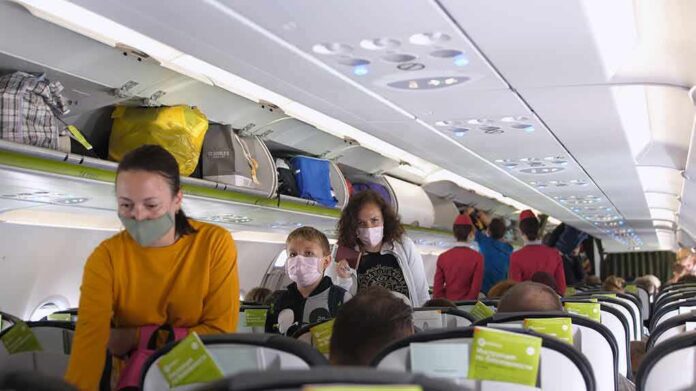
With tens of millions on the move for Thanksgiving, health experts urged masks in crowded indoor travel spots to cut risk for the most vulnerable.
Story Snapshot
- Experts advised optional, targeted mask use in packed indoor travel areas, not blanket mandates.
- Older adults, immunocompromised people, pregnant women, and babies were flagged as higher risk.
- Officials cited heavy holiday travel and multiple respiratory threats, including measles and early flu.
- A United Kingdom evidence review found limited support for broad community masking, backing targeted use.
What Prompted Fresh Mask Advice This Week
Local and national outlets reported new reminders as Thanksgiving travel surged. Reporters cited infectious-disease doctors who urged handwashing and optional mask use in crowded indoor places like airport lines and jet bridges. One San Francisco physician said people at higher risk, or those around them, should consider masking. The guidance arrived as airports prepared for more than 81 million travelers and officials tracked measles concerns and other seasonal illnesses. The Washington Post highlighted similar themes before the holiday rush.
Atlanta-based and other experts emphasized who benefits most. They pointed to older adults, people with weak immune systems, pregnant women, and infants as groups for whom a well-fitting mask offers added protection during travel. They also explained that mask performance varies. A National Institute for Occupational Safety and Health-approved N95 filters at least 95 percent of airborne particles when used as designed, making it the most protective option discussed in the coverage.
Why The Message Focused On Crowded Indoor Spots
Experts stressed that exposure risk changes as people move through the system. Aircraft cabins often have strong ventilation, but many pinch points do not. Security lines, crowded gates, jet bridges, and packed trains or rideshares bring people face to face. Reporters described masks as one of several layers, along with vaccines, staying home when sick, and hand hygiene. That layered framing aimed to add options without reviving broad mandates that many Americans rejected during the pandemic years.
The timing matters. Health officials described an early and active flu season and rising attention to measles, which remains highly contagious. Newsrooms also tracked record or near-record travel volume ahead of family gatherings. That mix—more people, more close contact, and more circulating viruses—led experts to call for simple steps that reduce odds of spread, especially to those who face higher risk of severe disease.
What The Evidence Supports—and Where It Falls Short
The advice leaned on targeted protection, not universal rules. A United Kingdom government evidence review concluded that proof was not strong enough to justify widespread community masking for everyone in normal settings. But the same review left room for masks to help vulnerable people in higher-risk, crowded places for short periods. That aligns with this week’s holiday guidance, which focused on busy indoor travel points and higher-risk groups rather than a one-size-fits-all plan.
Evidence gaps remain. Reported guidance did not include new, controlled holiday-travel studies that compare infection outcomes by mask type, fit, and adherence. Experts also note that real-world behavior matters. Many travelers remove masks to eat or talk. Some masks fit poorly. These factors blunt protection. That said, the technical advantage of a well-fitted N95 over looser face coverings is clear under standardized testing, which is why it drew mention in the reporting.
How This Lands With A Weary Public
Americans across the spectrum feel burned by years of confusion, shifting rules, and culture-war fights over masks. Many now see the federal government as slow, political, and out of touch. This week’s messaging tried to avoid that by keeping the ask narrow and practical: protect those who need it most in the most crowded places. That approach does not solve the trust problem, but it respects personal choice while giving higher-risk travelers a clear path to reduce exposure.
The path forward needs clarity, not spin. Officials could strengthen trust by publishing the specific data behind holiday cautions, separating advice by setting, and being honest about trade-offs. Airlines and airports can help by improving ventilation in bottlenecks and posting plain-language tips at gates and boarding lines. For families, the bottom line is simple: if someone in your group faces higher risk, a well-fitting N95 in tight indoor travel spots is a low-cost step that may help during the busiest week of the season.
Sources:
facebook.com, nbcbayarea.com, bostonglobe.com, bnd.com