

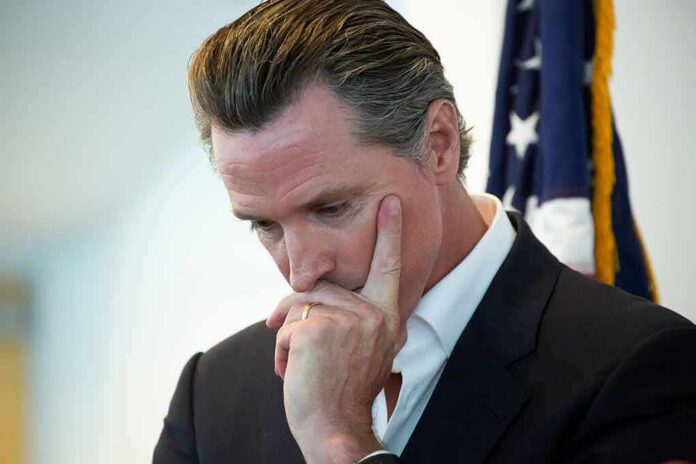
California’s governor moved to erase every death sentence and replace it with life in prison without parole, igniting a coast-to-coast clash over justice, power, and victims’ rights.
Story Snapshot
- Governor Gavin Newsom moved to commute all California death sentences to life without parole.
- The governor cited constitutional clemency power and asked the state Supreme Court to review cases with multiple felonies.
- President Trump condemned the move and stood with victims’ families who called it an injustice.
- Supporters say executions should end; critics say juries and victims were overruled.
What Newsom Decided and Why It Matters
Governor Gavin Newsom announced he will commute every death sentence in California to life in prison without the possibility of parole. His office’s fact sheet says the policy covers 548 condemned people and applies the same outcome to all. Newsom framed the step as rejecting executions while keeping offenders imprisoned for life. He argued the state can pursue justice without killing and said compassion and accountability can both stand. These points appear in his open letter and official releases.
Newsom grounded the action in the California Constitution’s clemency power. He also followed the rule that requires an extra step for many prisoners. For people with more than one felony conviction, the California Supreme Court must recommend clemency before it can take effect. Newsom sent the court a request covering 382 such cases. That means timing and outcomes for those cases are not final yet, and the court’s response will shape implementation.
The Core Dispute: Justice, Voice, and Democratic Process
Supporters of the change say executions are wrong and that spending should shift to victim services rather than more death penalty litigation. The governor’s office highlighted survivors who back that view and who stress healing and recovery alongside punishment. The materials, however, did not provide a budget plan showing how money would move or what results would follow, leaving open questions about measurable gains for victims from this change.
Opponents argue the governor overrode jury sentences and decades of court rulings in one sweep. Victims’ relatives, including Marc Klaas and Sandy Friend, said the decision erased hard-fought verdicts and reopened trauma. President Trump called the action a shocking injustice and appeared with families to denounce it. Critics, including some law-enforcement voices, said the move ignored victims’ preferences and public safety priorities set by juries and judges.
What Remains Unsettled in Law and Practice
California still needs its Supreme Court to recommend clemency for hundreds of the affected cases. That review could take time and may invite legal challenges. The mass approach also raises questions about individualized review. The governor’s plan applies one outcome to all on death row, which simplifies administration but does not address differences in crime facts or culpability among cases. Those open items could shape how lasting and accepted this policy becomes.
⚡ ONE-LINER@GavinNewsom
Newsom says no president should be able to sell a pardon. 'Justice is not for sale.' Fair enough, Gavin. You didn't sell yours. You handed all 548 of California's death row a commutation for free.#Newsom— Neil O'Neil (@UKpolymath) November 25, 2026
The record supplied by state materials names the covered population and declares an end to executions in practice. Independent confirmation of the exact condemned count in a current public roster does not appear in the provided sources. The documents also do not show audited data proving better safety, deterrence, or victim outcomes from blanket commutation. These gaps do not void the governor’s authority claim, but they limit evidence for predicted benefits and will likely fuel future audits and lawsuits.
Why People Across the Spectrum Care
Many Americans on the left and right distrust a system they see as serving elites and neglecting victims and public safety. This fight taps into that anger. Backers say the state should stop executions and treat even the worst crimes without taking another life. Opponents say the government brushed past juries, voters, and grieving families. Both sides accuse leaders of political theater. The final test now shifts to courts, budgets, and results that people can see and measure.