As Ebola cases surge in central Africa and officials quietly ramp up travel controls, Americans are again being asked to trust the same global health system many already suspect puts politics and elites first.
Story Snapshot
- Ebola cases in the Democratic Republic of the Congo (DRC) and Uganda are rising quickly, prompting a global health emergency declaration and cross-border spread.[3][6][10][11]
- The Centers for Disease Control and Prevention (CDC) warns of a rapidly evolving outbreak in insecure, highly mobile regions, yet still labels the current risk to Americans as low.[6][11]
- Washington has imposed enhanced travel screening and entry restrictions while the World Health Organization (WHO) still advises against broad travel bans, underscoring mixed signals.[6][10]
- The Bundibugyo strain driving this outbreak has no licensed vaccine or proven targeted treatment, fueling fears this crisis could grow far larger than official numbers show.[3][6]
Ebola’s New Surge: What Is Actually Happening on the Ground?
Health agencies report that the latest Ebola outbreak, driven by the Bundibugyo strain, began in Ituri Province in northeastern DRC only months after the last Ebola crisis ended there.[5][10][11] WHO and CDC say the epidemic has already spread from remote areas into multiple provinces, with confirmed cases now documented in Ituri, Nord-Kivu, and Sud-Kivu.[6][10][11] WHO has formally designated the crisis a Public Health Emergency of International Concern, its highest-level alert for global health threats.[5][10] That label signals concern about cross-border spread and fragile health systems, not just local infections.
Official counts illustrate how quickly the situation is changing. WHO reported that, as of mid-May, there were eight laboratory-confirmed cases alongside 246 suspected cases and 80 suspected deaths in Ituri alone.[10][11] UNICEF later cited 598 suspected cases and 139 suspected deaths across the region by May 20, including 66 confirmed infections and seven confirmed deaths.[9] By early June, European disease authorities counted 381 confirmed cases in DRC and 19 confirmed cases in Uganda, with deaths mounting in both countries.[3] These jumps highlight how early figures often underestimate true spread.
Cross-Border Transmission and Travel Controls
Public health officials confirm that the virus has crossed borders, with Uganda reporting confirmed cases linked to the DRC outbreak in districts including Kampala and Wakiso.[3][6] Uganda has temporarily closed parts of its border with DRC, allowing only tightly screened humanitarian, security, and essential cargo traffic to pass.[2] WHO simultaneously advises against general travel or trade restrictions, arguing that such measures can backfire by driving movement underground and hampering response logistics.[6][10] That divergence leaves ordinary citizens navigating mixed messages about just how serious cross-border risk really is.
The CDC’s own Health Alert Network advisory describes the outbreak zones as areas of insecurity, mining-related labor movement, and population displacement—conditions that tend to turbocharge disease spread and complicate data gathering.[11] At the same time, the CDC’s situation summary stresses that no Ebola cases tied to this outbreak have been detected in the United States and that the overall risk to the American public remains low.[6] Those two statements—“rapid cross-border spread” and “low U.S. risk”—sit uneasily together and feed broader skepticism about whether Washington is leveling with people.
The Bundibugyo Problem: No Vaccine, Limited Tools
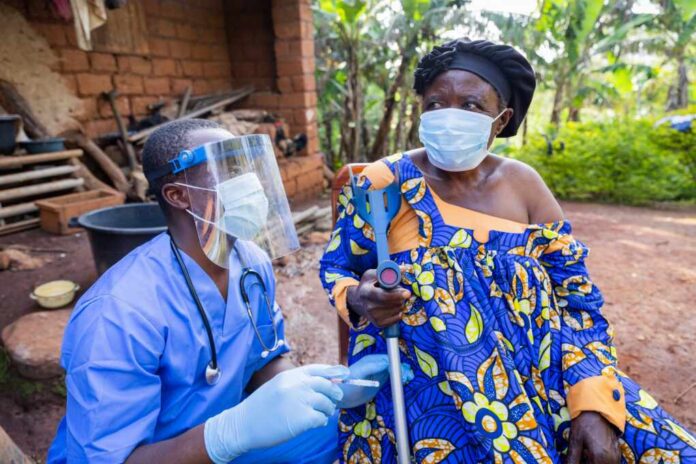
Doctors Without Borders and other front-line groups emphasize that this outbreak is not caused by the better-known Zaire Ebola strain but by the Bundibugyo virus, for which there is currently no licensed vaccine or approved targeted treatment.[3][6] Earlier Ebola crises relied heavily on vaccines and monoclonal antibody therapies tailored to Zaire; those tools are not authorized for Bundibugyo and may not work effectively.[3] Clinicians therefore must fall back on basic supportive care—fluids, oxygen, and close monitoring of vital signs—to keep patients alive. That reality adds urgency for communities that already distrust promises from distant institutions.
Humanitarian organizations warn that actual case numbers may be significantly higher than official tallies because insecurity, weak surveillance, and limited contact tracing allow infections and deaths to go unrecorded.[1][8][11] The International Federation of Red Cross and Red Crescent Societies describes a rapidly escalating situation, with cases and deaths rising as the virus moves through remote villages and into busier transport corridors.[8] When people on both the right and the left in the United States say they do not trust government statistics, this kind of uncertainty in basic outbreak data reinforces their concern that the public rarely gets the full picture in real time.
What U.S. Officials Are Doing—and Not Saying Clearly
Despite the low-risk language, the CDC and the Department of Homeland Security have already tightened the border for travelers from DRC, Uganda, and South Sudan.[6][5] On May 18, the agencies announced enhanced screening at a small set of major U.S. airports and imposed new entry restrictions on many non-citizens who have recently been in affected countries.[5][6] Passengers are being rerouted through Washington-Dulles, Atlanta, Houston, or New York’s John F. Kennedy airport for health checks and follow-up monitoring.[6] These steps acknowledge the possibility of imported cases even as officials insist the general threat is limited.
The first genome sequences from the 2026 Bundibugyo Ebola outbreak in DR Congo 🇨🇩 and Uganda 🇺🇬 reveal something important:
This does NOT appear to be a continuation of the 2007 Uganda outbreak or the 2012 DRC outbreak.
Scientists say it looks like a NEW spillover event.…
— Kay (@kay_myg) June 7, 2026
This mix of reassurance and quiet escalation feeds a narrative many Americans already suspect: leaders talk calm to avoid panic while they move aggressively behind the scenes to protect institutions first. WHO’s advice against broad travel bans, Uganda’s border shutdown, and Washington’s selective restrictions together reveal a fragmented response shaped as much by politics and trade as by public health evidence.[2][6][10] Whether one blames globalism, incompetence, or a self-protecting “deep state,” the outcome is the same—ordinary people are left to sort through conflicting signals during yet another crisis that exposes just how fragile the system really is.[1][2][8]
Sources:
[1] Web – Ebola Cases Jump as CDC Warns Outbreak Could Be Among Largest Ever…
[2] Web – Precautionary measures stepped up in response to Ebola disease …
[3] YouTube – DRC and Uganda battle new Ebola outbreaks as deaths …
[5] Web – Ebola Disease Outbreak in the Democratic Republic of the … – CDC
[6] Web – [PDF] Ebola Disease Outbreak in the Democratic Republic of the Congo …
[8] Web – Ebola Outbreak: Current Situation – CDC
[9] Web – Update on Ebola Outbreak in the Democratic Republic of the Congo and …
[10] Web – Current information about Ebola | RIVM
[11] Web – Epidemic of Ebola Disease caused by Bundibugyo virus in the …