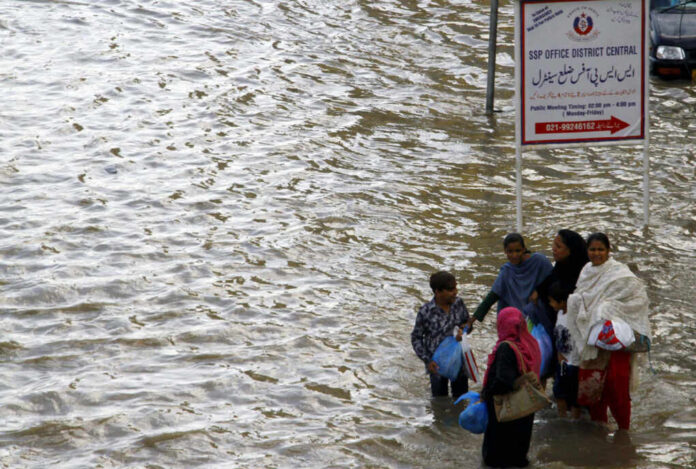
As catastrophic floods devastate Pakistan, over 800 lives lost and more than a million displaced.
Story Snapshot
- Over 800 people killed and 1.45 million displaced by Pakistan’s 2025 monsoon floods, with rural and urban communities overwhelmed.
- Systemic vulnerabilities, poor infrastructure, and cross-border water management failures worsened the disaster’s impact.
- Relief efforts, led by international and local agencies, are ongoing as additional rainfall threatens further devastation.
- Experts blame climate change, inadequate preparedness, and government neglect for the scale of destruction and humanitarian crisis.
Unprecedented Floods Overwhelm Communities
Since late June 2025, Pakistan has faced relentless monsoon rains causing flash floods that have swept through all major provinces, with Khyber Pakhtunkhwa and Punjab hit hardest. The death toll has surged beyond 800, with nearly 1,000 reported by some agencies, and more than 1.45 million people are affected in Punjab alone. The destruction is staggering: over 4,200 homes have been demolished, and hundreds of thousands have been forced from their communities. Relief operations are ongoing, but the crisis continues to escalate as forecasts warn of additional rainfall and further flooding.
Since June 26, relentless monsoon rains and flash floods have killed 802 people and injured 1,088 across #Pakistan, according to NDMA. Khyber Pakhtunkhwa is worst-hit. Rising river levels, especially in #Punjab, threaten more flooding. Authorities urge caution as heavy rainfall… pic.twitter.com/uaw2YGbjlJ
— The Statesman (@TheStatesmanLtd) August 27, 2025
The magnitude of displacement and property loss is compounded by longstanding vulnerabilities. Pakistan’s history of monsoon flooding—highlighted by the 2010 “super-floods”—has repeatedly shown the nation’s lack of resilient infrastructure and disaster preparedness. Deforestation, unregulated construction, and poor urban planning have left communities defenseless against rising rivers and flash floods. In Punjab, upstream water releases from Indian dams have also contributed to river swelling, further endangering local populations. Many affected regions are remote and difficult to reach, slowing down rescue and aid efforts and exposing glaring gaps in governance and resource allocation.
Watch: Monsoon floods wreak havoc across India and Pakistan, with more rain forecast
Humanitarian Response and the Role of International and Local Agencies
Relief operations are currently led by a combination of government agencies, international organizations, and local groups. The National Disaster Management Authority and Provincial Disaster Management Authorities coordinate evacuations, distribute aid, and oversee rescue missions, especially in the hardest-hit districts. The Pakistan Red Crescent Society, supported by the International Red Cross and United Nations agencies, provides essential supplies including food, clean water, shelter, and medical assistance. Despite these efforts, the scale of need far outpaces available resources, and many displaced families remain at risk of hunger, disease, and exposure as the crisis drags on.
Emergency declarations remain in effect in several districts as authorities and relief teams struggle to keep pace with ongoing rainfall and the relentless threat of new floods. The humanitarian need is both immediate and long-term: clean water shortages, destroyed homes, and devastated crops have left entire regions vulnerable to disease, food insecurity, and economic collapse. Children, women, and the elderly are particularly at risk, intensifying the pressure on already strained local health and social services.
Infrastructure Gaps, Climate Policy, and Government Accountability
Meteorologists and climate scientists link the increased frequency and intensity of monsoon rains to climate change, reflecting global policy failures and a lack of local adaptation measures. Cross-border issues, such as water releases from upstream dams in India, further complicate the situation and highlight the fragile nature of international cooperation when it comes to critical resources.
Systemic neglect is underscored by the recurring pattern of devastation—major floods in 2010, 2011, and now 2025—each time revealing the government’s inability to implement lasting solutions. Calls for improved land management, investment in resilient infrastructure, and community-based disaster risk reduction have so far yielded few results. As relief efforts continue, the focus has turned to the need for fundamental reforms to protect lives, property, and national sovereignty against future disasters.
Sources:
Wikipedia: 2025 Pakistan Floods
5Pillars: Pakistan Floods Death Toll
Arab News: Punjab Floods and National Impact
British Red Cross: Pakistan Floods 2025 Response
UN News: Monsoon Floods in Pakistan