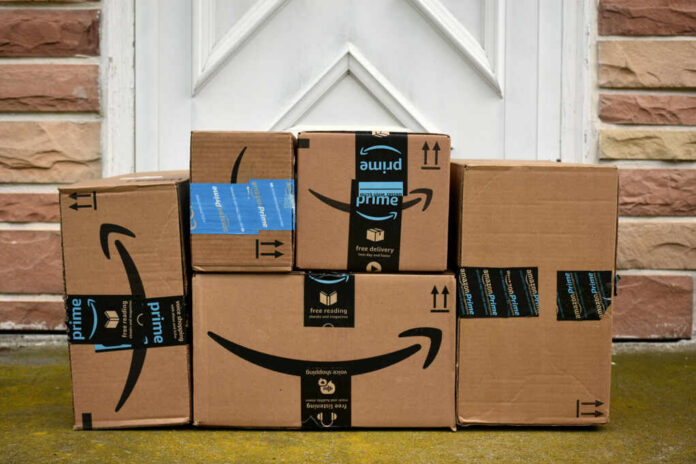
Amazon’s new drone delivery system intentionally drops packages from 10 feet in the air, leaving customers with shattered products and raising serious questions about whether the tech giant prioritizes speed over common sense.
Story Snapshot
- Amazon Prime Air drones hover at 10 feet and drop packages onto concrete without landing, causing widespread damage to customer orders
- Viral test by influencer Tamara Hancock showed a plastic bottle of syrup shattering on impact, highlighting risks for fragile items
- Drones have clipped internet cables in Texas, collided with cranes in Arizona, and sparked privacy complaints in Michigan over cameras scanning backyards
- FAA investigations underway as Amazon pushes to scale to 500 million annual deliveries by 2030 despite mounting safety and reliability concerns
Amazon’s Drop-First Design Sparks Outrage
Amazon Prime Air drones operate across Arizona, Texas, Michigan, and Florida with a deliberate design flaw that has customers questioning the company’s priorities. The drones never land, instead hovering at exactly 10 feet before releasing packages to freefall onto driveways, patios, and concrete surfaces. Amazon charges $4.99 for deliveries promised in under 60 minutes, but the trade-off appears to be damaged goods. The company claims its “purpose-built packaging” can withstand the impact, yet real-world evidence suggests otherwise. This approach raises fundamental questions about whether innovation should come at the expense of basic product care and customer satisfaction.
Real-World Tests Expose Packaging Failures
Teacher-turned-influencer Tamara Hancock conducted a revealing test that went viral, ordering a plastic bottle of blue raspberry syrup via Amazon’s drone service. The package tumbled and rolled upon impact, and the bottle shattered, creating a sticky mess. Hancock’s experience mirrors complaints from other customers who have received broken items. If a plastic bottle cannot survive the drop, the prospects for glass containers or other fragile goods appear grim. Amazon acknowledged the incidents as rare and promised refunds and improvements, but the fundamental design remains unchanged. The company’s response suggests they are betting on packaging solutions rather than addressing the root problem of dropping items from significant heights.
Safety Incidents Trigger Federal Scrutiny
Beyond broken packages, Amazon’s drone program has generated serious safety and privacy concerns that extend far beyond customer inconvenience. In Texas, a drone clipped internet cables, causing neighborhood-wide outages that disrupted work and communication for residents. Arizona operations faced a temporary shutdown after drones collided with construction cranes at worksites. Michigan communities have filed police reports over privacy violations, as the drones are equipped with cameras that scan backyards during deliveries. The Federal Aviation Administration has launched investigations into multiple incidents, signaling that regulatory oversight may tighten before Amazon achieves its ambitious goal of 500 million annual deliveries by 2030.
The Real Cost of Futuristic Promises
Each Amazon Prime Air drone reportedly costs $146,000, a substantial investment that raises questions about the economic viability of the program at scale. The disconnect between these high-tech costs and the $4.99 delivery fee suggests Amazon is subsidizing operations to build market dominance, a familiar pattern among tech giants that prioritize growth over profitability. Meanwhile, everyday Americans bear the consequences through broken orders, privacy invasions, and infrastructure damage. The program exemplifies a troubling trend where corporations rush unproven technology to market, leaving customers and communities to deal with the fallout. As viral videos continue to expose failures, public trust in drone delivery erodes, potentially forcing Amazon to choose between genuine solutions and public relations damage control.
UPDATE: AMAZON delivery drones dropping boxes from 10 feet in air, damaging orders… https://t.co/wtgTYutBok pic.twitter.com/zcJkrco60Q
— NA404ERROR (@Too_Much_Rum) April 18, 2026
The broader implications extend beyond Amazon’s bottom line to the future of automated delivery services across the industry. Competitors watching these failures may reconsider their own drone programs, while ground delivery methods gain renewed appreciation for their reliability. For Americans already frustrated with declining service quality across industries, Amazon’s drone debacle reinforces the perception that corporations value technological flash over fundamental competence. The FAA’s ongoing investigations could result in stricter regulations that either force design changes or slow the rollout significantly, leaving customers wondering why a company with Amazon’s resources cannot solve the simple problem of gently placing packages on the ground.
Sources:
Video Shows Amazon Delivery Drone Dropping Package Directly