
NTSB’s chilling new footage exposes how ignored safety warnings in Washington’s airspace cost 67 American lives in a preventable mid-air horror.
Story Highlights
- January 29, 2025: American Airlines Flight 5342 collides with U.S. Army Black Hawk over Potomac River near DCA, killing all 67 aboard.
- NTSB released harrowing simulation footage on January 27, 2026, revealing visibility failures and near-miss red flags in busy D.C. skies.
- FAA responds with helicopter route restrictions and ADS-B mandates, but critics say pre-crash warnings were dismissed under prior lax oversight.
- First major U.S. passenger jet crash in 16 years highlights risks of mixing civilian and military traffic without modern tech safeguards.
Tragic Collision Details
American Airlines Flight 5342, a Bombardier CRJ700 from Wichita, Kansas, approached Ronald Reagan Washington National Airport on January 29, 2025. At 8:43 p.m. EST, air traffic control switched the jet from Runway 1 to Runway 33. The crew accepted the change and received landing clearance. Meanwhile, a U.S. Army Sikorsky UH-60 Black Hawk departed Davison Army Airfield for night vision goggle training. At 8:47 p.m., a radar conflict alert sounded as paths converged over the Potomac River near Key Bridge.
Final Moments and Harrowing Footage
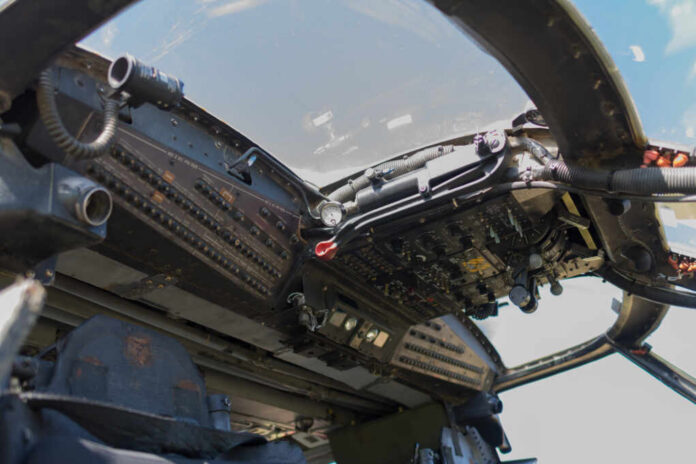
Twenty seconds before impact at 8:47:59 p.m., the controller asked the helicopter crew if they had the CRJ in sight. The jet crew heard TCAS warnings: “traffic, traffic.” Collision occurred at 300 feet altitude, with the jet at 128 mph and its transponder failing 2,400 feet from the runway. Witnesses saw the jet split in half and the helicopter upside down before both plunged into the river. NTSB’s January 27, 2026, board meeting released a right-seat helicopter simulation of the final three minutes, underscoring night vision goggles’ detection limits.
DCA suspended operations immediately, closing for over 14 hours and diverting flights to Dulles, BWI, and RIC. All 64 on the jet—including 60 passengers, two pilots, two flight attendants—and three helicopter crew perished. No survivors emerged from the wreckage, marking the deadliest U.S. aviation disaster in decades.
Watch:
Preventable Risks in Complex Airspace
DCA’s airspace ranks among the world’s busiest, blending fixed-wing jets and helicopters over the Potomac. Route 4 helicopter paths intersect visual approaches to Runway 33, creating convergence zones. Pre-crash reports documented dozens of near-misses, signaling systemic vulnerabilities. The helicopter crew claimed visual contact but likely misidentified the jet; a held microphone may have blocked critical ATC chatter. Night conditions exacerbated issues with night vision equipment.
‘NTSB Releases Harrowing Footage of the American Airlines Crash at DCA Last January’https://t.co/uzCXi5SHBN
— MarsColony (@MarsColony01) January 28, 2026
This marked the first fatal CRJ700 crash, American Airlines’ first since 2001’s Flight 587, and the first Potomac mid-air since 1982’s Air Florida 90, which killed 78. As the first major U.S. commercial passenger crash since Colgan Air 3407 in 2009, it exposed gaps in mixed civilian-military operations.
FAA Actions and Ongoing Reforms
FAA imposed immediate restrictions on January 31, 2025, limiting helicopter Routes 1 and 4 to police, medical, and presidential flights. March 2025 amendments revised visual separation procedures. A July 1, 2025, Letter of Agreement barred Pentagon Heliport operations. Administrator Bryan Bedford pushed ADS-B Out mandates for military helicopters, a $400 GPS tech simulation proved could enable detection. Transportation Secretary Sean P. Duffy demanded an independent airspace review; an IG audit followed in August 2025.
NTSB investigation (DCA25MA108) continues post-2026 meeting, with final probable cause pending. The Army defends training protocols amid scrutiny. Aviation experts label the event a “defining moment,” urging nationwide procedural changes and better near-miss tracking to prioritize American safety over bureaucratic delays.
Sources:
https://en.wikipedia.org/wiki/2025_Potomac_River_mid-air_collision
https://www.ntsb.gov/investigations/Pages/DCA25MA108.aspx
https://www.faa.gov/newsroom/faa-statements-midair-collision-reagan-washington-national-airport
https://wtop.com/local/2026/01/january-29-2025-dca-crash-is-defining-moment-in-aviation-history-experts-say/
https://abcnews.go.com/US/causes-years-deadly-mid-air-collision-dc-announced/story?id=129586770