President Trump just drew a bright line: Washington won’t bail out Democrat-run cities during anti-ICE riots—except to defend federal property with “very forceful” consequences for attackers.
Quick Take
- Trump directed DHS Secretary Kristi Noem to hold back federal intervention in city unrest unless local leaders formally request it.
- ICE and Border Patrol were told to defend federal buildings, officers, and vehicles “very forcefully,” with steep penalties warned for assaults.
- The order lands amid fresh anti-ICE unrest tied to stepped-up enforcement in sanctuary-style jurisdictions and repeated clashes over local cooperation.
- Multiple outlets confirm the same core message from Trump’s Truth Social post, with reporting focused on Los Angeles and other Democratic-led cities.
Trump’s Directive: No Federal Backup Unless Cities Ask
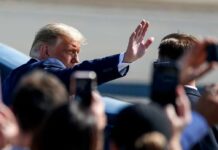
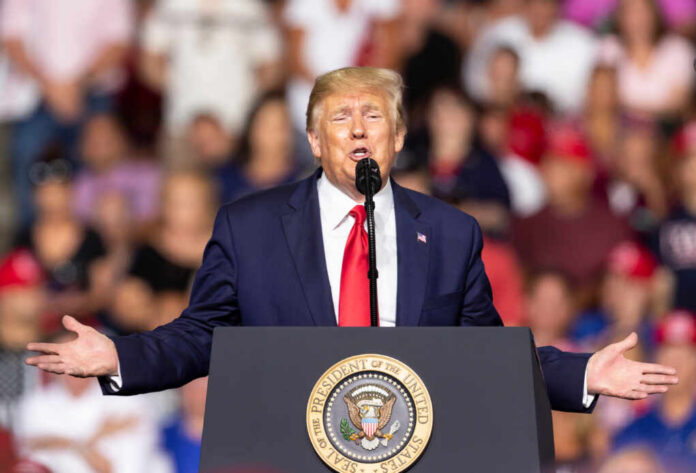
President Donald Trump posted on Truth Social on Jan. 31, 2026, instructing Homeland Security Secretary Kristi Noem not to send federal help into anti-ICE protests or riots in Democratic-led cities unless local authorities request assistance. The message framed the decision as a response to what Trump described as “poorly run” cities, while emphasizing that Washington would not automatically step in to restore order on local streets.
Trump’s post did not describe a blanket federal pullback. It set a conditional standard: cities that want federal muscle must ask for it, and the request must come from local leadership. That detail matters because it shifts public responsibility back onto mayors and governors who have often opposed federal immigration enforcement, while also narrowing the circumstances under which federal personnel would be deployed for crowd-control in city neighborhoods.
Watch:
“Very Forceful” Protection of Federal Property Raises the Stakes
At the same time Trump told cities they would not get automatic federal help, he delivered a second, sharper instruction: ICE and Border Patrol should be “very forceful” in protecting federal property and federal personnel. The warning language focused on assaults against officers and vehicles—such as spitting or throwing objects—and promised serious consequences. The operational takeaway is straightforward: federal assets get hardened protection even if city streets do not.
Reporting around the post tied the message to recent unrest, particularly in Los Angeles, where protests and clashes were described as riots by some coverage. Separate reporting also said Los Angeles police managed de-escalation without federal support in at least one incident, underscoring the administration’s point that local officials have tools they can use.
How This Connects to the Broader Immigration Crackdown and Local Resistance
The directive arrives in a climate shaped by stepped-up immigration enforcement and persistent sanctuary-city standoffs. Prior reporting cited ICE operations in Los Angeles neighborhoods in 2025 and described an escalating cycle: raids draw large demonstrations, demonstrations strain local policing, and federal-state friction follows. This has not stayed confined to one metro area; coverage referenced activity and tensions across several Democratic-led jurisdictions, including Portland, Chicago, Minneapolis, and Washington, D.C.
The available sources show a federal posture aimed at enforcing immigration law while trying—at least on paper—to avoid automatic federal takeover of local disorder. Still, the underlying dispute remains: local leaders can resist cooperation, but they also bear responsibility for maintaining order when unrest follows.
Courts, Governors, and the Limits of Federal Power
Another tension line runs through the courts and intergovernmental disputes. Reporting referenced legal pushback and procedural fights over deployments and enforcement operations in places such as Illinois and Oregon, alongside developments involving ICE leadership and court scrutiny in Minnesota. These details underscore a recurring reality: immigration enforcement is not just a policy argument but also an ongoing jurisdictional battle, with judges and state officials testing the boundaries of federal action.
From a constitutional perspective, the key question is not rhetoric but process: who requests aid, under what authority, and for what mission. Trump’s Jan. 31 message is not a general call for federal troops to police city streets. It is a conditional approach—no intervention unless asked—paired with an uncompromising commitment to defend federal buildings and personnel.
Sources:
Trump says immigration agents won’t intervene in anti-ICE protests unless asked to do so
Trump vows not help blue cities riots, instructs ICE, Border Patrol protect federal property
Trump warns cities to handle riots, orders ICE & Border Patrol to defend federal property
Trump, ICE protests: Federal agents help if ask; Democrat cities
Trump national guard city updates
The Trump administration’s ICE and CBP have become a threat to Americans; Congress must ensure DHS follows the law and adopts commonsense reforms