
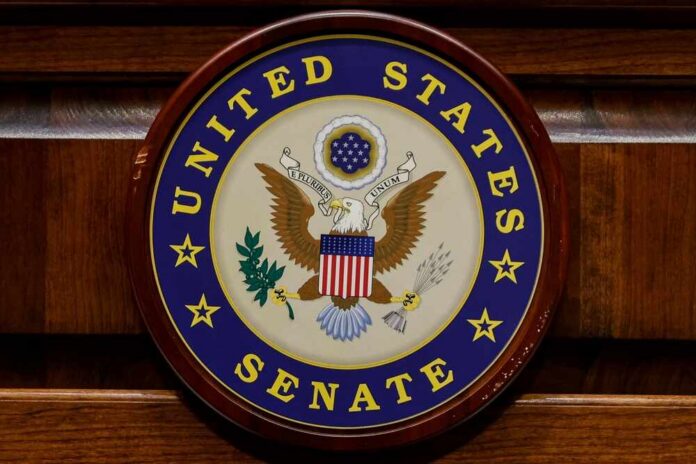
President Trump blasted the Senate for “getting nothing passed,” even as records show a mix of stalled bills, narrow votes, and a failed stopgap funding plan.
Story Snapshot
- Senate records show both action and gridlock, not “nothing.”
- A key stopgap funding bill failed in the Senate, fueling Trump’s charge.
- Republican defections complicated the agenda, tightening already thin margins.
- Democrats say they opposed bills that did not cut costs for families.
What Trump Claimed And What The Record Shows
President Trump said the Senate was “getting nothing passed,” arguing that the slowdown was hurting the country. Senate Republican leadership, however, lists several passed measures, including tax relief and regulatory rollbacks, which contradict the literal claim of “nothing.” These pages reflect partisan framing, but they document real floor action and enacted items. The Senate’s official listings also show recent movement on major bills, proving a mixed picture rather than a total standstill.
The Senate’s own legislative tracker highlights both progress and failure. One high-stakes example is a fiscal year 2026 continuing resolution, S.2882, which is listed as “Failed to Pass.” That miss matters because funding bills keep the lights on and give agencies stability. Failures like this feed the narrative that the chamber is stuck, even if other bills cleared the floor earlier in the session. The data point gives Trump’s frustration a concrete anchor.
Why Some Bills Stalled Or Slowed
House and Senate differences also slowed work. The Congressional Record explains that the annual defense bill advanced in both chambers but still needed a conference to settle key gaps before final passage. That step is normal, but it adds weeks and risk. Missed target dates make the process feel broken to many voters who see urgent problems at the border, in prices, or in energy costs and want faster results from Washington.
Internal Republican splits narrowed the path on marquee items. A scholarly review of the 2025 push reports that three Republican senators broke with the party on the One Big Beautiful Bill, which rolled many priorities into one package. That forced razor-thin votes and raised the cost of each defection. The strategy increased leverage but also raised stakes, making any policy dispute a threat to the whole agenda’s schedule and scope.
How Democrats And Some Republicans Framed Their “No” Votes
Senate Democrats said they opposed a Republican funding bill because it failed to lower costs for families. Senator John Hickenlooper argued the bill did not do the work on prices that his party sought, placing the fight in policy terms and not mere obstruction. That line speaks to voters worried about groceries, rent, and health care, even as it also keeps pressure on Republicans to adjust the bill text to win cross-aisle votes.
Some Republicans also balked on policy grounds. Reporting identified Senators Susan Collins, Thom Tillis, and Rand Paul as opposing core parts of the large agenda bill. Collins warned about projected Medicaid reductions and the pace of energy tax credit changes. Tillis questioned whether states could absorb the proposed cuts. Paul said the plan did not cut spending enough and could raise deficits. Those disagreements undercut a simple “Democrats blocked it” story.
What Gridlock Means For People Beyond The Capitol
When deadlines slide and short-term funding fails, agencies face stop-start planning. Contractors wait. States hold back on projects. Families see noise and little relief. The Senate’s mixed record—some wins, some stalls—matches a larger trend of rising gridlock and harder votes on big items. The chamber’s rules and slim margins mean even one or two dissenters can halt action. That fuels a wider belief that Washington serves insiders more than working people.
Sources:
facebook.com, republicanleader.senate.gov, willbrownsberger.com, congress.gov, senate.gov, cambridge.org, abcnews.com