Federal-state tensions rise as Minnesota mobilizes the National Guard during ICE protests, revealing deep divides over immigration enforcement.
Story Highlights
- The Minnesota National Guard mobilized but not deployed amid ICE-related protests.
- Federal judge restricts ICE tactics, prohibiting tear gas on peaceful protesters.
- Governor Walz addresses balancing protest rights with public safety.
- The Department of Justice investigates state officials for potential obstruction.
Mobilization of the Minnesota National Guard
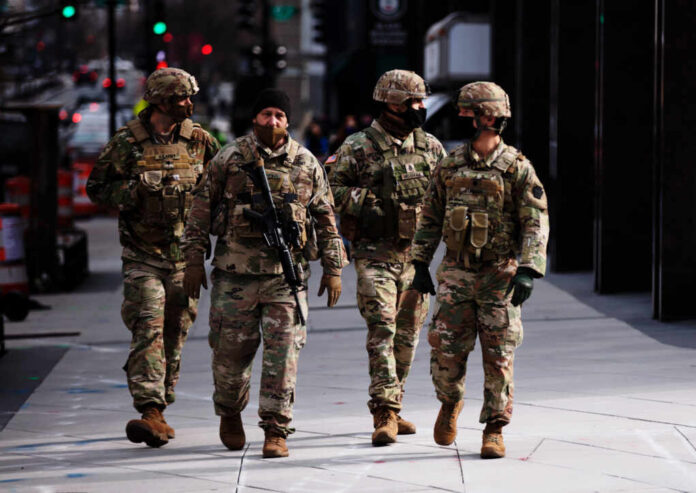
On January 17, 2026, the Minnesota National Guard was mobilized in response to growing tensions surrounding U.S. Immigration and Customs Enforcement (ICE) operations in Minneapolis. Governor Tim Walz issued an executive order to support public safety during protests against ICE activities, a move that highlights the strain between federal immigration enforcement and local governance. The Guard remains in a standby position, ready to act if the situation escalates further.
Protests erupted following two critical incidents involving ICE officers. On January 7, officer Jonathan Ross was involved in the fatal shooting of Renee Good, triggering widespread outrage. A week later, another ICE officer shot a Venezuelan national amid a confrontation, further intensifying public unrest. These events have drawn national attention and prompted a federal judge to issue orders limiting ICE’s use of force against protesters.
Watch:
Federal and State Dynamics
Federal-state relations are under strain as the Department of Justice investigates Governor Walz and Minneapolis Mayor Jacob Frey for potentially obstructing federal law enforcement. The investigation underscores the tension between state leaders advocating for community safety and federal authorities enforcing immigration laws. Meanwhile, the judicial orders restricting ICE practices have set a precedent, affecting how federal agencies operate within Minnesota.
As the protests continue, the Minnesota National Guard’s readiness serves as a reminder of the state’s commitment to maintaining order without deploying force prematurely. The Guard’s use of reflective vests, if deployed, aims to ensure clear identification amidst multiple law enforcement agencies on the ground, avoiding confusion and enhancing safety for both officers and civilians.
Implications for the Future
The current situation in Minnesota is emblematic of broader national debates over immigration enforcement and state sovereignty. The mobilization of the National Guard signals the state’s proactive stance in managing potential civil unrest, while also reflecting a measured approach to federal intervention. The outcome of the DOJ investigation and the federal judge’s rulings may have long-term implications on state-federal cooperation and future immigration policy enforcement.
As Minneapolis residents and immigrant communities navigate the heightened law enforcement presence, the state’s actions may either assure citizens of their safety or raise alarms over the militarization of civilian spaces. The dual nature of the ongoing protests, with both pro-ICE and anti-ICE demonstrators, highlights the complex social fabric and the ongoing struggle to balance enforcement with civil liberties.
Sources:
CBS News Minnesota
UPI
ABC News
CBS News Minnesota